
Ground Beef Stew
This Ground Beef Stew is packed with savory ground beef, tender potatoes, and a rich, thick gravy that brings everything together. It’s a hearty, comforting dinner with homemade flavor in every spoonful.
If you love hearty, comforting dinners like this one, explore my collection of stew recipes for more cozy meals packed with rich, savory flavor.

Unlike a brothy hamburger soup, this version has a thick, velvety gravy with no tomatoes or packaged mixes. A little Dijon mustard and Worcestershire sauce add extra depth, giving this simple one-pot dinner a wonderfully rich, savory finish.
For another slow-simmered favorite, try my classic beef stew with tender chunks of beef and potatoes. If it’s the homemade gravy you love most, my beef tips and gravy is another comforting choice. Or try my hamburger soup for a brothier version with ground beef, vegetables, and tomatoes.
Why You’ll Love This Ground Beef Stew
What I love about this recipe is how it turns a handful of everyday ingredients into a dinner that feels a little special. It has the familiar charm of an old-fashioned family meal, the kind you’d happily make again when the weather turns cold. Nothing fancy or complicated, just good home cooking that’s worth coming back to.
- Rich, homestyle flavor. A deeply savory gravy gives this stew that comforting, slow-cooked taste.
- Hearty and filling. Generous portions make it a satisfying family dinner without needing much on the side.
- Simple one-pot cooking. Everything comes together in one pot with familiar ingredients and minimal cleanup.

Quick Look at the Ingredients
Every ingredient has a purpose here, from the beef that builds the flavor to the flour that gives the gravy its body. Here’s what to know before you start cooking.
- Ground beef: Two pounds make this stew wonderfully hearty and satisfying. Browning the beef well adds extra depth to the gravy.
- Potatoes: Make the stew filling and comforting while soaking up the savory gravy. Cut them into evenly sized pieces for consistent cooking.
- Carrots, onion, and celery: Add a touch of natural sweetness and build the classic homestyle flavor.
- Garlic: Adds a warm, savory aroma that complements the beef.
- Beef broth: Forms the flavorful base of the gravy. Unsalted broth makes it easier to control the seasoning.
- All-purpose flour: Thickens the broth into a rich gravy without needing a packaged gravy mix.
- Dijon mustard and Worcestershire sauce: Give the gravy a little tang and extra savory depth without overpowering the beef.
- Olive oil and butter: Olive oil helps brown the beef, while butter adds richness to the vegetables and gravy.
- Seasonings: Sweet paprika, dried thyme, bay leaf, salt, and black pepper round out the flavor.

How to Make Ground Beef Stew
Making this Ground Beef Stew is simple, and everything comes together in one pot. Start by browning the beef, build a rich homemade gravy, then let the potatoes simmer gently until tender.
Brown the ground beef. Heat 2 tablespoons of olive oil in a large, deep skillet or Dutch oven over medium-high heat. Add the ground beef and cook for 8–10 minutes, breaking it into small crumbles as it browns. Season with 1 teaspoon of salt and a little black pepper. Drain any excess grease if needed.
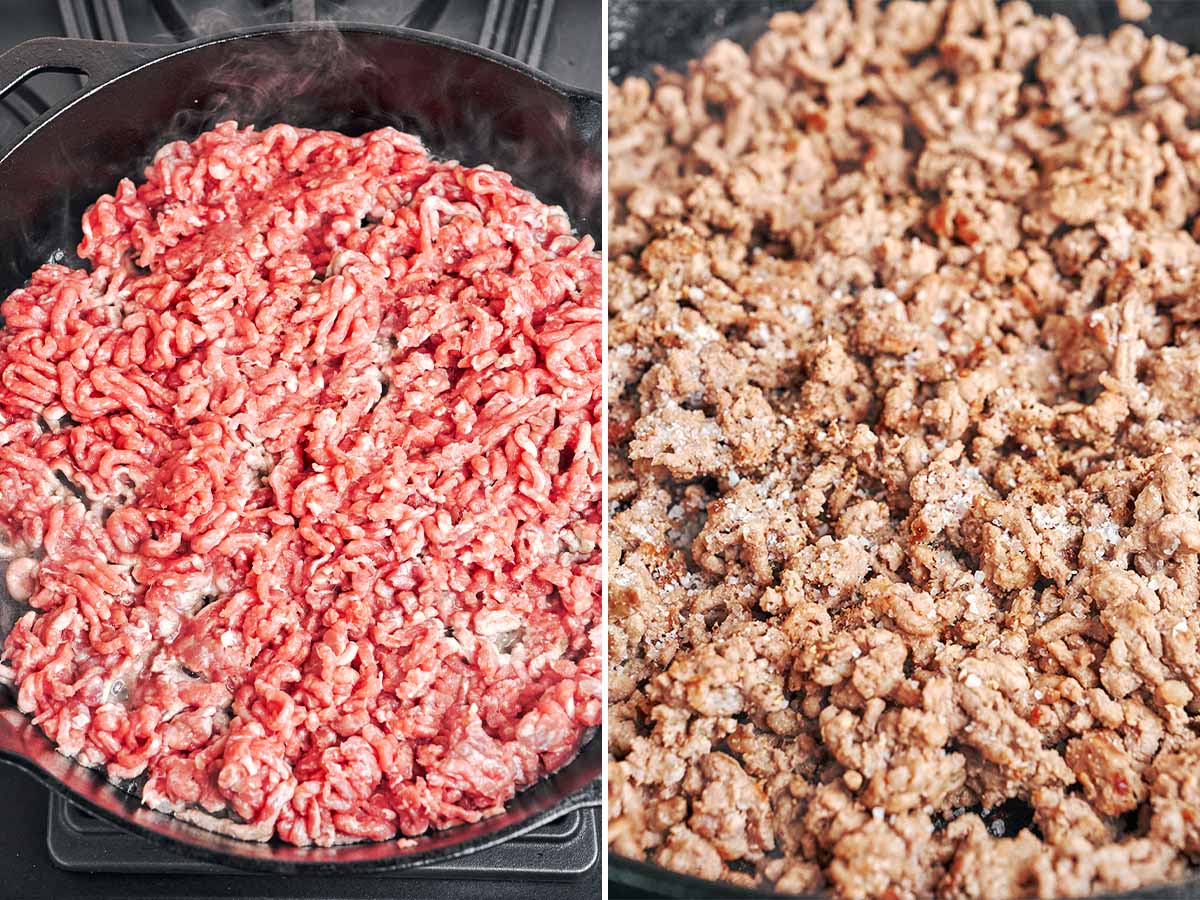
Cook the vegetables. Reduce the heat to medium. Add the butter, chopped onion, sliced carrots, and celery. Cook for 5–6 minutes, stirring occasionally, until the onion begins to soften. Stir in the minced garlic and cook for another 30 seconds, just until fragrant.
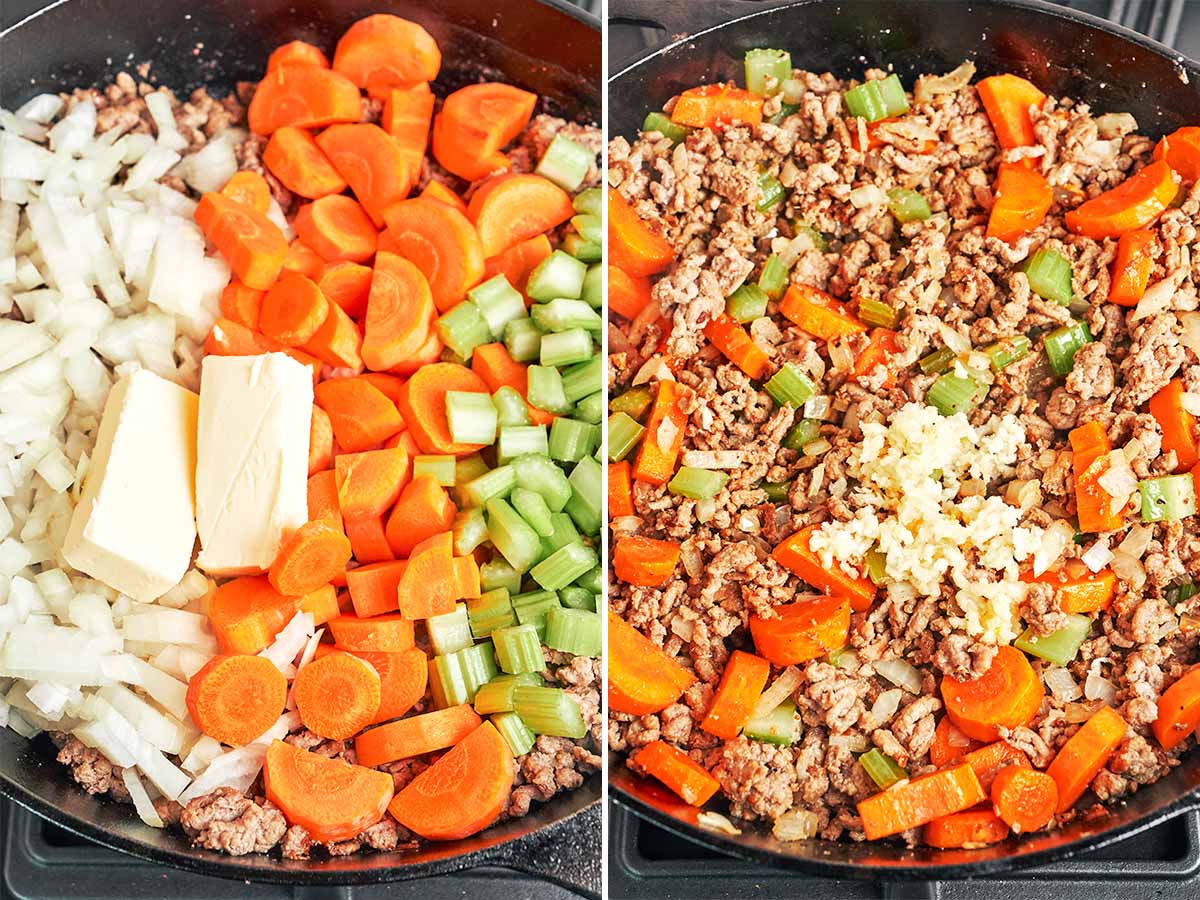
Add the flour. Sprinkle the flour evenly over the beef and vegetables. Stir well until everything is lightly coated, then cook for 1–2 minutes to remove the raw flour taste.
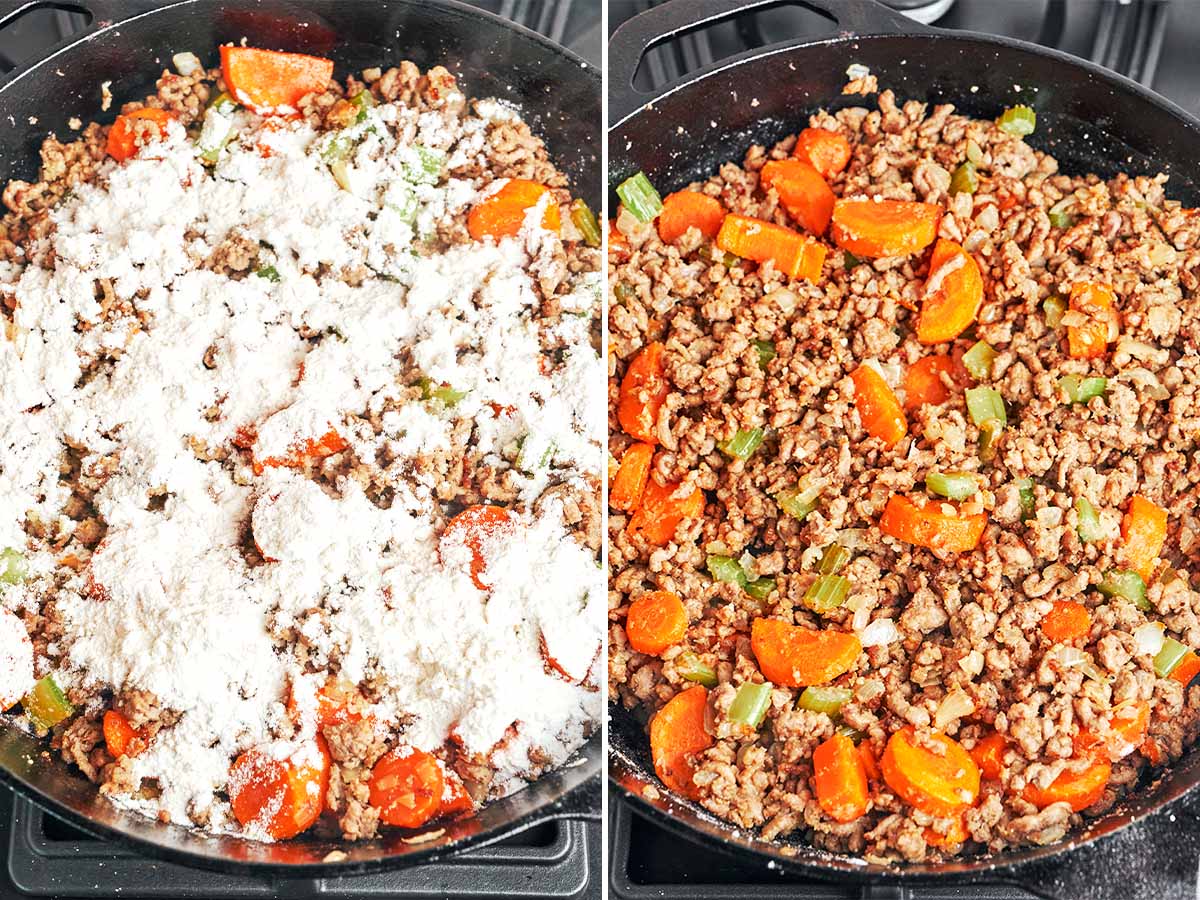
Make the gravy. Gradually pour in the beef broth, stirring well to prevent lumps and scraping up any browned bits from the bottom of the skillet. Stir in the Dijon mustard and Worcestershire sauce until combined.
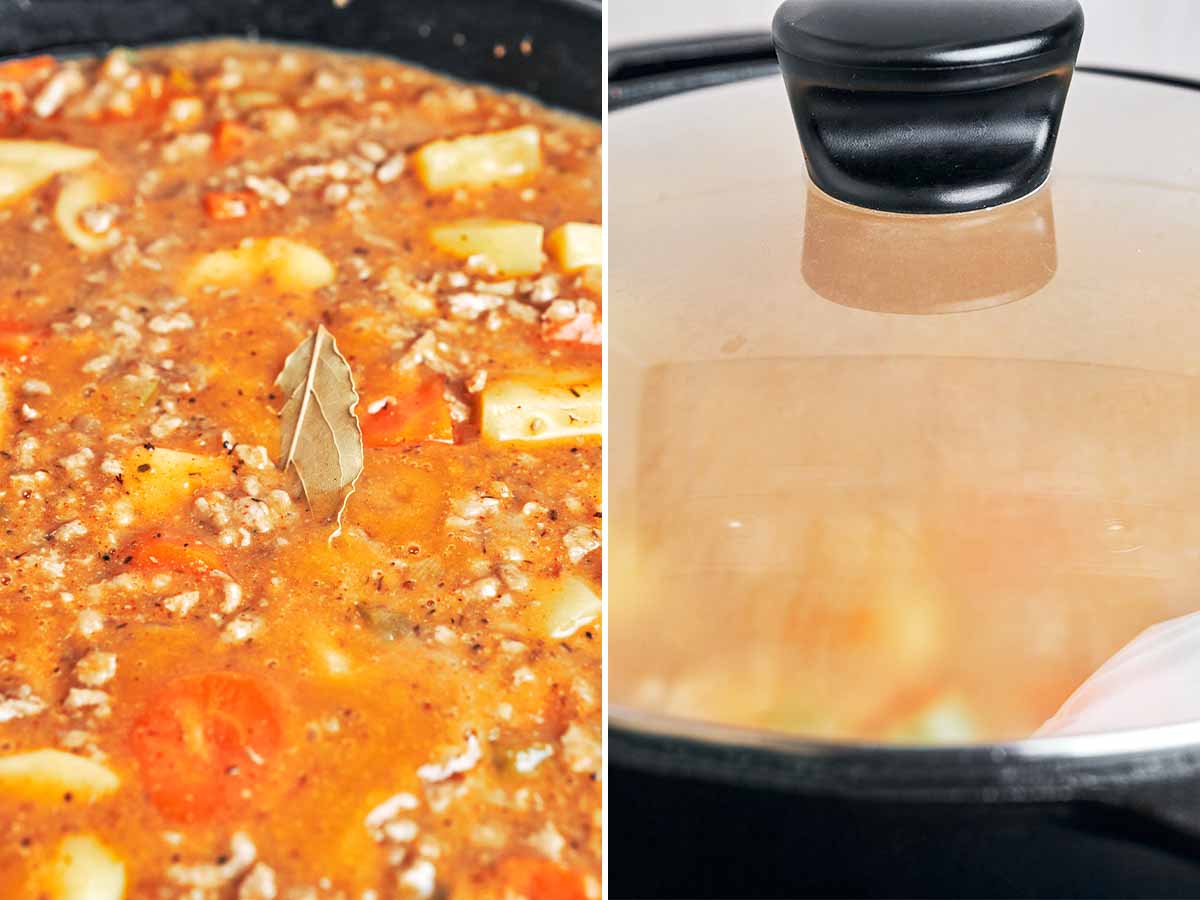
Add the potatoes and seasonings. Add the diced potatoes, sweet paprika, dried thyme, and bay leaf. Stir gently to combine and bring the stew to a gentle simmer.
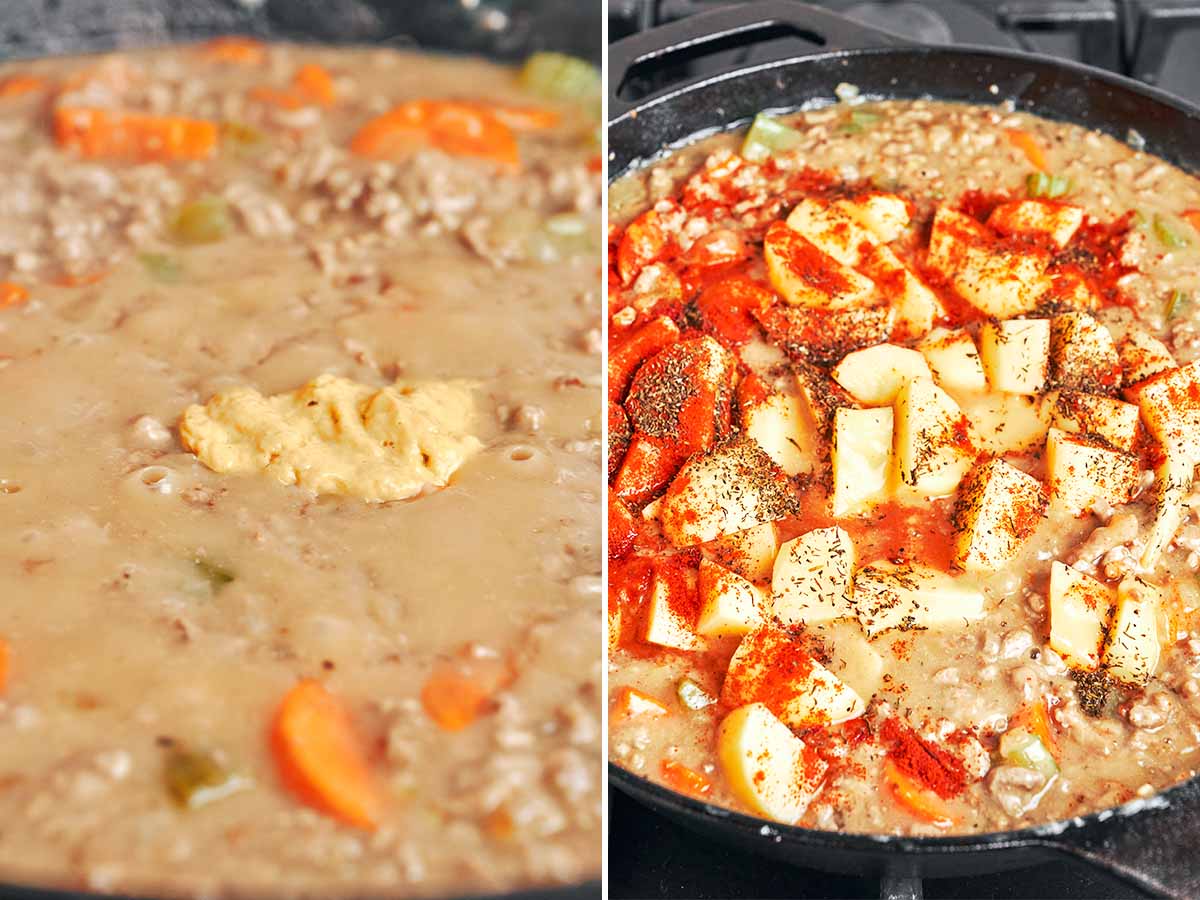
Simmer until tender. Reduce the heat to low, cover, and simmer for 35–40 minutes, or until the potatoes are fork-tender. Stir gently every 7 minutes, scraping the bottom of the skillet to prevent the thick gravy from sticking. Cooking time may vary depending on the potatoes.
Finish and serve. Remove the bay leaf and taste the gravy, adding a little more salt and black pepper if needed. If the gravy is too thick, stir in a splash of warm beef broth. Let the stew rest for 5 minutes, then sprinkle with freshly chopped parsley and serve warm.

Pro Tips for the Best Ground Beef Stew
When I made this stew, the potatoes needed a little longer to soften, and the gravy turned out thicker than I wanted. A few simple adjustments can make a real difference in getting that rich, spoonable consistency.
- Take your time browning the beef. Give the meat a chance to develop a nicely browned crust before breaking it apart. If your skillet feels crowded, brown it in batches. Those flavorful bits left in the pan will make the gravy taste even better.
- Be careful with the flour. A little goes a long way when making homemade gravy. Measure it carefully, cook it briefly with the beef and vegetables, and gradually stir in the broth to keep the sauce smooth and free of lumps.
- Don’t let the gravy get too thick too soon. The sauce will thicken as the stew simmers, so keep a little extra warm beef broth nearby. Add a splash whenever needed, especially if the potatoes are still firm.
- Let the potatoes tell you when it’s ready. Depending on the variety and size of the pieces, they may take 35–40 minutes to become tender. Keep the heat low and check with a fork rather than rushing the cooking time.
- Give the stew a final taste. Dijon mustard and Worcestershire sauce bring plenty of savory depth, but the seasoning still needs a final check. Once the potatoes are tender, adjust the salt and pepper and let the stew rest for a few minutes before serving.
Variations and Substitutions
One of the nice things about a homemade stew is how easily you can adapt it to what you have in the kitchen. These simple swaps let you change a few things while keeping that hearty, savory character.
- Try different potatoes. Yukon Gold and red potatoes are both good options if you want pieces that hold their shape. Russets will work too, but they tend to soften more and may naturally thicken the gravy.
- Use leaner ground beef. If you prefer less fat, 90/10 ground beef is a good alternative. It still gives the stew plenty of beefy flavor without leaving as much grease in the pan.
- Add a few extra vegetables. Sliced mushrooms would bring another layer of savory flavor, while frozen green beans are a simple way to add more vegetables. Add the mushrooms with the onions or stir the green beans in during the last few minutes of cooking.
- Swap broth for stock. Beef stock works just as well as beef broth and can give the gravy a slightly richer body. If you’re using a salted version, reduce the added salt and adjust the seasoning at the end.
What to Serve with Ground Beef Stew
With plenty of beef, potatoes, and vegetables in every bowl, this stew is satisfying enough on its own. A thick slice of warm homemade bread is especially good for soaking up the rich gravy. For something lighter, try a crisp green salad with a tangy vinaigrette, or add a few warm, buttery biscuits for a comforting family dinner.
Storage and Reheating
The gravy becomes noticeably thicker once this stew has been refrigerated, but a splash of broth brings it back to a lovely, spoonable consistency. Here’s how to keep leftovers tasting their best.
- Refrigerate: Transfer leftovers to shallow, airtight containers and refrigerate within 2 hours of cooking. Store in the refrigerator for up to 3–4 days.
- Reheat: Warm the stew in a saucepan over medium-low heat, stirring gently and adding a splash of beef broth if the gravy is too thick. Heat until bubbling and thoroughly heated to 165°F (74°C).
- Freeze: Store cooled portions in freezer-safe containers for up to 2–3 months for the best quality. Thaw overnight in the refrigerator before reheating. Keep in mind that potatoes may become softer after freezing, and the gravy may need a little extra broth to regain its smooth texture.
Frequently Asked Questions
Is ground beef stew the same as hamburger soup?
They’re similar, but the texture is what sets them apart. Hamburger soup has a lighter, broth-based consistency, while ground beef stew is thicker and heartier, with a rich gravy that coats the meat and vegetables.
Can you make ground beef stew without tomatoes?
Absolutely. This recipe gets its rich flavor from browned beef, savory broth, Dijon mustard, and Worcestershire sauce. A little flour gives the gravy its thickness, so there’s no need for tomato paste or canned tomatoes.
What kind of potatoes work best for ground beef stew?
Yukon Gold or red potatoes are excellent choices because they become tender while holding their shape. Russet potatoes work too, although their softer, starchier texture can make the gravy a little thicker as they cook.
Can I use lean ground beef?
Yes. Lean ground beef works well and can help keep the gravy from becoming greasy. If you’re using beef with a higher fat content, simply drain the excess grease after browning, leaving a little behind for flavor.
Ground Beef Stew

Ingredients
For the Beef and Vegetables
- 2 lb (900 g) ground beef
- 2 tbsp olive oil
- 2 tbsp unsalted butter
- 1 large yellow onion diced
- 3 medium carrots sliced into thick rounds or half-moons
- 2 celery stalks chopped
- 4 garlic cloves minced
- 1 lb (450 g) potatoes, peeled and cut into bite-sized cubes
For the Gravy and Seasonings
- 3 tbsp all-purpose flour
- 3 cups unsalted beef broth
- 1 tbsp Worcestershire sauce
- 1 tsp Dijon mustard
- 1/2 tsp sweet paprika
- 1/2 tsp dried thyme
- 1 bay leaf
- 1 tsp fine salt plus more to taste
- Black pepper to taste
- 1-2 tbsp fresh parsley chopped, for garnish
Instructions
- Brown the ground beef. Heat 2 tablespoons of olive oil in a large, deep skillet or Dutch oven over medium-high heat. Add the ground beef and cook for 8–10 minutes, breaking it into small crumbles as it browns. Season with 1 teaspoon of salt and black pepper. Drain any excess grease if needed.
- Cook the vegetables. Reduce the heat to medium. Add the butter, chopped onion, sliced carrots, and celery. Cook for 5–6 minutes, stirring occasionally, until the onion begins to soften. Stir in the minced garlic and cook for another 30 seconds, just until fragrant.
- Add the flour. Sprinkle the flour evenly over the beef and vegetables. Stir well until everything is lightly coated, then cook for 1–2 minutes to remove the raw flour taste.
- Make the gravy. Gradually pour in the beef broth, stirring well to prevent lumps and scraping up any browned bits from the bottom of the skillet. Stir in the Dijon mustard and Worcestershire sauce until combined.
- Add the potatoes and seasonings. Add the diced potatoes, sweet paprika, dried thyme, and bay leaf. Stir gently to combine and bring the stew to a gentle simmer.
- Simmer until tender. Reduce the heat to low, cover, and simmer for 35–40 minutes, or until the potatoes are fork-tender. Stir gently every 7 minutes, scraping the bottom of the skillet to prevent the thick gravy from sticking. Cooking time may vary depending on the potatoes.
- Finish and serve. Remove the bay leaf and taste the gravy, adding a little more salt and black pepper if needed. If the gravy is too thick, stir in a splash of warm beef broth. Let the stew rest for 5 minutes, then sprinkle with freshly chopped parsley and serve warm.
Notes
- Flour: Use 3 tablespoons for a thick but spoonable gravy. The original batch was made with 4 tablespoons, which produced a thicker result.
- Potatoes: Cut into evenly sized pieces for consistent cooking. Depending on the variety, they may need 35–40 minutes to become fork-tender.
- Gravy consistency: Stir the stew regularly while simmering. If the gravy thickens too much before the potatoes are tender, add a splash of warm beef broth.
- Seasoning: The recipe starts with 1 teaspoon of salt added to the beef. Taste the finished stew before adding more, especially if using salted broth.
- Storage: Refrigerate leftovers in an airtight container for up to 3–4 days. Reheat gently with a splash of beef broth if needed, until thoroughly heated to 165°F (74°C).