
Pork Paprikash
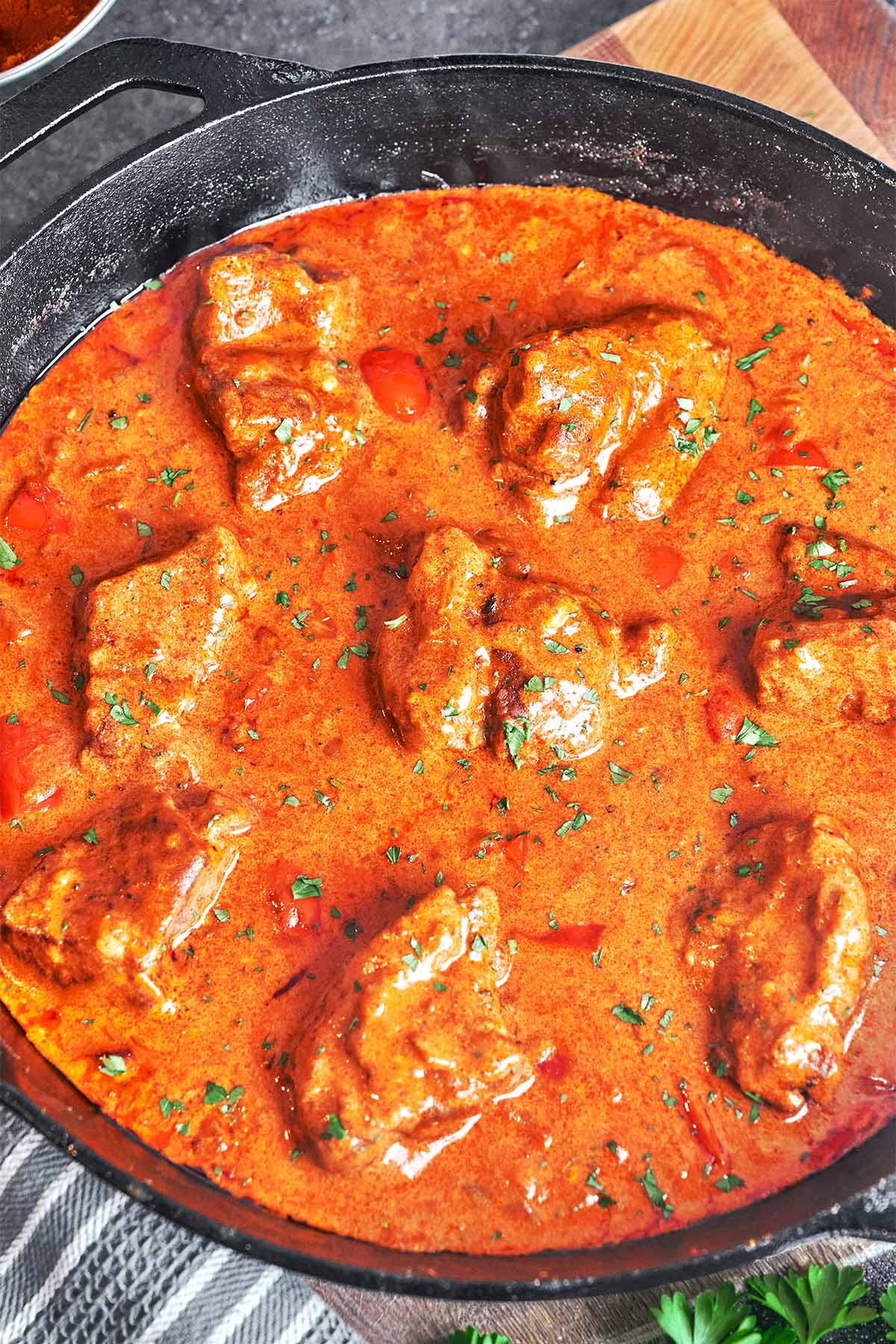
This pork paprikash is the kind of cozy dinner that makes an ordinary evening feel special. Tender pieces of pork are tucked into a rich, silky paprika sauce with just the right touch of tang from sour cream.
For more cozy pork dinner ideas, explore my pork recipes collection, from creamy skillet dinners to slow-simmered stews.
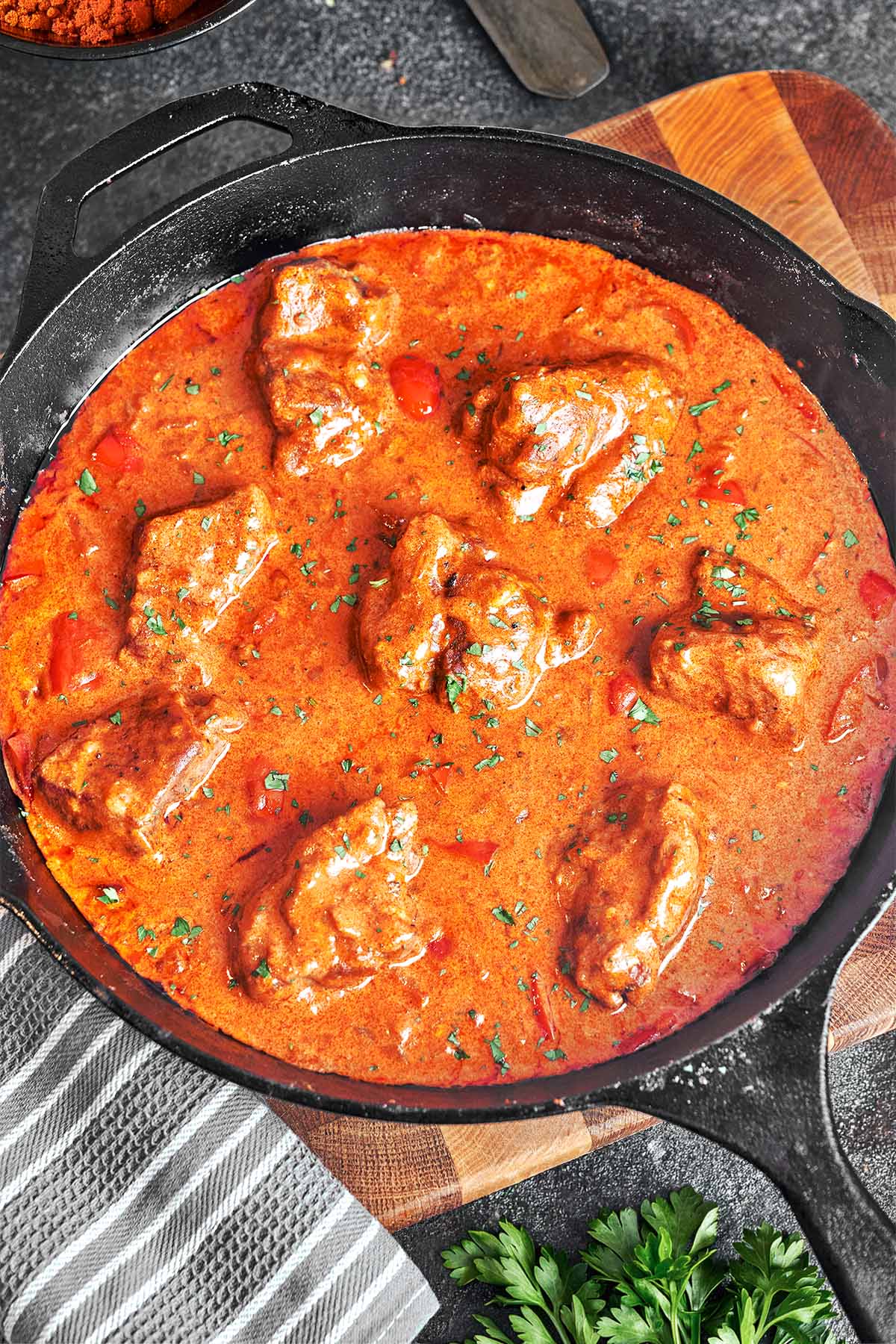
I love how the sweet paprika gives the sauce its warm, savory depth without making it spicy. A little time on the stove turns this into the kind of hearty, comforting dinner that feels wonderfully homemade.
If you love cozy pork dinners like this one, try my pork stew with mushrooms for tender pork in a rich, savory gravy. My pork chops with sour cream sauce are a quicker skillet favorite with that same lovely tangy finish. And for a special weekend dinner, pork bourguignon brings deep, comforting flavor with a beautiful red wine sauce.
Why You’ll Love This Pork Paprikash
There’s a reason I love slow-simmered pork dinners: they turn simple ingredients into something that tastes like you really took your time. This Hungarian pork paprikash has that same Sunday-dinner feeling, hearty and generous without being fussy. It’s the sort of meal that makes the kitchen smell wonderful and gives everyone a reason to linger at the table.
- Rich, balanced flavor. Warm paprika and a gentle tang create a savory sauce that’s full of character without being spicy.
- Beautifully tender pork. Every bite is juicy and satisfying, with a velvety sauce that coats the meat.
- Simple, comforting goodness. Familiar ingredients come together in a meal that feels generous, cozy, and made with care.
Quick Look at the Ingredients
This pork paprikash comes together with a handful of everyday ingredients, but a few thoughtful choices make all the difference. Here’s what gives the dish its rich flavor and creamy texture.
- Pork shoulder: Boneless pork shoulder is ideal for this recipe. Its marbling helps the meat become wonderfully tender as it slowly simmers in the sauce.
- Sweet Hungarian paprika: The heart of the dish, bringing a warm, slightly sweet flavor and that beautiful deep red color. Choose sweet paprika rather than smoked for a more traditional taste.
- Onions, red bell pepper, and tomato: These vegetables build a savory, slightly sweet base and add natural richness to the sauce without overpowering the paprika.
- Chicken stock: Adds depth to the sauce as the pork cooks. Low-sodium stock is a good choice since you can adjust the seasoning at the end.
- Sour cream and flour: Sour cream adds a delicate tang that balances the rich paprika flavor, while flour gently thickens the sauce into a smooth, velvety gravy. Full-fat sour cream works best.
How to Make Pork Paprikash
This stovetop pork paprikash starts with golden-seared pork shoulder and finishes with a smooth, tangy sour cream sauce. Everything comes together in one deep skillet, with a gentle simmer doing most of the work.
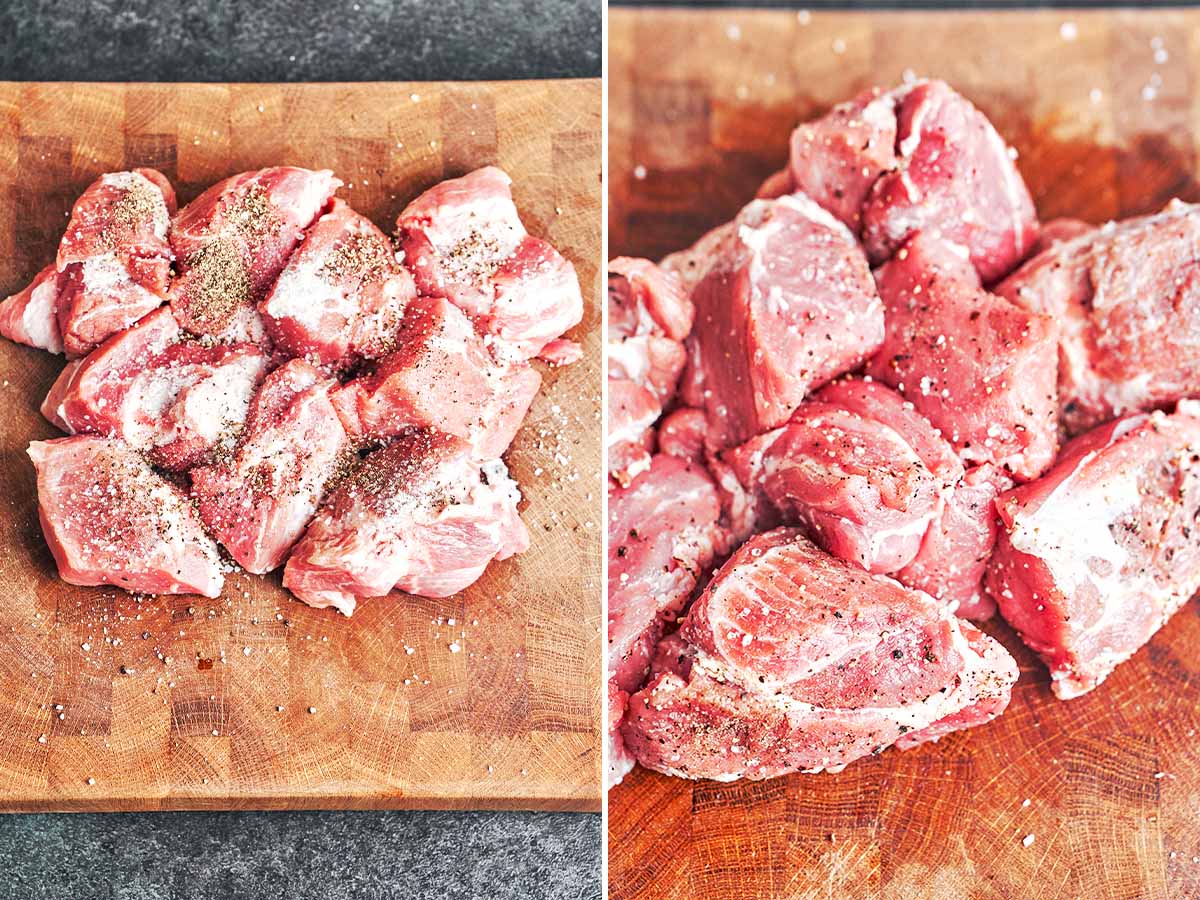
Prepare the pork. Cut the pork shoulder into 1½-inch pieces and pat dry with paper towels. Season with salt and the black pepper, tossing to coat evenly.
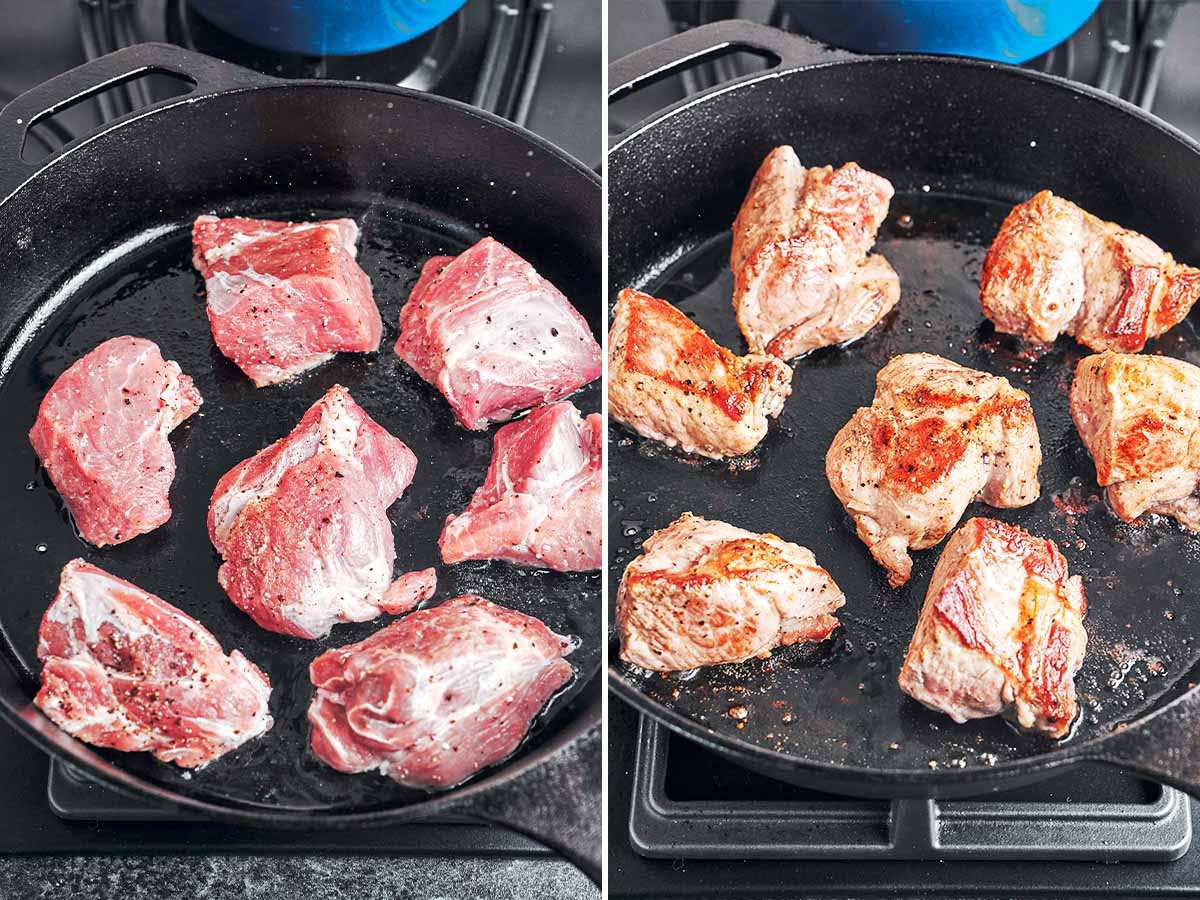
Brown the pork. Heat the olive oil in a large, deep skillet over medium-high heat. Sear the pork in batches for about 6–8 minutes per batch, turning until nicely browned on several sides. Transfer to a plate and set aside.
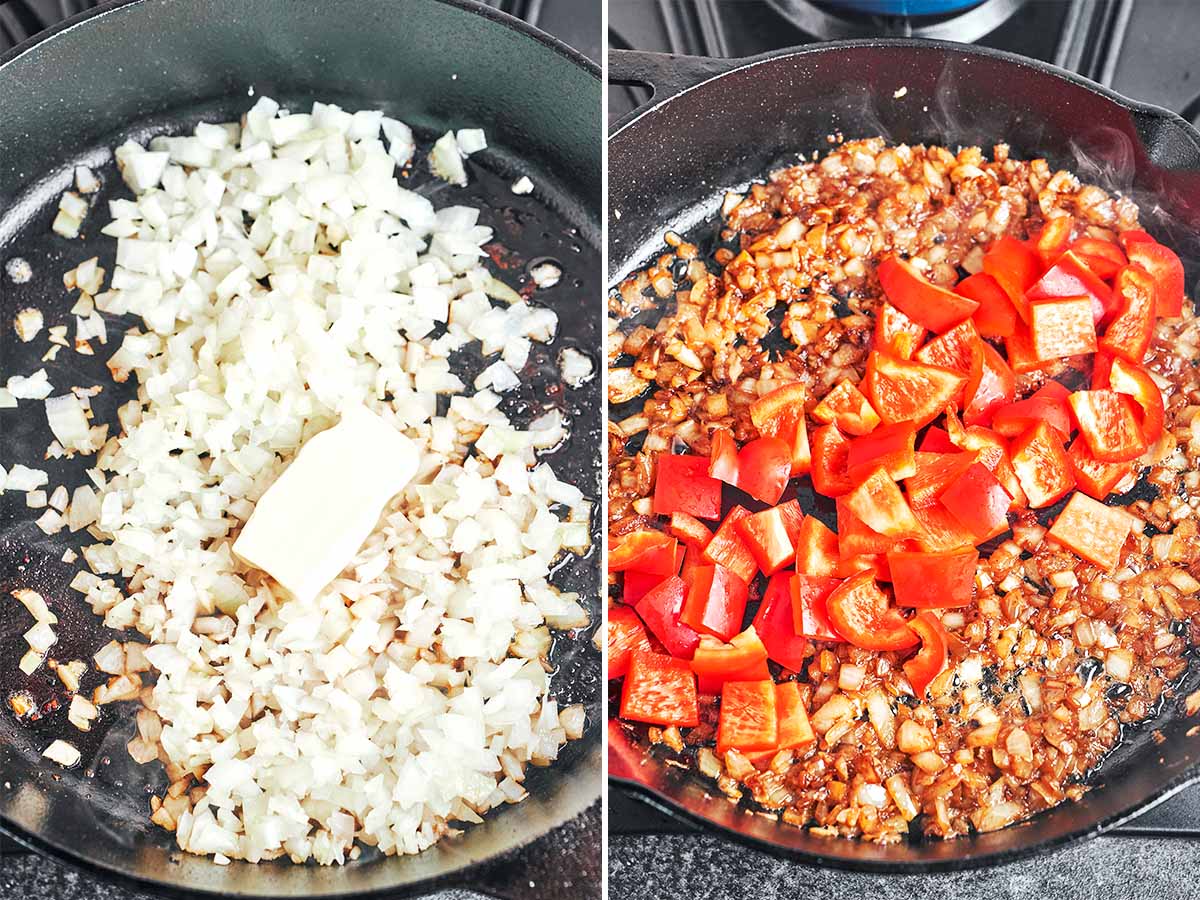
Cook the vegetables. Reduce the heat to medium and add the butter and chopped onions to the same skillet. Cook for 7–8 minutes, stirring occasionally, until softened and lightly golden. Add the red bell pepper and cook for another 4–5 minutes. Stir in the chopped tomato and garlic, cooking for about 2 minutes more.
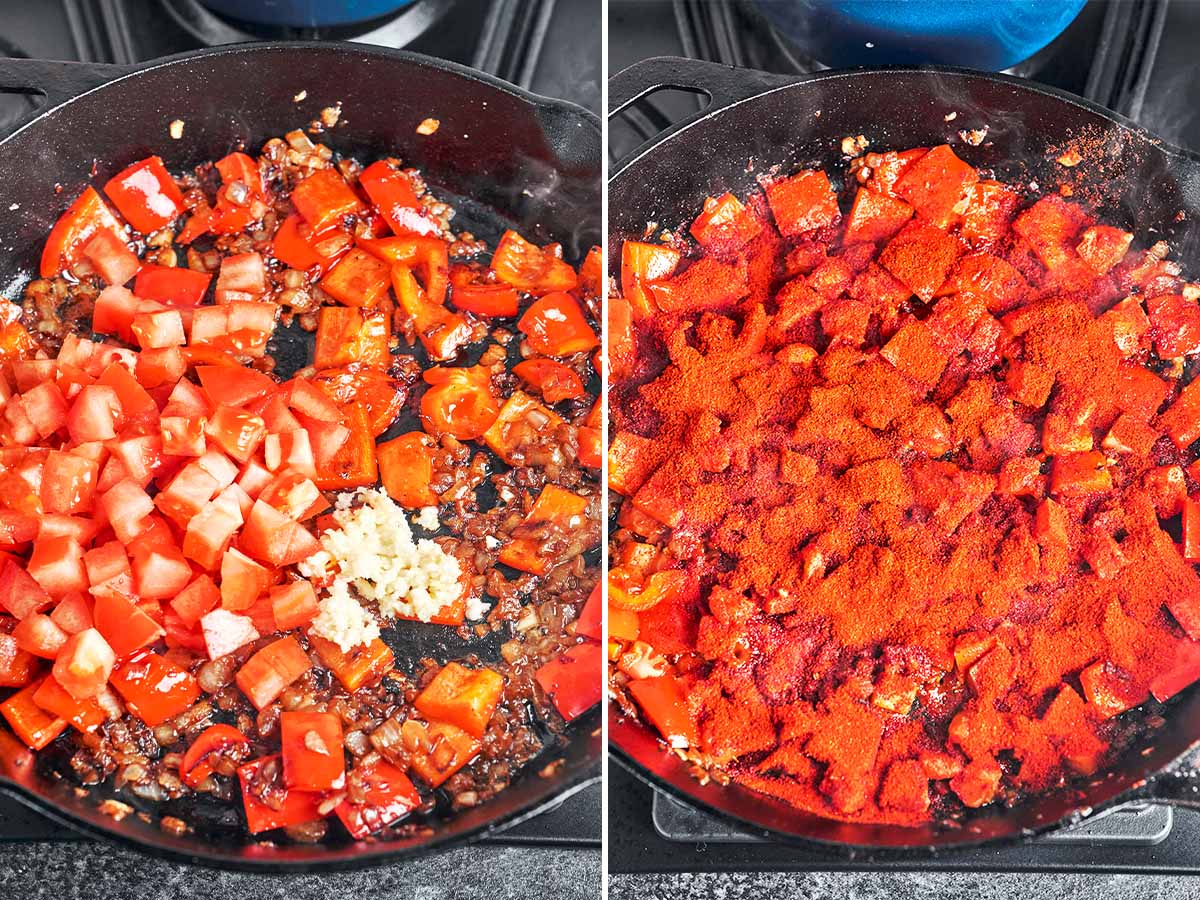
Build the paprika sauce. Remove the skillet from the heat and sprinkle the sweet Hungarian paprika over the vegetables. Stir briefly to coat everything, then pour in the chicken stock, scraping up the flavorful browned bits from the bottom of the skillet.
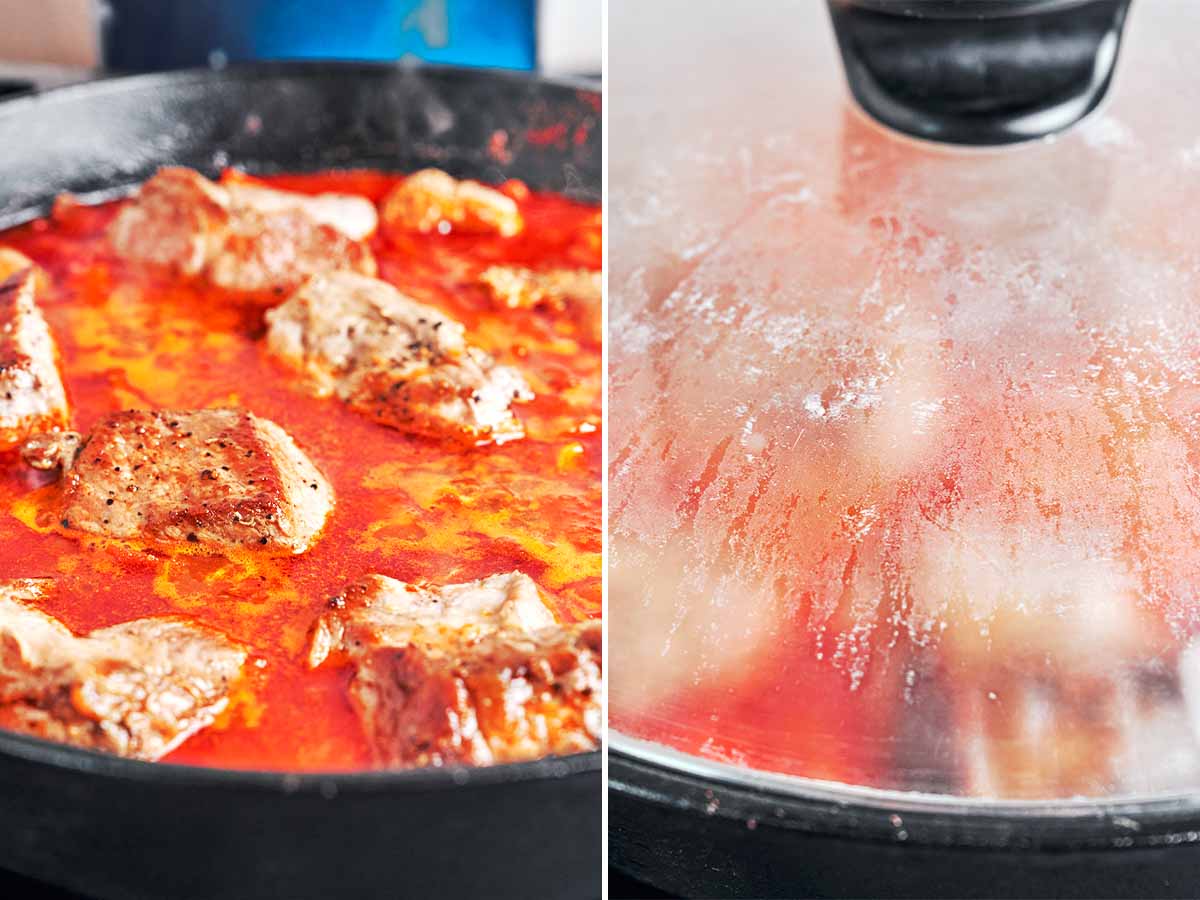
Simmer the pork. Return the pork and any accumulated juices to the skillet. Bring the sauce to a gentle simmer, cover, and cook over low heat for about 60 minutes, or until the pork is fork-tender. Stir occasionally and add a splash of stock if the sauce reduces too much.
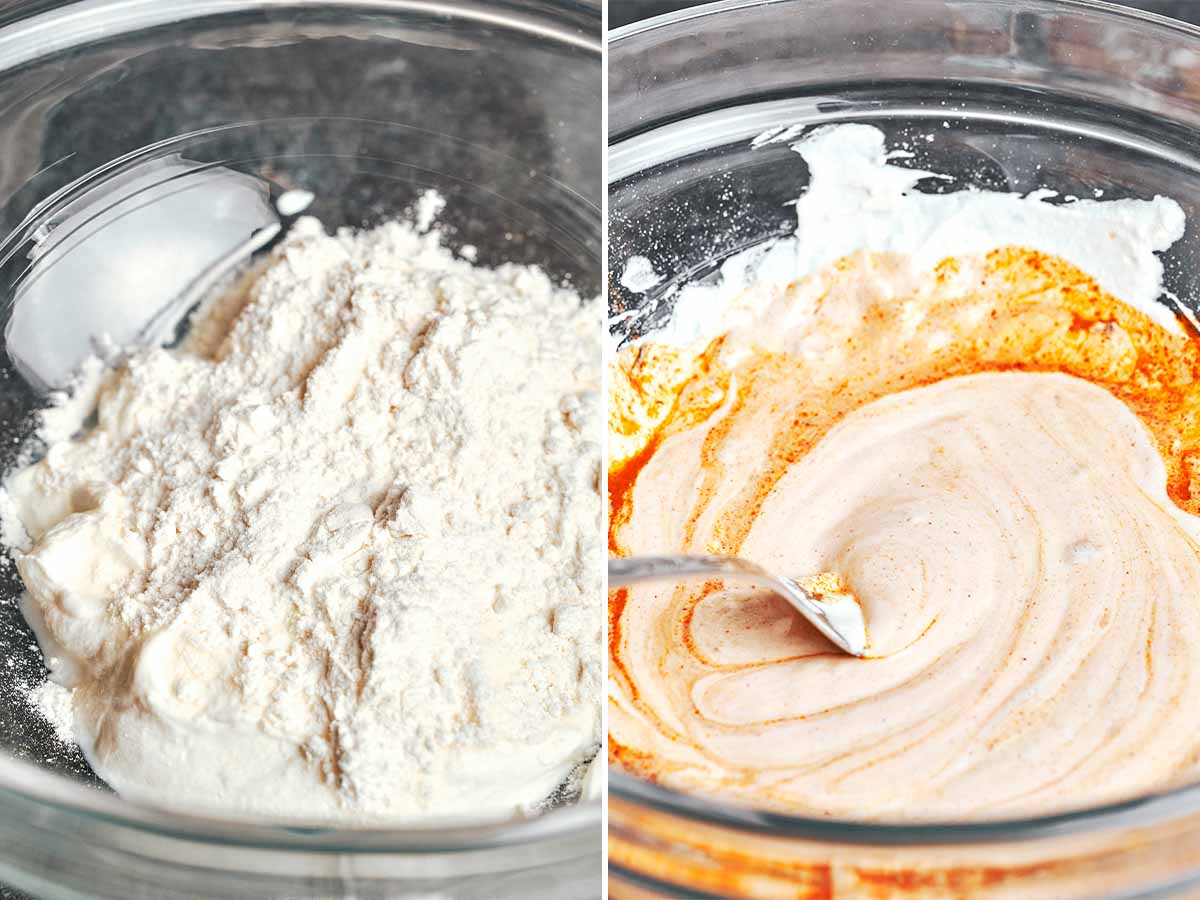
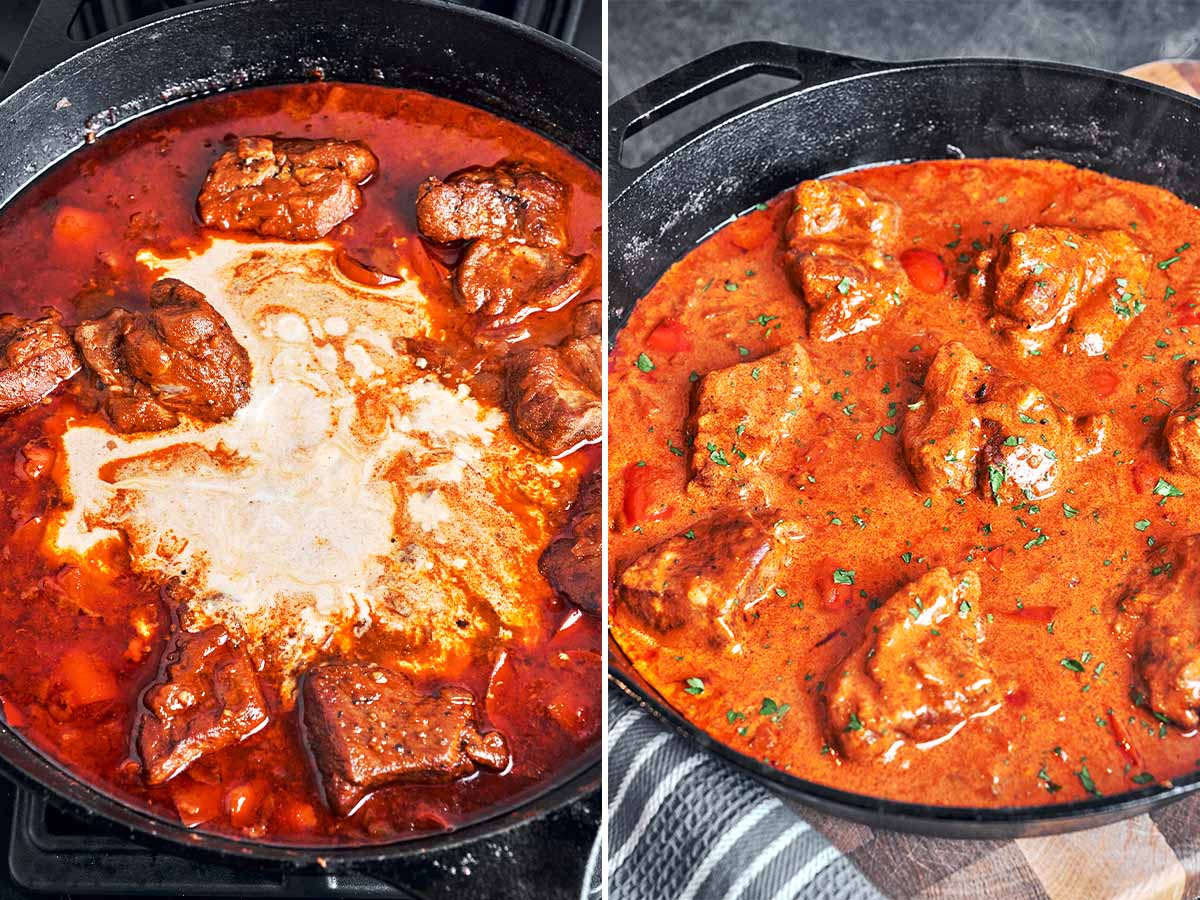
Prepare the sour cream mixture. In a small bowl, whisk together the sour cream and flour until smooth. Gradually stir in a few tablespoons of the hot paprika sauce, mixing well to warm the sour cream before adding it to the skillet.
Finish the sauce. Reduce the heat to very low and gently stir the sour cream mixture into the skillet. Cook for another 10 minutes at a very gentle simmer, stirring occasionally, until the sauce is smooth and slightly thickened. Avoid letting it boil vigorously. Taste and add up to ¼ teaspoon of salt if needed, depending on your chicken stock. Sprinkle with fresh parsley and serve warm.
Pro Tips for the Best Pork Paprikash
- Don’t crowd the skillet. Give the pork enough room to develop a beautiful golden crust. If the pieces are packed too tightly, they’ll release moisture and steam instead of browning.
- Use fresh, good-quality paprika. Since paprika is the star of this dish, its freshness really matters. Older paprika can lose much of its flavor and vibrant color, leaving the sauce less rich and aromatic.
- Let the pork tell you when it’s ready. Pork shoulder can take a little longer depending on the size of the pieces. If the meat isn’t fork-tender after 60 minutes, give it another 10–15 minutes before adding the sour cream.
- Watch the sauce consistency. If the paprika sauce looks too thin toward the end of cooking, let it simmer uncovered for a few minutes before adding the sour cream. If it becomes too thick, a small splash of chicken stock will loosen it nicely.
- Season to taste at the end. Chicken stock varies quite a bit in saltiness, so taste the finished sauce before adding more salt. A little extra may be all it needs to bring out the warm paprika flavor.
Variations and Substitutions
This pork paprikash is delicious just as it is, but there are a few simple ways to adapt it depending on what you have in your kitchen.
- Try a different pork cut. Boneless pork butt (Boston butt) works beautifully in place of pork shoulder. It has enough marbling to stay tender during slow cooking. Avoid lean pork loin for this longer-simmered version, as it can dry out.
- Use canned tomatoes. If fresh tomatoes aren’t available, substitute about ½ cup of canned diced tomatoes, drained. They’ll add a similar touch of acidity and richness to the paprika sauce.
- Add a little heat. For a slightly spicier pork paprikash, replace ¼–½ teaspoon of the sweet paprika with hot Hungarian paprika. Start small so the warm, savory flavor stays front and center.
- Swap the sour cream. Full-fat crème fraîche is a good alternative if you prefer a richer, slightly milder sauce. Keep in mind that sour cream gives traditional paprikash its lovely tangy finish.
What to Serve with Pork Paprikash
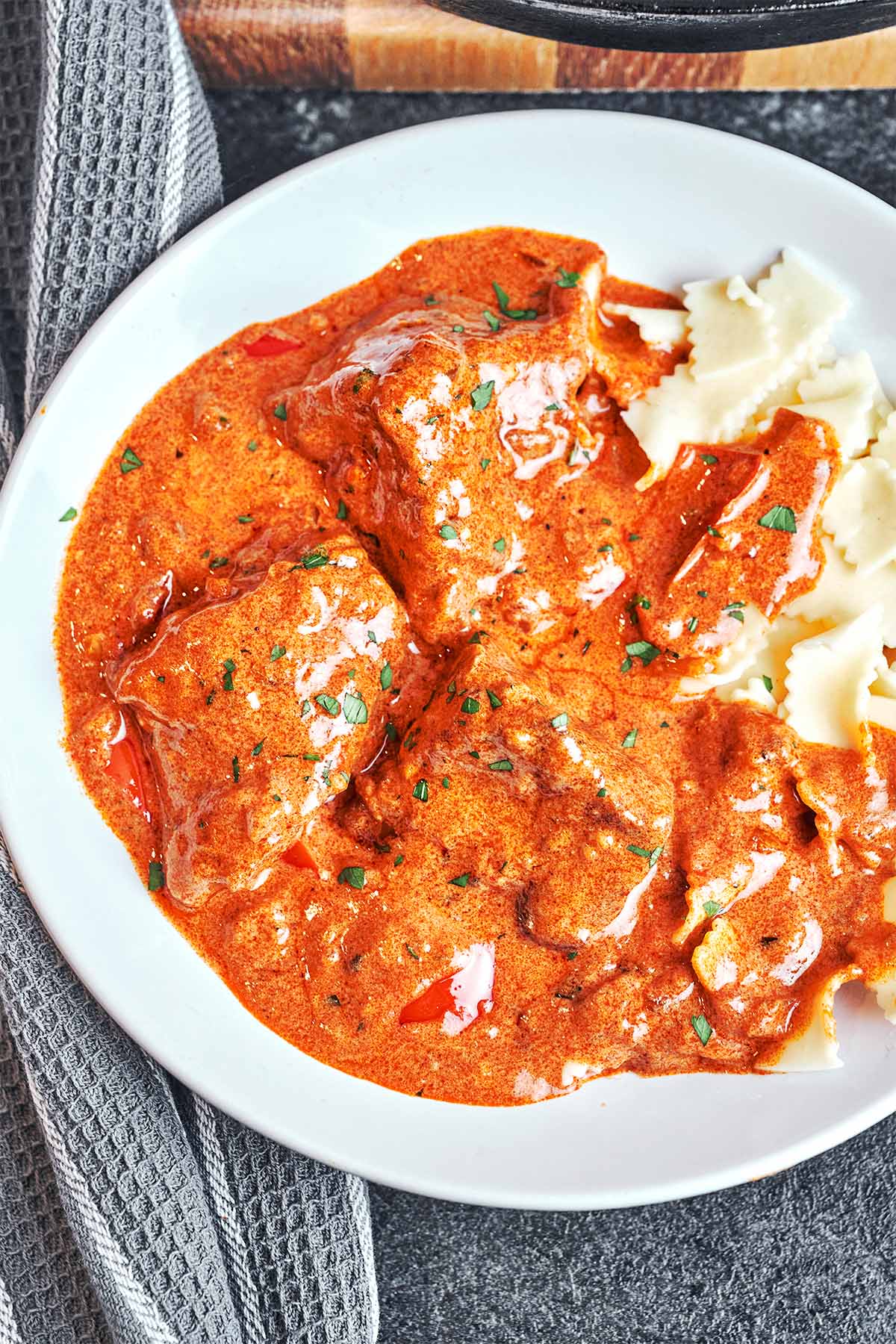
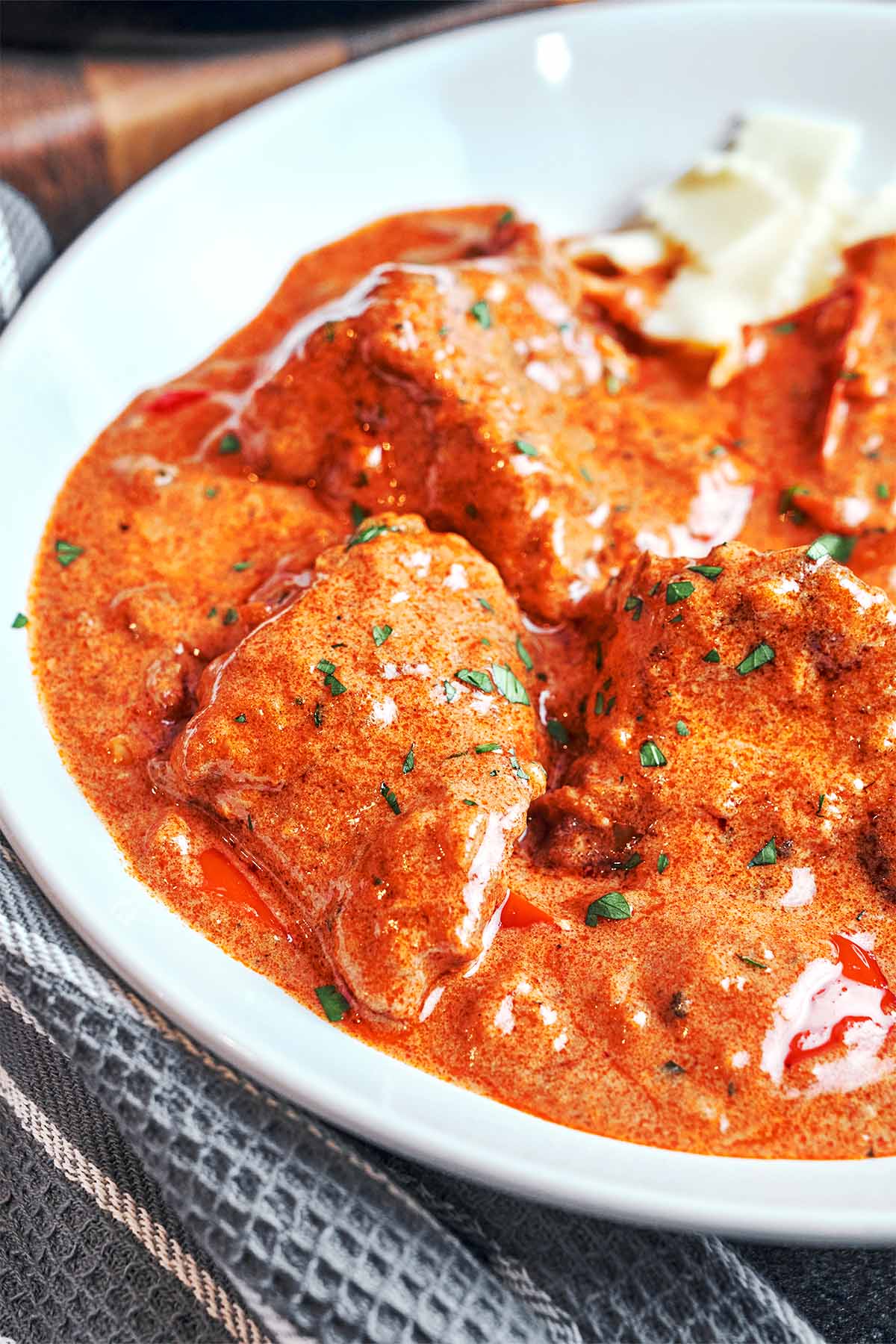
Hungarian nokedli (soft egg dumplings) are a classic choice, but buttered egg noodles or farfalle are just as lovely with the creamy paprika sauce. For a cozy dinner, spoon the pork over my creamy mashed potatoes or fluffy white rice. And if you love having something to catch every last spoonful, add a slice of homemade bread.
Storage and Reheating
Refrigerate: Store leftover pork paprikash with its sauce in an airtight container in the refrigerator for up to 3–4 days. Refrigerate within 2 hours of cooking, preferably in shallow containers so it cools quickly.
Reheat: Warm the pork and sauce in a covered skillet over medium-low heat, stirring occasionally, until heated through to 165°F (74°C). Add a splash of chicken stock if the sauce has thickened in the refrigerator. Avoid prolonged, vigorous boiling, which can cause the sour cream sauce to separate.
Freeze: Freezing the finished dish isn’t ideal because the sour cream sauce may become grainy after thawing. If you’re preparing it ahead for the freezer, it’s better to freeze the pork in its paprika sauce before adding the sour cream mixture.
Frequently Asked Questions
Is pork paprikash spicy?
Not when it’s made with sweet paprika. This version has a warm, savory flavor rather than noticeable heat, making it a lovely choice for a family dinner.
Can I use regular paprika instead of Hungarian paprika?
Yes, regular sweet paprika will work if Hungarian paprika isn’t available. Just make sure it’s mild and not smoked. The flavor may be a little less distinctive, but you’ll still get a delicious paprika sauce.
What’s the difference between pork paprikash and pork goulash?
Both are rooted in Hungarian cooking, but they’re not quite the same. Traditional Hungarian goulash is a soup, while paprikash is a saucy meat dish finished with sour cream. A closer relative is Hungarian pörkölt, a thick paprika stew usually made without sour cream.
Can I make pork paprikash without flour?
Yes, although the sauce will be thinner. You can simmer the paprika sauce uncovered for a few extra minutes before stirring in the sour cream to reduce some of the liquid naturally. It won’t have quite the same thick, velvety consistency.
Final Thoughts
I hope this pork paprikash brings a little extra comfort to your dinner table. If you give it a try, I’d love to hear how it turned out and what you served alongside it. Leave a comment below, and don’t forget to rate the recipe if you enjoyed it!
Pork Paprikash

Ingredients
For the Pork
- 2 lb (900 g) boneless pork shoulder, cut into 1½-inch pieces
- 2 tbsp olive oil
- 1 tsp fine salt
- ½ tsp freshly ground black pepper
For the Paprika Sauce
- 1 tbsp unsalted butter
- 2 medium yellow onions finely chopped
- 1 medium red bell pepper diced
- 1 medium ripe tomato finely chopped
- 3 garlic cloves minced
- 2½ tbsp sweet Hungarian paprika
- 2 cups chicken stock, preferably low-sodium
- ¾ cup (180 g) full-fat sour cream
- 1 tbsp all-purpose flour
- ¼ tsp fine salt or to taste (optional)
- Fresh parsley chopped, for garnish
Instructions
- Prepare the pork. Cut the pork shoulder into 1½-inch pieces and pat dry with paper towels. Season with 1 teaspoon of salt and the black pepper, tossing to coat evenly.
- Brown the pork. Heat the olive oil in a large, deep skillet or Dutch oven over medium-high heat. Sear the pork in batches for about 6–8 minutes per batch, turning until browned on several sides. Transfer to a plate and set aside.
- Cook the vegetables. Reduce the heat to medium. Add the butter and onions to the same skillet. Cook for 7–8 minutes, stirring occasionally, until softened and lightly golden. Add the red bell pepper and cook for another 4–5 minutes. Stir in the chopped tomato and garlic and cook for about 2 minutes more.
- Build the paprika sauce. Remove the skillet from the heat and stir in the sweet Hungarian paprika for about 15–20 seconds. Pour in the chicken stock, scraping up any browned bits from the bottom of the skillet.
- Simmer the pork. Return the pork and any accumulated juices to the skillet. Bring to a gentle simmer, cover, and cook over low heat for about 60 minutes, or until the pork is fork-tender. Stir occasionally, adding a little extra stock if the sauce reduces too much.
- Prepare the sour cream mixture. In a small bowl, whisk together the sour cream and flour until smooth. Gradually stir in 3–4 tablespoons of the hot paprika sauce, mixing well to temper the sour cream.
- Finish the paprikash. Reduce the heat to very low and gently stir the sour cream mixture into the skillet. Cook for another 10 minutes at a very gentle simmer, stirring occasionally, until the sauce is smooth and slightly thickened. Avoid vigorous boiling. Taste and add up to ¼ teaspoon of salt if needed, depending on the saltiness of your chicken stock. Garnish with fresh parsley and serve warm.
Notes
- Pork shoulder: Cooking time may vary depending on the size of the pieces. The pork should be fork-tender before adding the sour cream mixture.
- Paprika: Sweet Hungarian paprika gives the sauce its characteristic flavor and color. Avoid smoked paprika for a more traditional taste.
- Sour cream: Use full-fat sour cream and temper it with hot sauce before adding it to the skillet to help prevent curdling.
- Salt: The recipe uses 1 teaspoon to season the pork. Add up to another ¼ teaspoon at the end only if needed.
- Storage: Refrigerate leftovers in an airtight container for up to 3–4 days. Reheat gently until heated through to 165°F (74°C).