
Pork Bourguignon (Red Wine Pork Stew)
This Pork Bourguignon is a rich red wine pork stew with tender, juicy pork slowly simmered until soft. The sauce cooks down glossy and full-bodied, coating the meat with deep, savory flavor.
Looking for more cozy dinners made with pork? Browse my collection of pork recipes for more slow-simmered stews, skillet dinners, and comforting family meals.
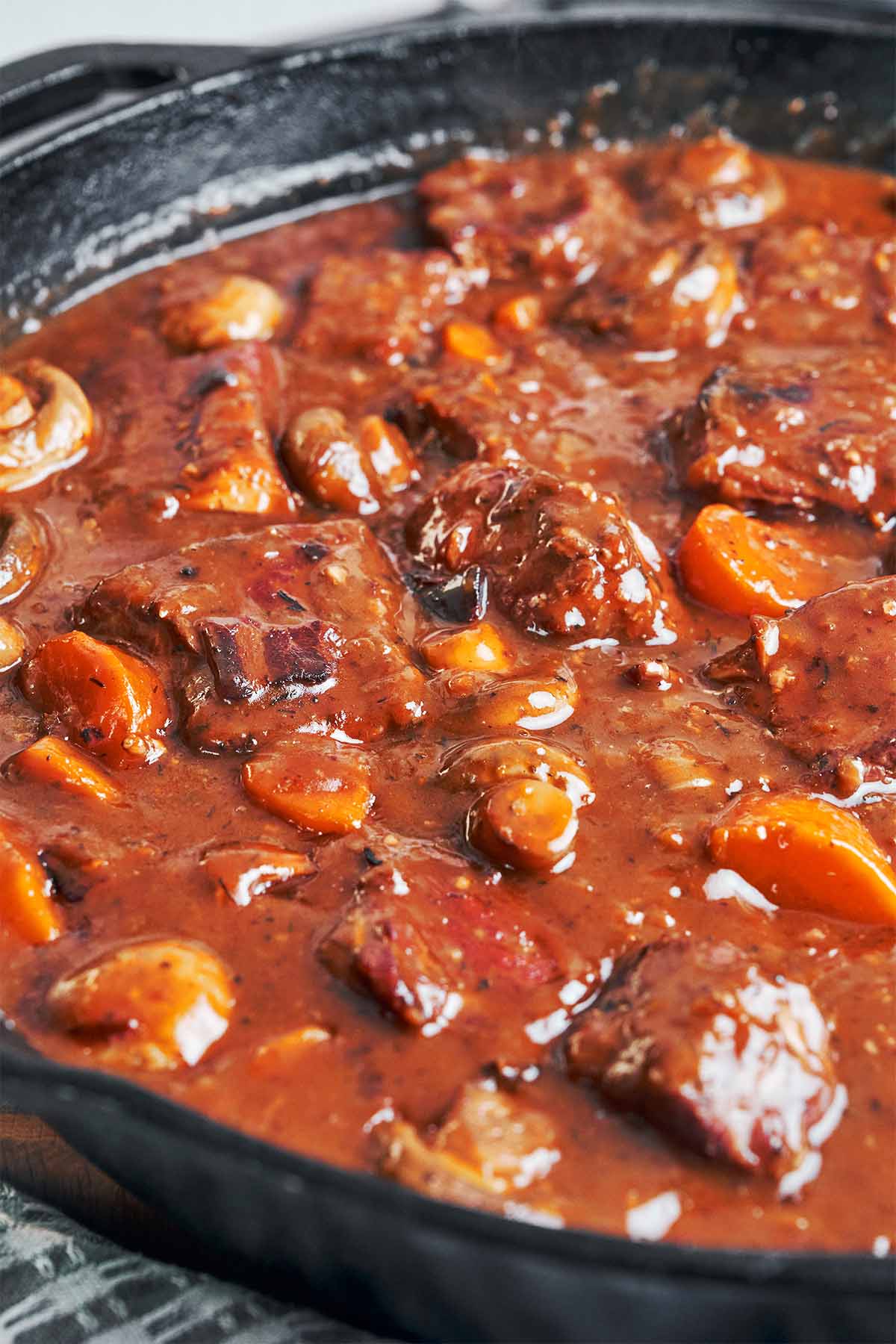
Browning the pork, bacon, and mushrooms builds layers of savory flavor, while the red wine gives the sauce the deep character of classic Beef Bourguignon. The pork remains tender and slightly milder, creating a rich, comforting stew that never feels too heavy.
For more cozy pork dinners, try my tender braised cabbage with pork, these rich creamy Dijon pork chops, or a hearty pork stew with potatoes and pickles. Each one has its own comforting flavor, from slow-braised cabbage to creamy skillet sauce and a deeply savory stew.
What Is Pork Bourguignon?
Pork Bourguignon is a pork version of classic Beef Bourguignon, made with pork shoulder browned and slowly braised in red wine and broth until fork-tender. The pork stays a little softer and milder than beef, while the sauce develops the deep, full-bodied flavor that makes bourguignon so comforting.
Why You’ll Love This Recipe
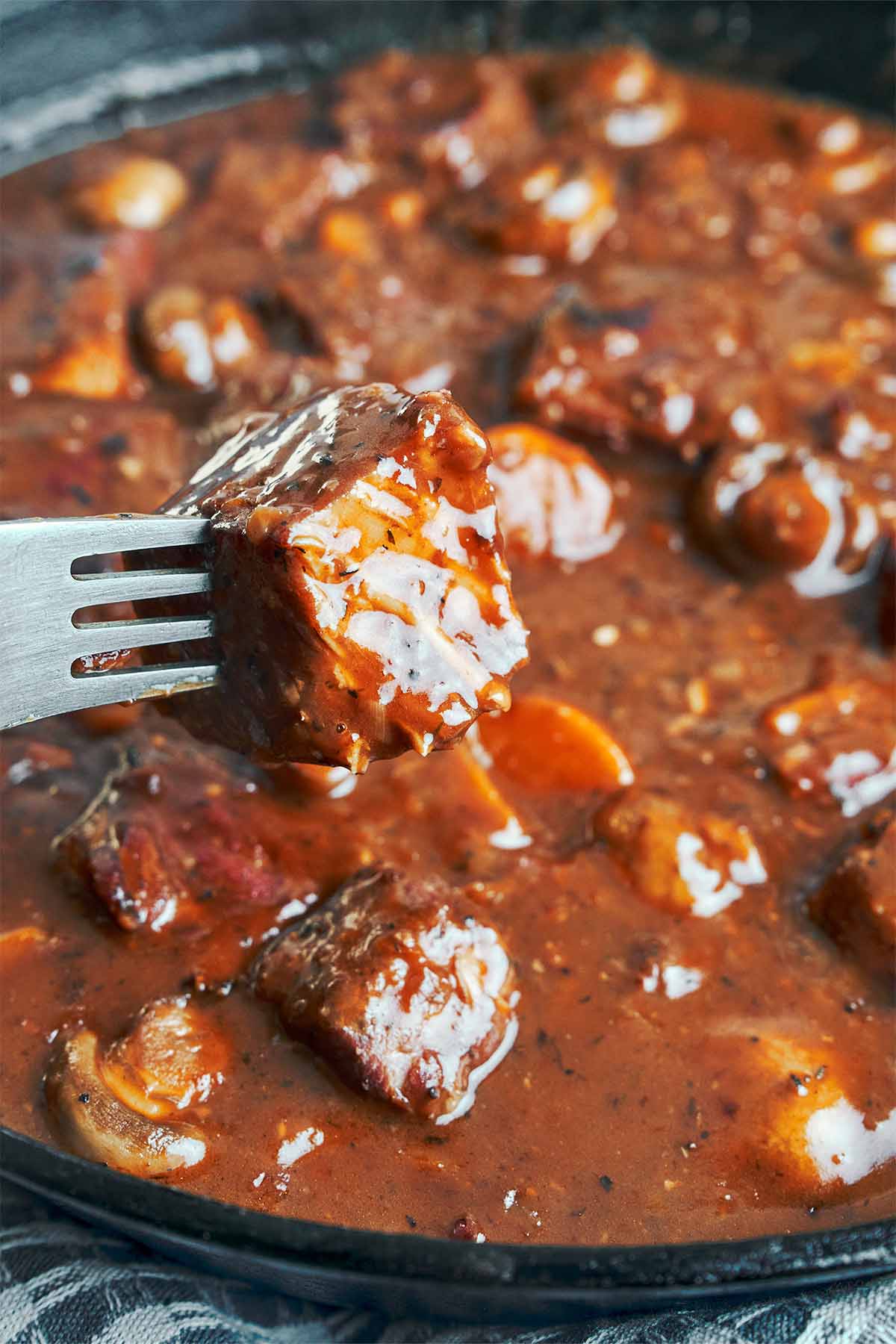
The pork cooks slowly until it is tender enough to pull apart with a fork, but the pieces still hold their shape in the sauce. Bacon, browned pork, and red wine give the stew that deep bourguignon flavor, while the pork keeps it a little softer and lighter than the classic beef version.
The mushrooms are cooked separately until golden and added near the end, so they keep their meaty texture instead of disappearing into the sauce. The result is a hearty red wine pork stew with deep flavor that gets even better as it rests.
Quick Look at the Ingredients
Nothing here is unusual or difficult to find. The flavor comes from giving the pork, bacon, and mushrooms time to brown, then letting everything slowly come together in the red wine sauce.
- Pork shoulder: This is the cut I would choose for a stew like this. It has enough richness to stay juicy and becomes wonderfully tender as it simmers, without the pieces falling apart too soon.
- Smoked bacon: Bacon gives the sauce a warm, smoky background from the very beginning. I brown it in a tablespoon of oil, then leave those flavorful drippings in the pan for the pork.
- Onion and carrot: These soften into the sauce and bring a little natural sweetness, which is especially nice against the deeper flavor of the wine.
- Garlic: A few cloves are enough to round out the sauce without making the garlic stand out too strongly.
- Tomato paste: Just a spoonful adds color and a deeper savory note. Once it cooks briefly in the pan, it blends right into the wine sauce.
- Flour: This gives the sauce a little body as it simmers, so it coats the pork rather than staying thin and watery.
- Dry red wine: The wine is what gives pork bourguignon its deep, unmistakable character. It does not need to be expensive, just dry and pleasant enough that you would enjoy a glass of it.
- Broth: Broth gently balances the wine and gives the pork plenty of flavorful liquid to simmer in.
- Mushrooms: I like to brown them separately so they stay golden and meaty instead of becoming too soft in the sauce. They go into the stew near the endt.
- Bay leaves and thyme: These add a quiet earthy flavor in the background. They support the wine and pork without making the stew taste overly herby.
- Salt and black pepper: Season the pork before browning, then taste the finished sauce before adding more. The bacon and broth already bring some saltiness of their own.
How to Make Pork Bourguignon
Most of the flavor is built right in the skillet before the stew begins to simmer. Once the pork is back in the sauce, the rest is mostly a matter of giving it time to become tender.
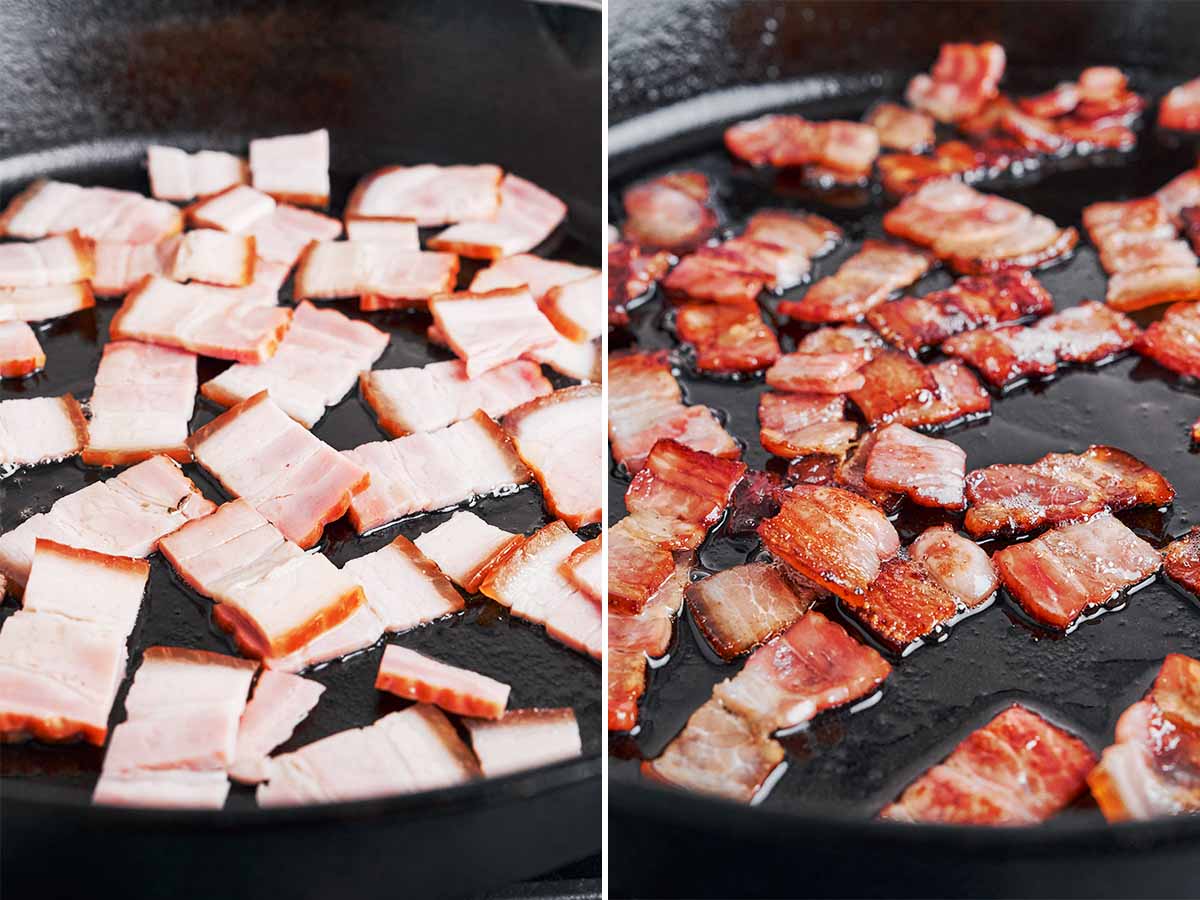
Brown the bacon: Heat 1 tablespoon of oil in a large deep skillet over medium heat. Add the bacon and cook until the pieces are nicely browned and have released some of their fat. Transfer the bacon to a plate, leaving the drippings in the skillet.
Season the pork: Place the pork in a bowl and season it evenly with salt and black pepper.
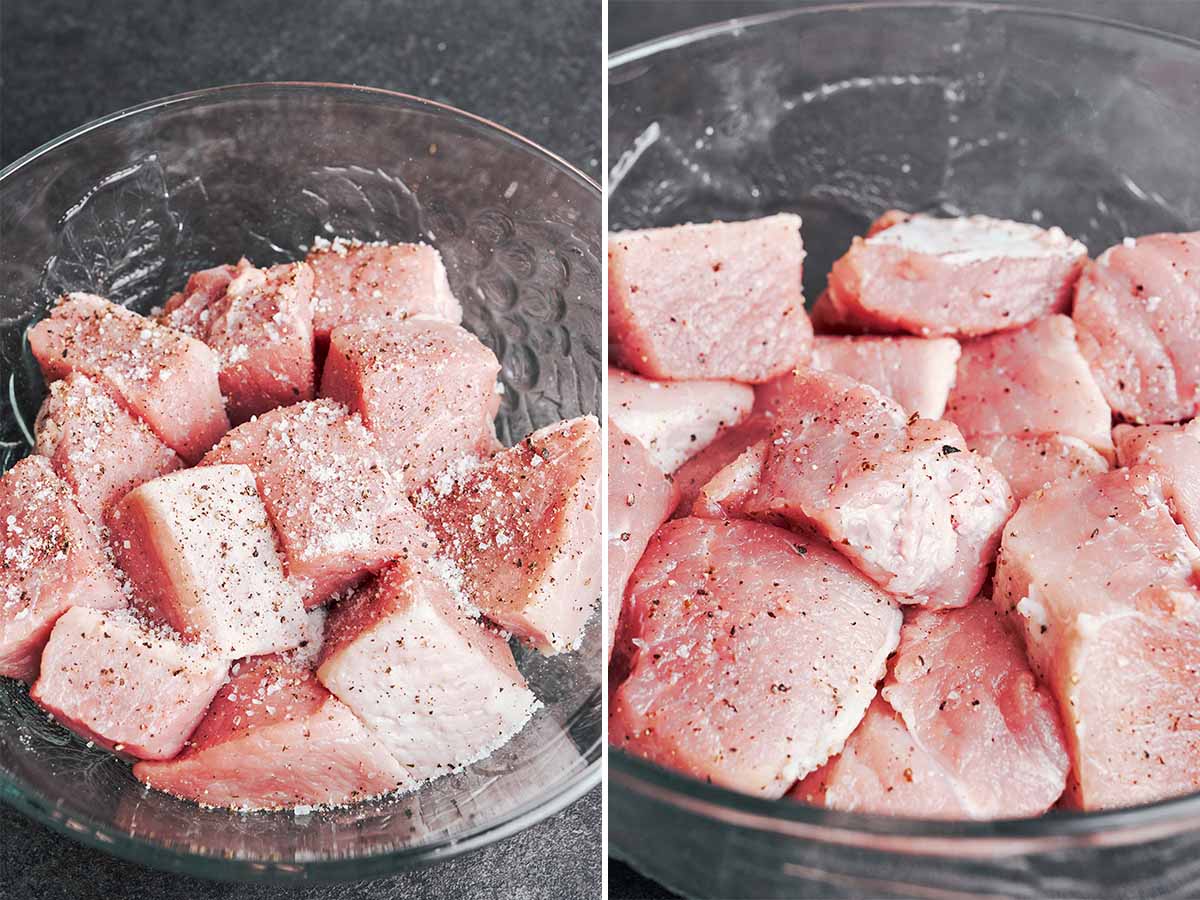
Sear the pork: Add the pork to the hot skillet in a single layer and brown it on several sides, turning the pieces as needed. The meat does not need to cook through at this point. Transfer it to a plate once the outside is nicely golden.
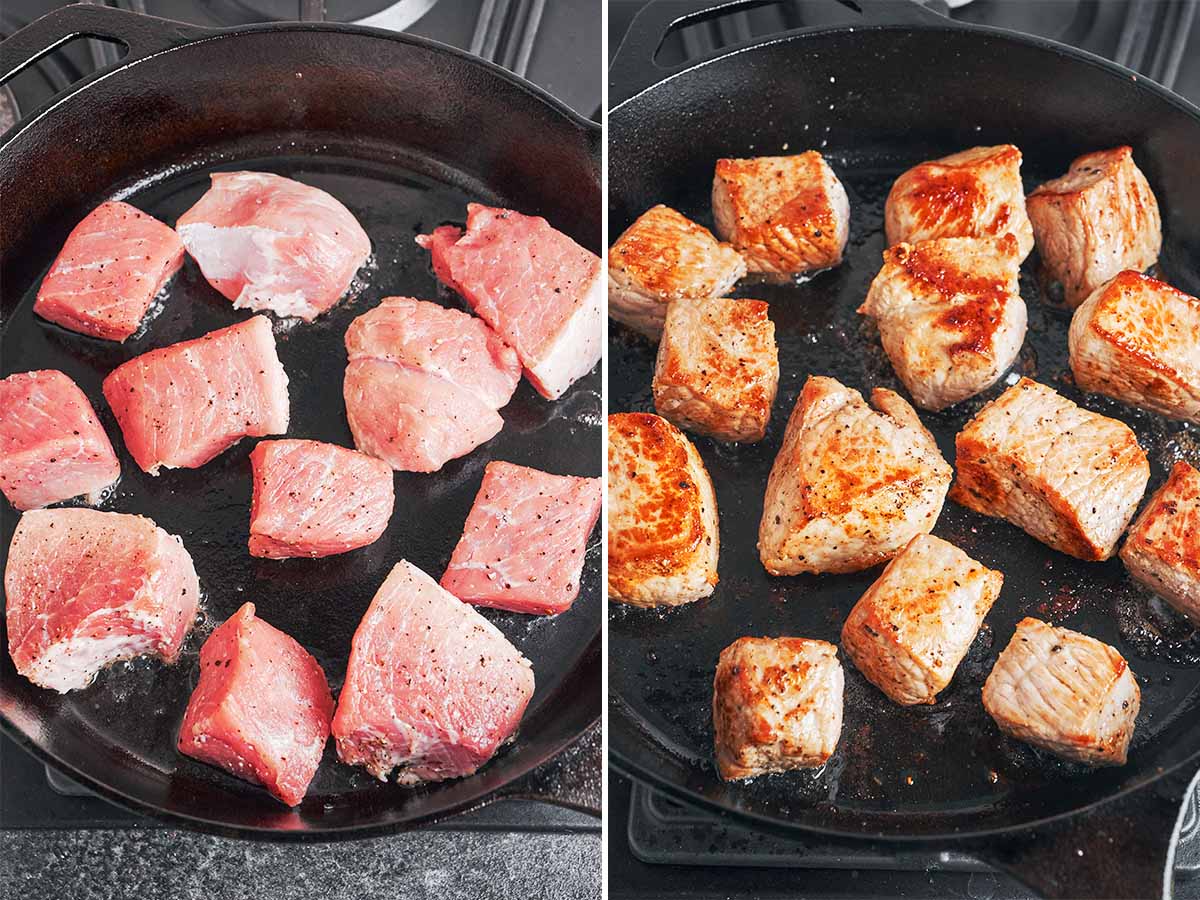
Cook the vegetables: Add the butter, onion, and carrot to the same skillet. Cook until the vegetables begin to soften and pick up the flavor left behind by the bacon and pork.
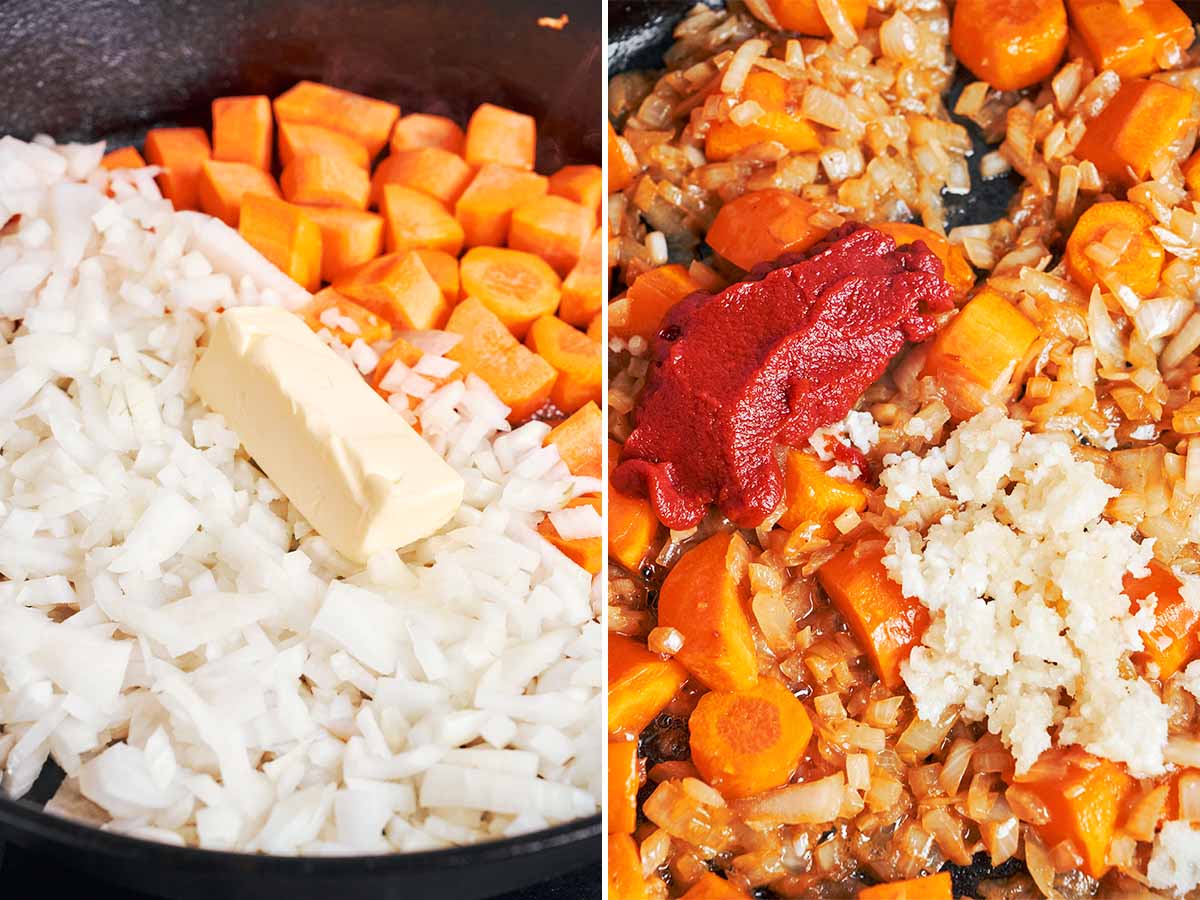
Add the garlic and tomato paste: Stir in the minced garlic and tomato paste together. Cook briefly, stirring, until the vegetables are evenly coated and the tomato paste begins to deepen in color.
Stir in the flour: Sprinkle the flour evenly over the vegetables and stir until no dry patches remain. Let it cook briefly so it blends smoothly into the sauce.
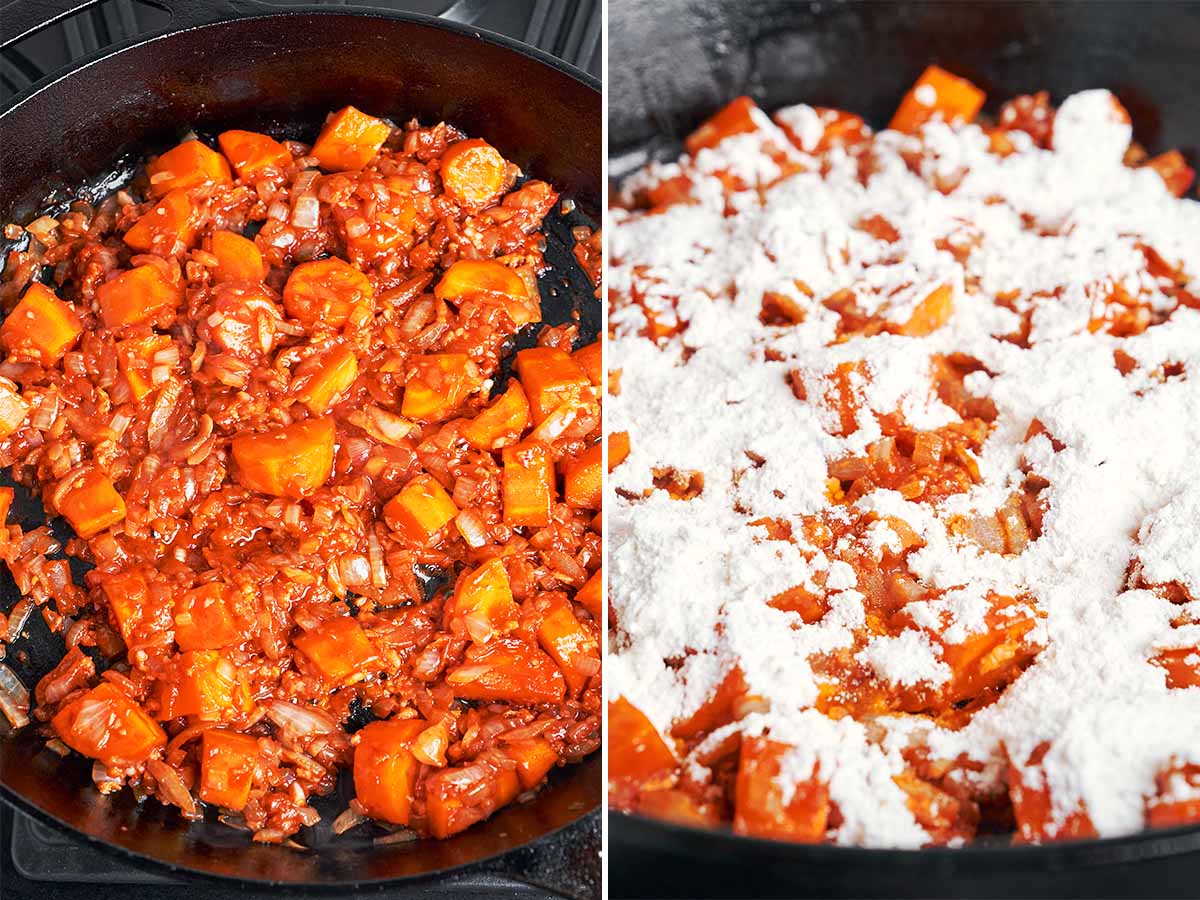
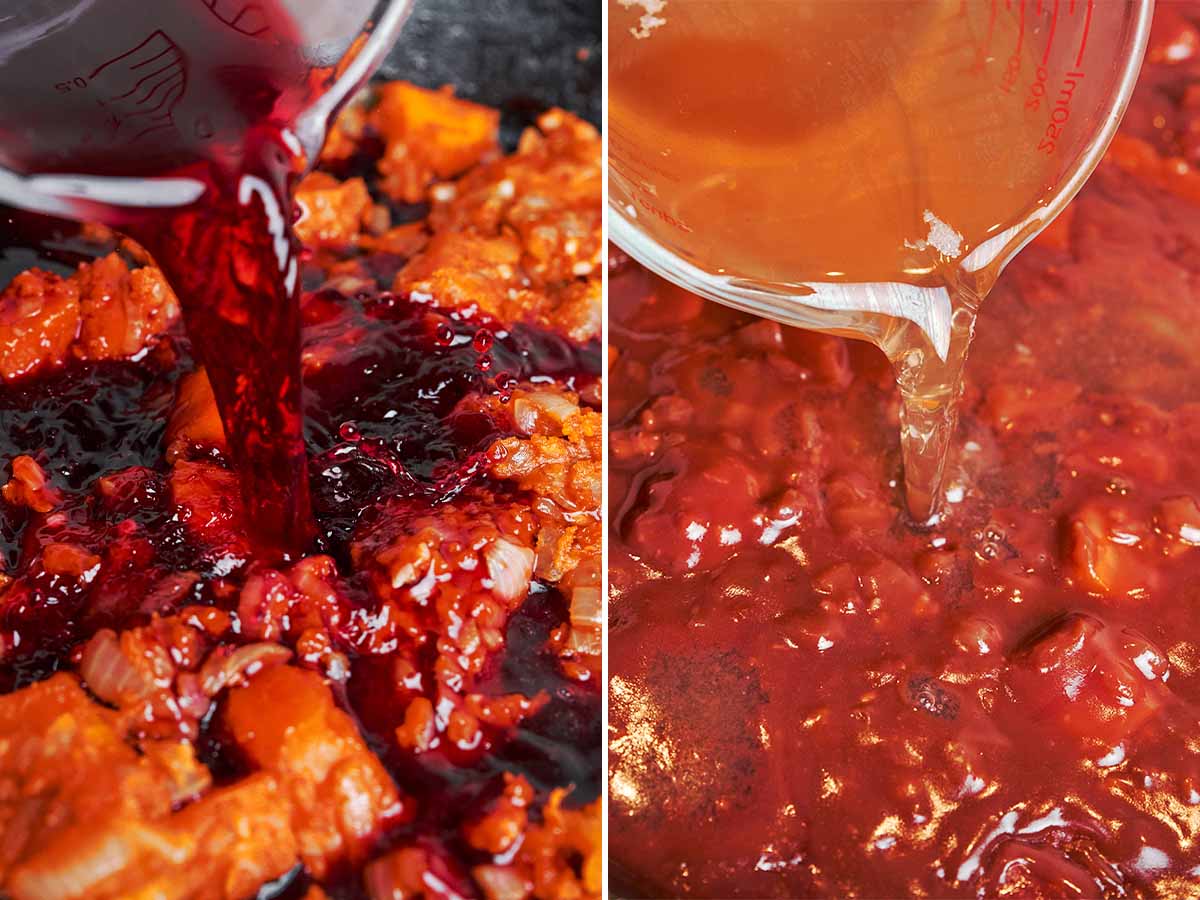
Add the wine and broth: Pour in the red wine and stir well, scraping up anything stuck to the bottom of the skillet. Follow with the broth and stir until the sauce comes together.
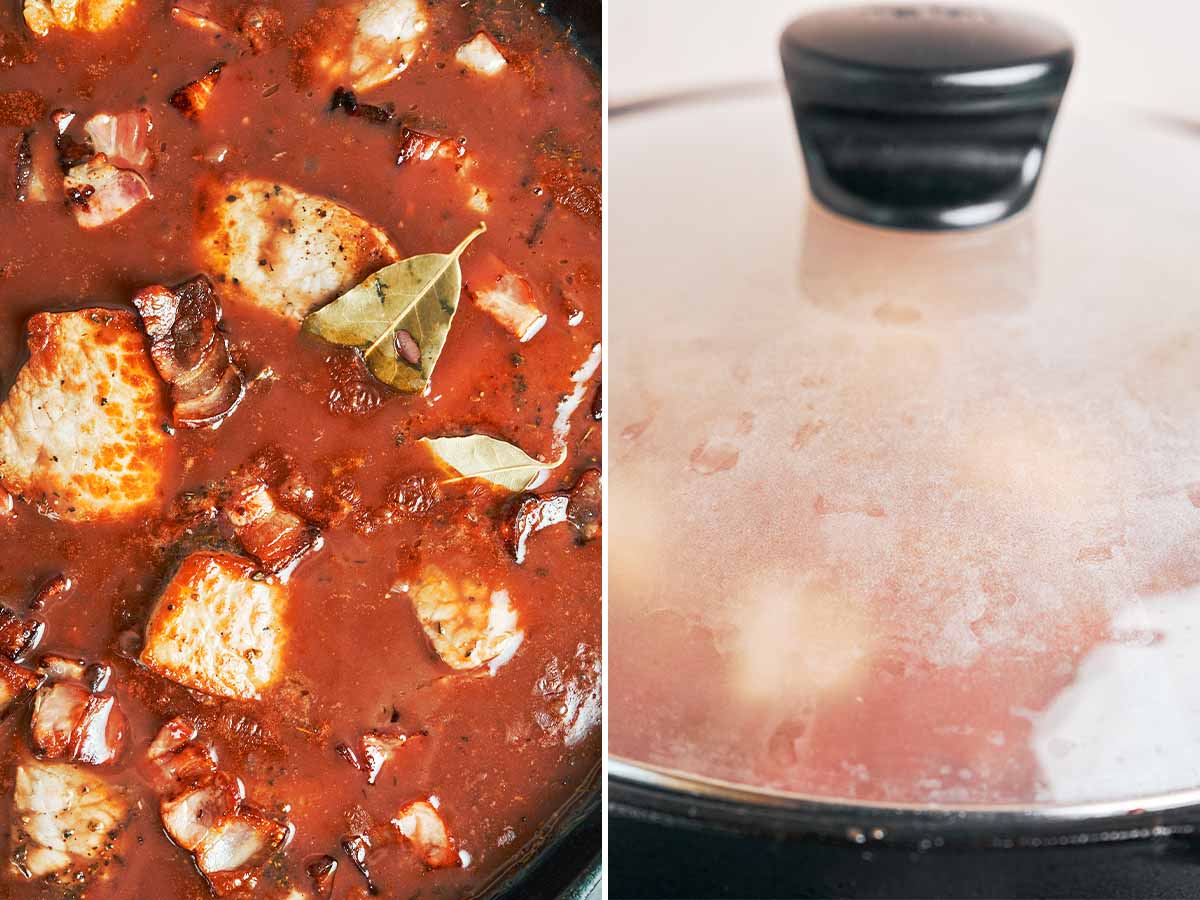
Return the pork and bacon: Add the browned pork and bacon back to the skillet, along with the bay leaves and thyme. Bring the sauce to a gentle simmer, cover, and cook over low heat until the pork is tender.
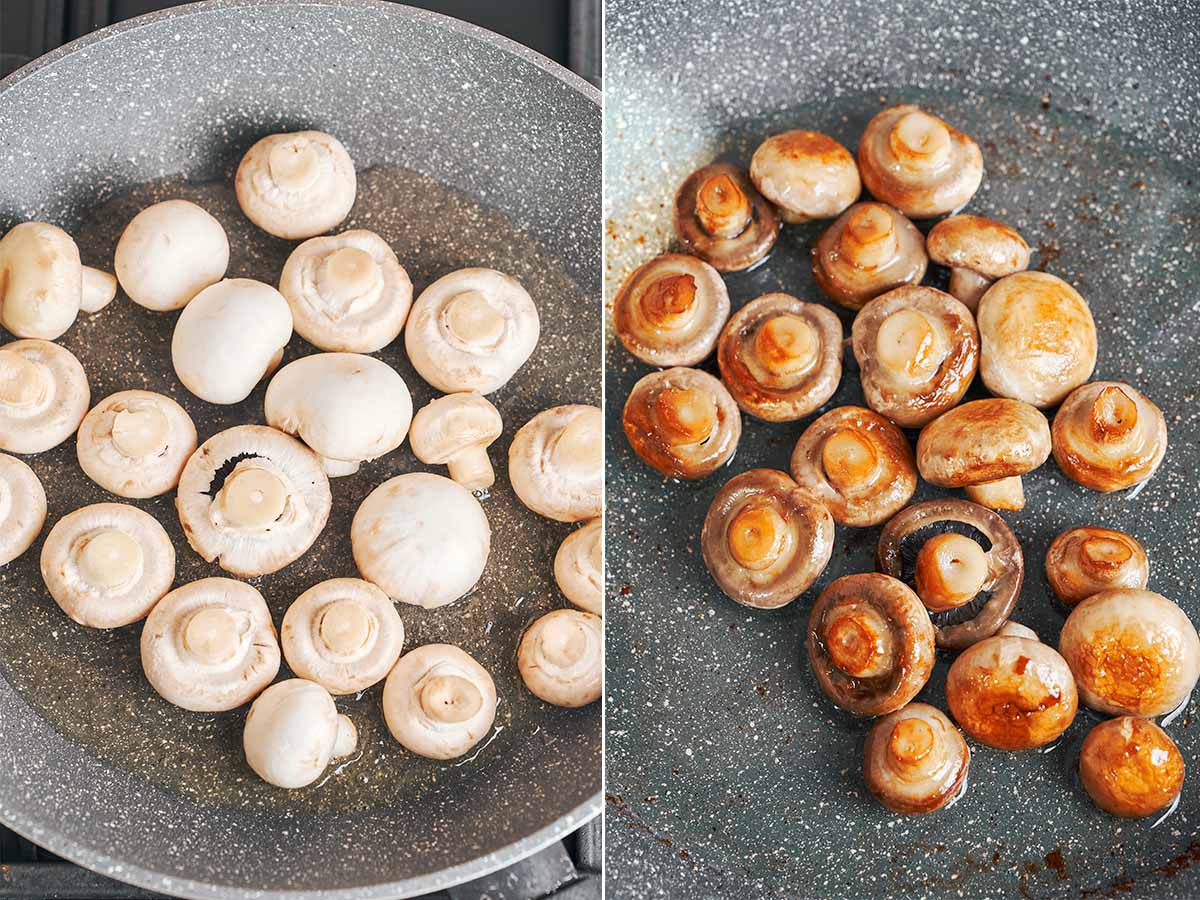
Brown the mushrooms: While the pork simmers, cook the whole mushrooms in a separate skillet until golden on several sides.
Finish the stew: Add the browned mushrooms to the pork bourguignon, then season the stew with 1/3 teaspoon salt. Let everything simmer together uncovered until the mushrooms are warmed through and the red wine sauce is thick enough to coat the pork.
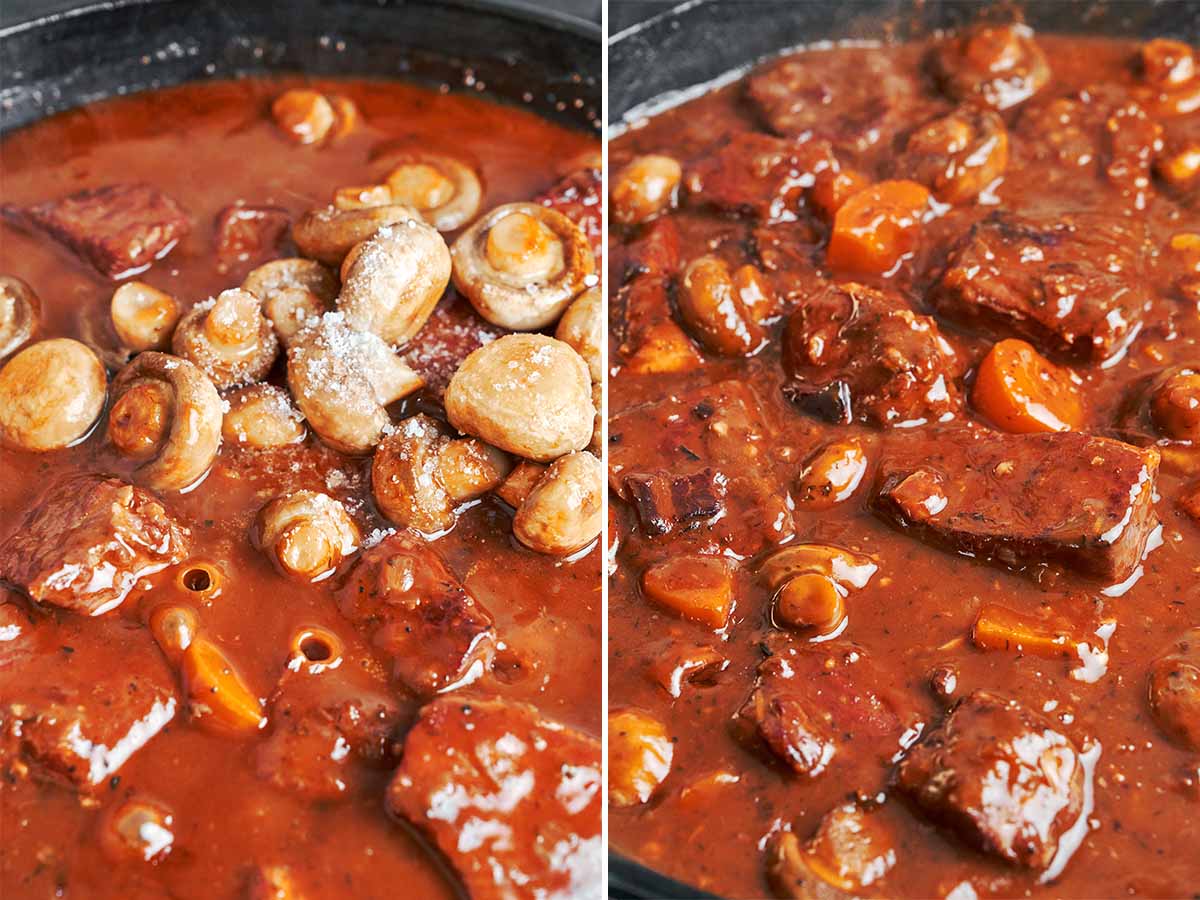
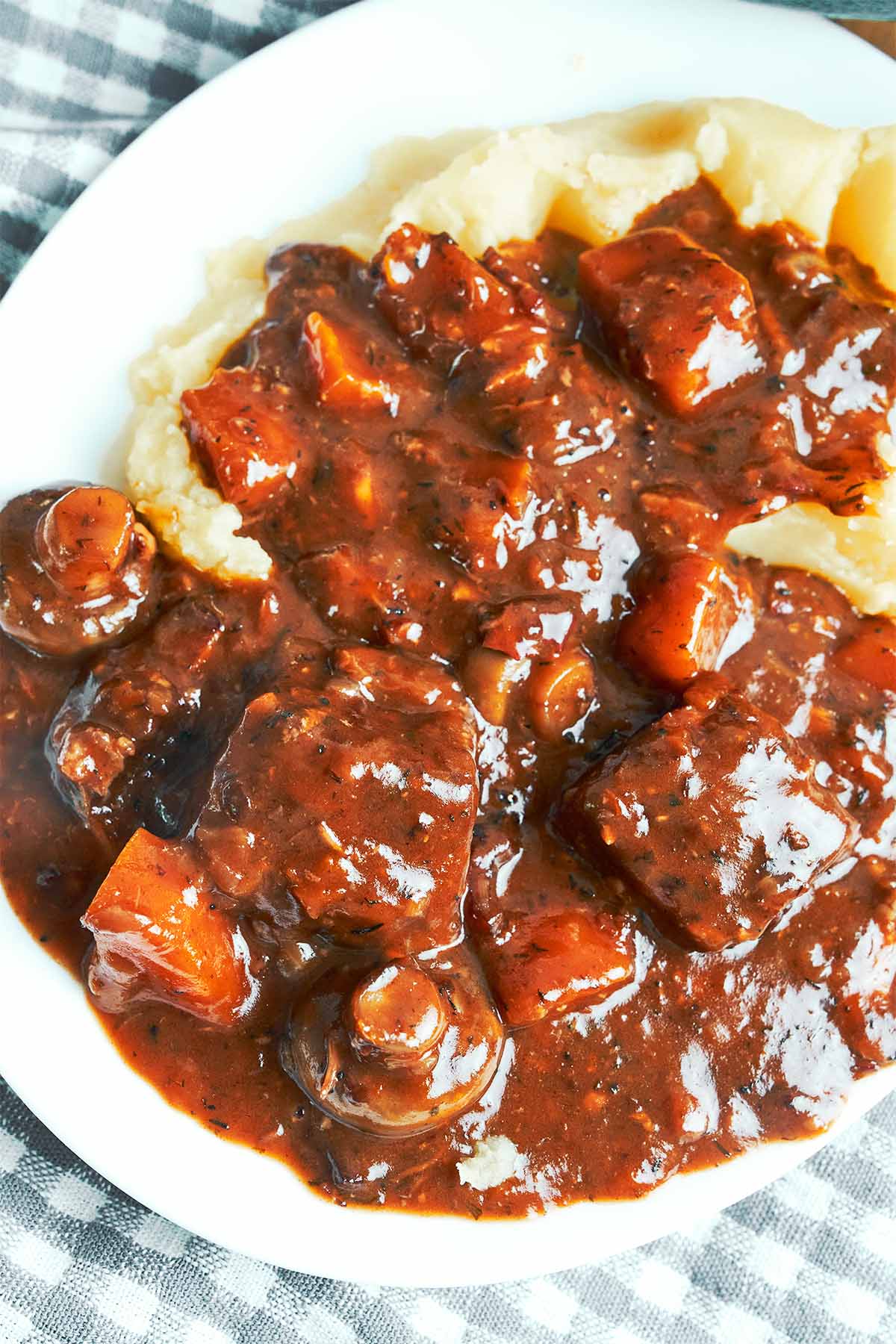
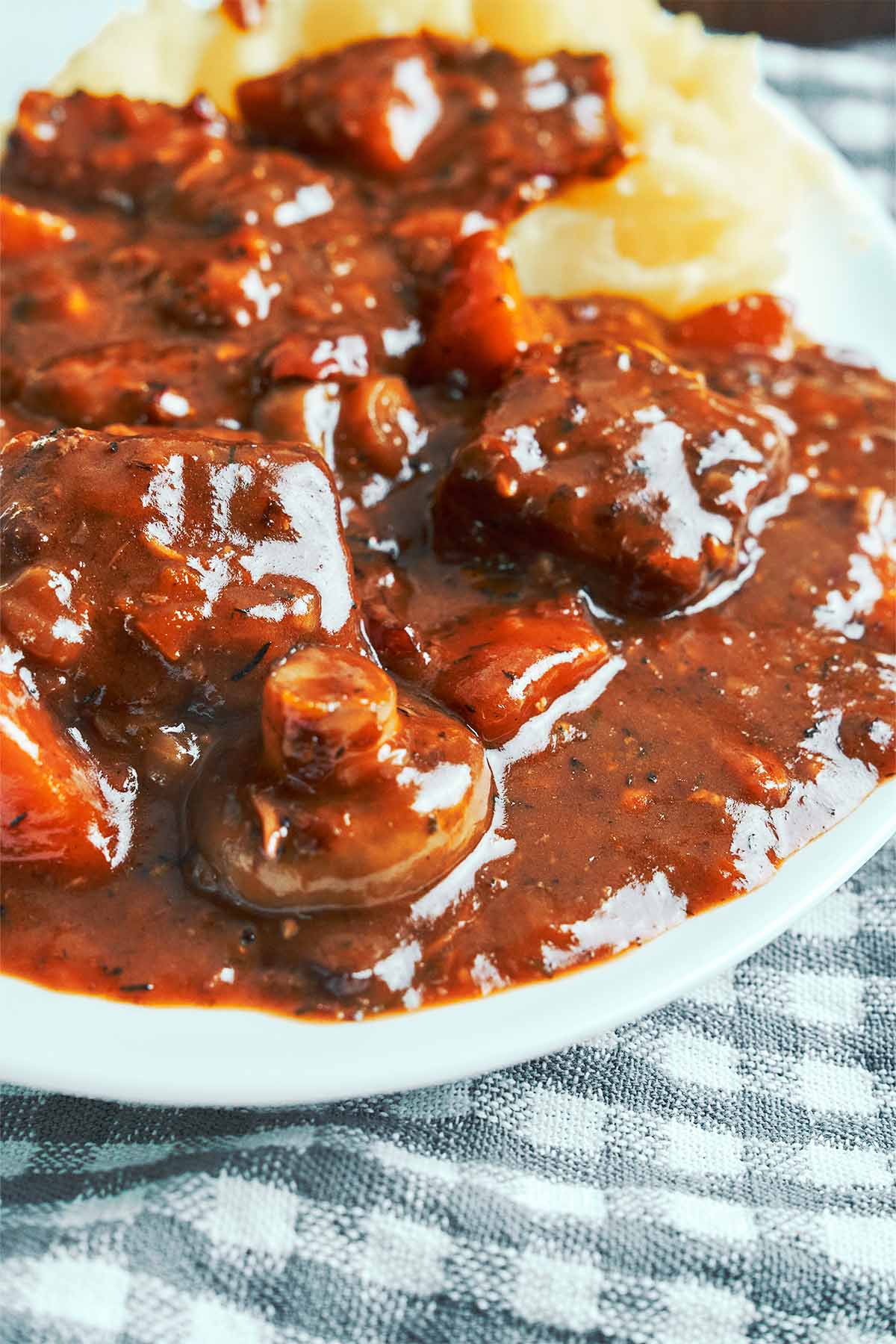
Serve: Spoon the pork bourguignon over creamy mashed potatoes, adding plenty of tender pork, mushrooms, carrots, and rich red wine sauce to each plate. Serve warm while the sauce is thick and glossy.
Pro Tips for the Best Pork Bourguignon
- Keep the pork pieces fairly large: Large, evenly sized chunks have enough time to become tender without drying out or breaking apart in the sauce. Try to keep them close in size so they finish cooking at about the same time.
- Let the skillet get hot before adding the pork: The meat should begin sizzling as soon as it touches the pan. Brown it in batches if needed, leaving a little space between the pieces so they sear instead of releasing too much moisture.
- Do not clean the skillet between steps: The browned bits left behind by the bacon and pork are a big part of the finished flavor. Once the wine goes in, gently scrape them from the bottom and let them melt into the sauce.
- Give the tomato paste and flour a moment to cook: Let the tomato paste deepen slightly before adding the flour, then stir the flour through until no dry patches remain. This keeps the sauce smooth and removes any raw flour taste.
- Keep the stew at a gentle simmer: A low, steady bubble gives the pork time to soften while the sauce slowly develops. If the heat is too high, the liquid may reduce before the meat is tender.
- Add the browned mushrooms near the end: Cooking them separately gives them a golden surface and a meatier texture. Stirring them in after the pork has simmered keeps them from becoming too soft in the sauce.
- Adjust the sauce before serving: If it still looks a little thin, let the stew simmer uncovered for a few minutes. If it becomes thicker than you like, loosen it with a small splash of broth until it coats the pork without feeling heavy.
Variations and Substitutions
- Pork shoulder or pork butt: Either cut works well here. Both have enough marbling to stay juicy and become tender during the slow simmer.
- Different mushrooms: White button mushrooms are mild and easy to find, while cremini mushrooms bring a slightly deeper, earthier flavor. Small mushrooms can be left whole, and larger ones can be halved.
- Bacon or pancetta: Smoked bacon gives the stew a warmer, more noticeable smoky flavor. Pancetta is a good alternative when you want something a little more delicate.
- Red wine: Pinot Noir, Merlot, or another dry red wine will work nicely. Avoid sweet wine, since it can make the finished sauce taste unbalanced.
- Broth: Chicken broth keeps the sauce a little lighter, while beef broth gives it a darker, more robust flavor. Use whichever suits the result you prefer.
- Fresh or dried thyme: Fresh thyme can be added in whole sprigs and removed before serving. Dried thyme works just as well, but use it lightly so it does not overpower the wine sauce.
- Without wine: You can replace the wine with additional broth and a small splash of balsamic vinegar, but the flavor will be different and the dish will no longer have the same classic bourguignon character.
What to Serve with Pork Bourguignon
My first choice is creamy mashed potatoes, since they soak up the rich red wine sauce without competing with it. Spoon the stew over the potatoes and make sure each plate gets a good mix of tender pork, carrots, and browned mushrooms.
- Mashed potatoes: Their smooth, creamy texture is the perfect match for the thick, glossy sauce.
- Buttered egg noodles: A simple option that keeps the focus on the pork and wine sauce.
- Creamy polenta: Soft and comforting, with enough body to hold the stew nicely.
- Crusty bread: Perfect for soaking up every bit of sauce left on the plate.
- A simple green salad: Something fresh and lightly dressed helps balance the richness of the stew.
Storage and Reheating
Pork bourguignon keeps very well, and the flavor is often even deeper the next day after the pork has had time to sit in the red wine sauce.
- Refrigerate: Let the stew cool, then store it in an airtight container for up to 4 days.
- Reheat: Warm it gently in a covered saucepan over low heat, stirring from time to time. Add a small splash of broth if the sauce has thickened too much in the refrigerator.
- Freeze: Freeze the cooled stew in a freezer-safe container for up to 3 months. Leave a little room at the top for the sauce to expand.
- Thaw: Let it thaw overnight in the refrigerator, then reheat slowly until the pork and sauce are hot throughout.
Frequently Asked Questions
What is the best cut of pork for Pork Bourguignon?
Pork shoulder or pork butt works best because it has enough marbling to stay juicy during the long simmer. Lean cuts such as pork loin or tenderloin can dry out before the sauce has time to develop.
Can I make Pork Bourguignon ahead of time?
Yes. This is a great make-ahead stew because the flavor becomes even deeper after resting overnight. Let it cool, refrigerate it in a covered container, then reheat gently on the stove before serving.
Can I make it without red wine?
You can replace the wine with more broth and a small splash of balsamic vinegar, but the sauce will not have the same deep bourguignon flavor. Red wine is one of the ingredients that gives this stew its distinctive character.
Why is my pork still tough?
It usually just needs more time. Keep the stew at a gentle simmer and continue cooking until the pork is easy to break apart with a fork. Avoid boiling it hard, since that can make the meat tighten before it becomes tender.
How can I thicken the sauce?
Remove the lid and let the stew simmer gently for a few extra minutes. The sauce will continue to reduce and will also thicken slightly as it rests off the heat.
Do I have to cook the mushrooms separately?
You can add them directly to the stew, but browning them in a separate skillet gives them better color and a meatier texture. It also keeps them from releasing extra moisture into the red wine sauce.
This Pork Bourguignon is the kind of slow-cooked dinner that rewards a little patience. The pork turns wonderfully tender, the mushrooms keep their meaty texture, and the red wine sauce becomes deeper and richer as everything simmers together. Spoon it over mashed potatoes and let the sauce do the rest.
Pork Bourguignon: Red Wine Pork Stew
Ingredients
- 1 tablespoon olive oil
- 5 ounces (150 g) smoked bacon, chopped
- 2 1/2 pounds (1.1 kg) boneless pork shoulder, cut into large even pieces
- Salt and black pepper for seasoning the pork
- 2 tablespoon butter
- 2 large yellow onion chopped
- 2 medium carrots sliced
- 4 garlic cloves minced
- 1 tablespoon tomato paste
- 2 tablespoons all-purpose flour
- 2 cups dry red wine
- 2 cups chicken broth or beef broth
- 2 bay leaves
- 1 teaspoon dried thyme
- 10 ounces (300 g) small mushrooms, left whole or halved if large
- 1/3 teaspoon salt
Instructions
- Brown the bacon: Heat the olive oil in a large deep skillet or Dutch oven over medium heat. Add the chopped bacon and cook until nicely browned and some of the fat has rendered. Transfer the bacon to a plate, leaving the drippings in the skillet.
- Season the pork: Pat the pork dry with paper towels, then season the pieces evenly with salt and black pepper.
- Sear the pork: Add the pork to the hot skillet in a single layer and brown it on several sides, turning as needed. The pork does not need to cook through. Transfer it to a plate once nicely golden.
- Cook the vegetables: Add the butter, chopped onion, and sliced carrots to the same skillet. Cook over medium heat until the vegetables begin to soften, stirring occasionally and picking up the browned flavor left in the pan.
- Add the garlic and tomato paste: Stir in the minced garlic and tomato paste. Cook for about 1 minute, stirring, until fragrant and the tomato paste begins to deepen slightly in color.
- Add the flour: Sprinkle the flour over the vegetables and stir well until no dry patches remain. Cook for about 1 minute so the flour blends into the base of the sauce.
- Add the wine and broth: Slowly pour in the red wine, stirring and scraping the bottom of the skillet to loosen the browned bits. Pour in the broth and stir until the sauce is smooth.
- Return the pork and bacon: Add the browned pork and bacon back to the skillet. Stir in the bay leaves and thyme, then bring the sauce to a gentle simmer.
- Simmer until tender: Cover the skillet and cook over low heat for about 1 1/2 hours, or until the pork is tender when tested with a fork. Keep the sauce at a gentle simmer rather than a hard boil.
- Brown the mushrooms: While the pork simmers, place the mushrooms in a separate skillet over medium-high heat. Cook until they are golden on several sides and have developed a meaty texture.
- Finish the stew: Add the browned mushrooms to the pork bourguignon, then sprinkle in 1/3 teaspoon salt. Simmer uncovered for another 10 to 15 minutes, or until the mushrooms are warmed through and the red wine sauce is thick and glossy. Remove the bay leaves before serving.
- Serve: Spoon the pork bourguignon over creamy mashed potatoes, adding plenty of tender pork, mushrooms, carrots, and rich red wine sauce to each plate. Serve warm.
Notes
- Keep the pork pieces fairly large and close in size so they become tender without drying out or falling apart too quickly.
- Pat the pork dry before seasoning. Moisture on the surface makes it harder for the meat to develop a good golden crust.
- Do not clean the skillet between the bacon, pork, and vegetables. The browned bits left on the bottom add important flavor to the finished sauce.
- Use a dry red wine that tastes pleasant on its own. Avoid sweet wine and bottled cooking wine.
- Brown the mushrooms separately and add them near the end so they stay golden and meaty instead of becoming overly soft in the sauce.
- If the sauce is too thin, simmer the stew uncovered for a few extra minutes. If it becomes too thick, loosen it with a small splash of broth.
- Pork bourguignon can be prepared a day ahead. The flavor becomes even deeper after the stew rests overnight in the refrigerator.
What’s a fabulous meall My family loved it and
my ridiculously picky teenager can’t stop talking
about it. l’ll be incorporating this into my
repertoire. Thanks!
Thank you so much! ❤️ Hearing that your teenagers loved it is probably the best compliment I could get. I’m so happy this one made it into your regular rotation!