
Slow Roasted Pork Belly
This Slow Roasted Pork Belly is tender, juicy, and richly flavored with simple pantry spices. Roasted gently in the oven, the pork becomes melt-in-your-mouth soft with very little hands-on prep.
If you love cozy oven dinners like this, you can also explore more comforting pork recipes for easy homemade meals.
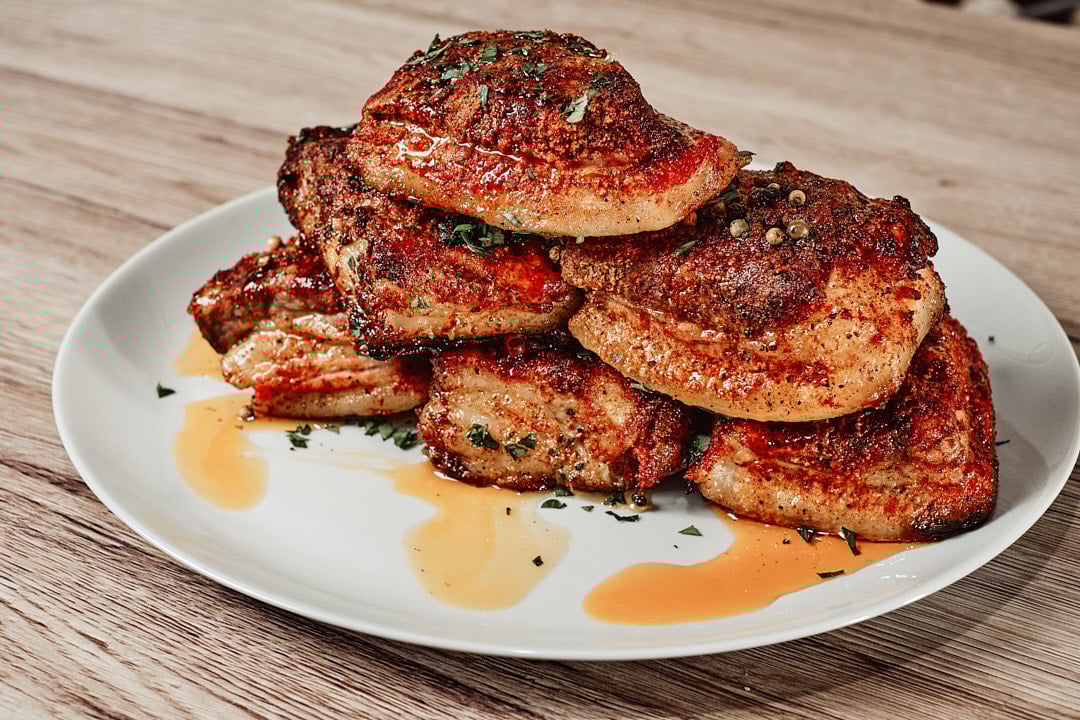
What makes this recipe so reliable is the gentle oven method. Wrapping the pork before roasting helps it stay moist as the fat slowly renders, giving you tender slices with plenty of rich flavor and almost no fuss.
If you enjoy this slow roasted pork belly, you might also like my Pork Stew, Pork Schnitzel with Gravy, or Easy Oven Barbecue Ribs for more cozy pork dinners.
Why You’ll Love This Slow Roasted Pork Belly
This recipe gets a lot of flavor from a surprisingly simple method. The pork belly is seasoned with warm spices, wrapped in parchment, and roasted gently until the meat is tender and the fat has had time to render without drying everything out.
What I love most is how little attention it needs once it goes into the oven. There’s no constant basting or complicated prep, just rich, juicy slices with a savory, lightly smoky flavor that feels special without making the recipe difficult.
This pork belly fits right in with other classic pork dishes like my Best Pork Blanquette, which is slow cooked and rich in flavor, just like this recipe.
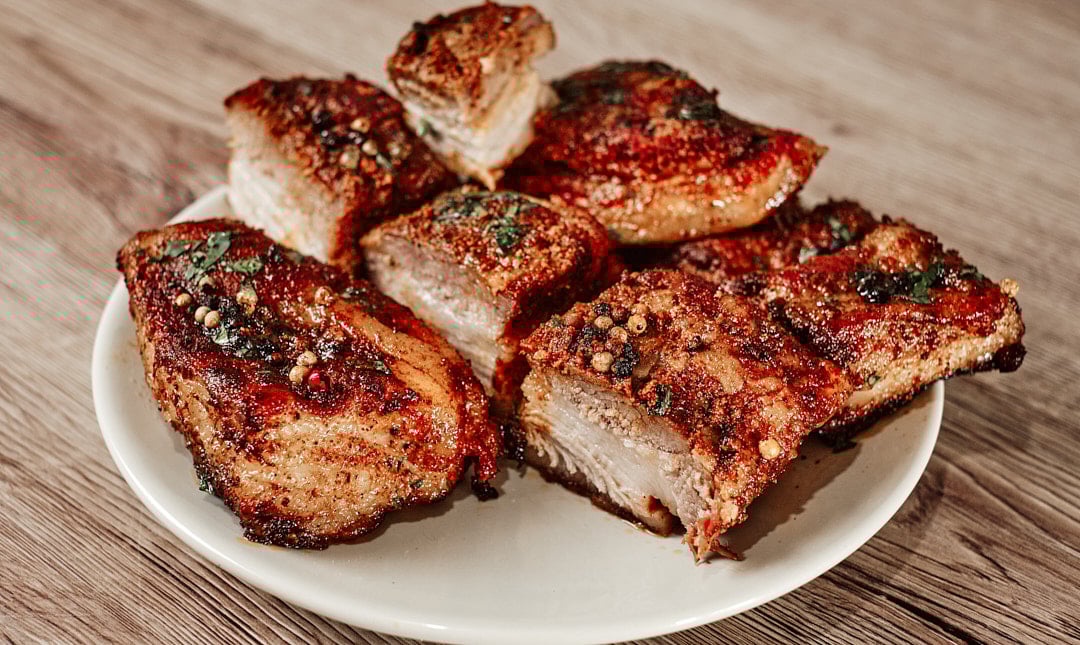
Pork Belly: How to Choose the Best Piece
Look for even thickness. Choose a piece that is fairly uniform and about 1 1/4 inches thick or more. This helps the pork cook evenly while giving the fat enough time to render without drying out the meat.
Choose a good balance of meat and fat. Pork belly should have visible layers of both. Too much fat can feel overly rich, while a very lean piece may not become as tender during slow roasting.
An even shape helps. A neat rectangular piece is easier to portion and tends to roast more evenly, especially if you plan to cut it into similar-sized pieces before cooking.
What You’ll Need for Slow Roasted Pork Belly
You only need a handful of simple seasonings for this recipe. The pork belly brings most of the richness, while the spices add savory, smoky flavor without overpowering the meat.
- Pork belly: Choose a thick, meaty piece with visible layers of fat throughout. That balance gives you the best texture after slow roasting.
- Salt: Seasons the pork throughout and brings out its natural savory flavor.
- Garlic powder: Adds an easy layer of savory flavor that works especially well with rich pork.
- Smoked paprika: Gives the pork a warm, lightly smoky note and adds color to the seasoning.
- Black pepper: Adds gentle heat and balances the richness of the pork belly.
- Chili powder: Adds a subtle background warmth without making the pork overly spicy.
- Bay leaf and whole peppercorns: Add another layer of aroma while the pork slowly roasts in the parchment.
Exact ingredient amounts and full instructions are in the recipe card below.
How to Make Slow Roasted Pork Belly
The method is simple: cut and season the pork belly, wrap it snugly in parchment, then let it roast gently until tender. Keeping the pieces similar in size helps them cook evenly.
Cut the pork belly. Slice the pork belly into evenly sized pieces so they roast at the same rate and become tender at about the same time.

Season the pork belly. Season the pieces generously with salt on all sides. In a small bowl, mix the garlic powder, smoked paprika, black pepper, and chili powder, then sprinkle the mixture evenly over the pork and gently press it onto the surface.
Wrap the pork belly. Scatter the whole peppercorns over the seasoned pork and place the bay leaf on top. Wrap the pieces snugly in parchment paper so they stay moist while roasting.
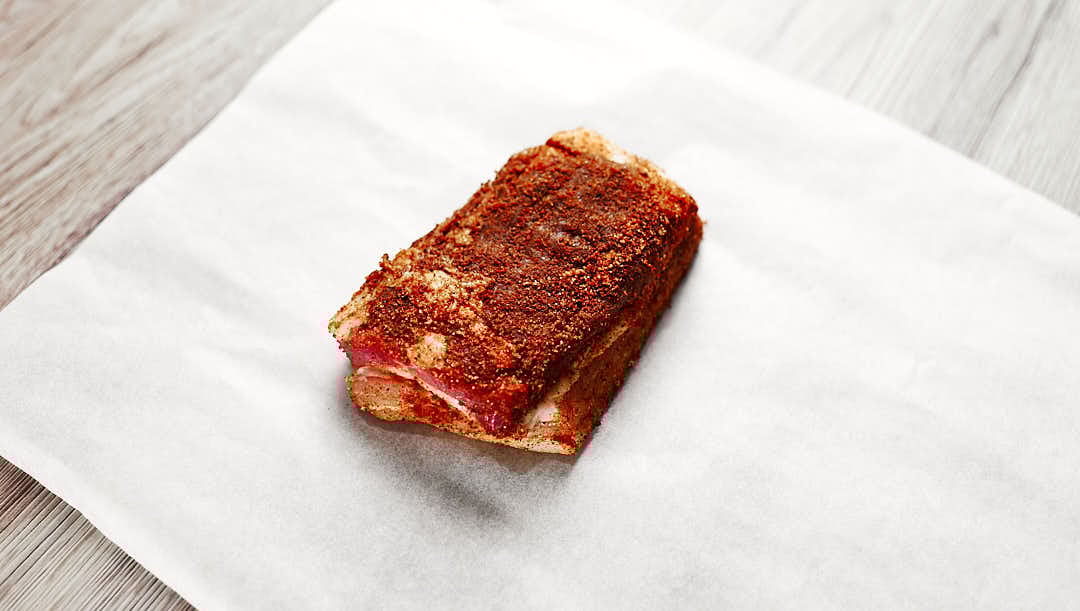
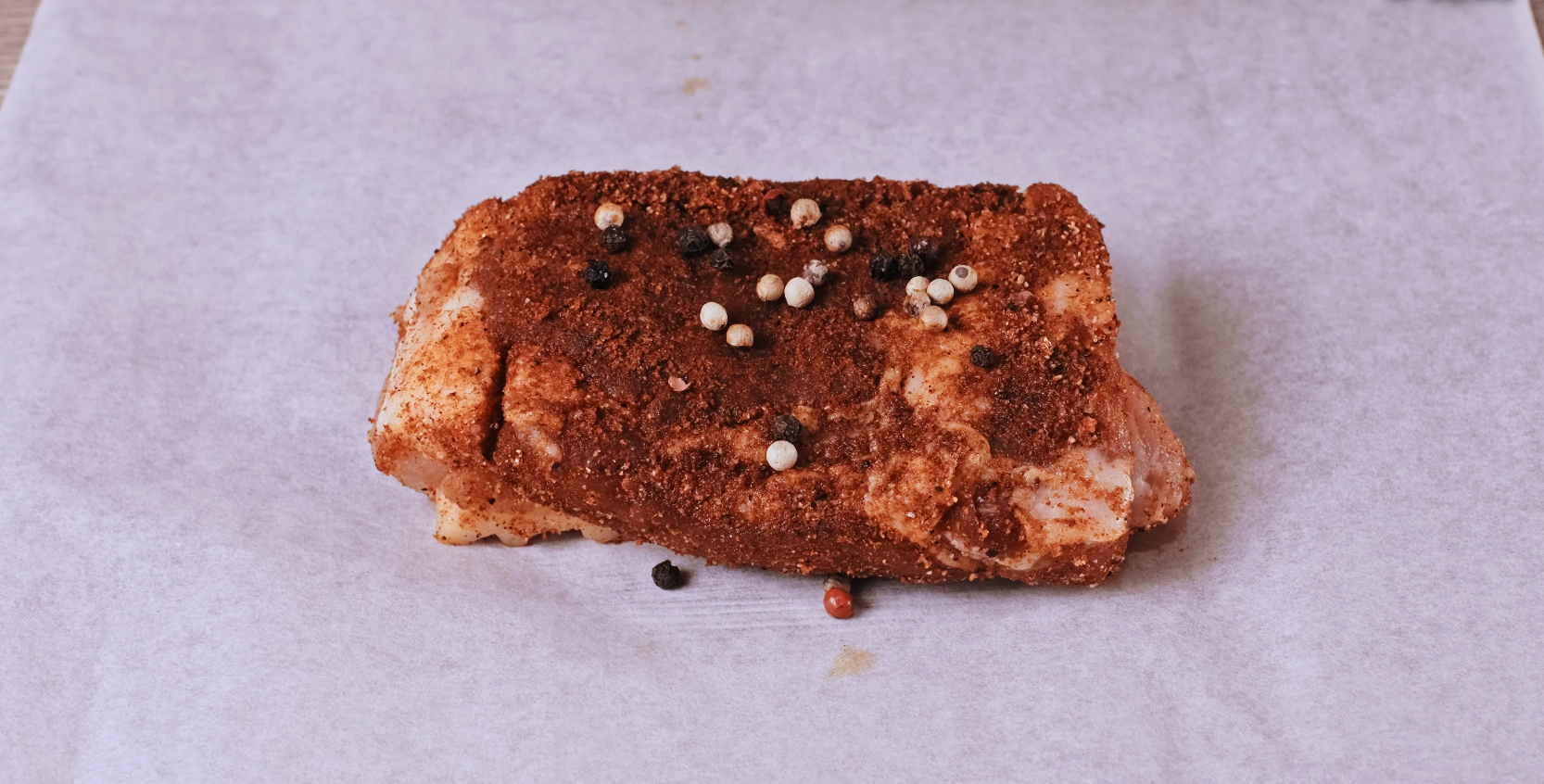
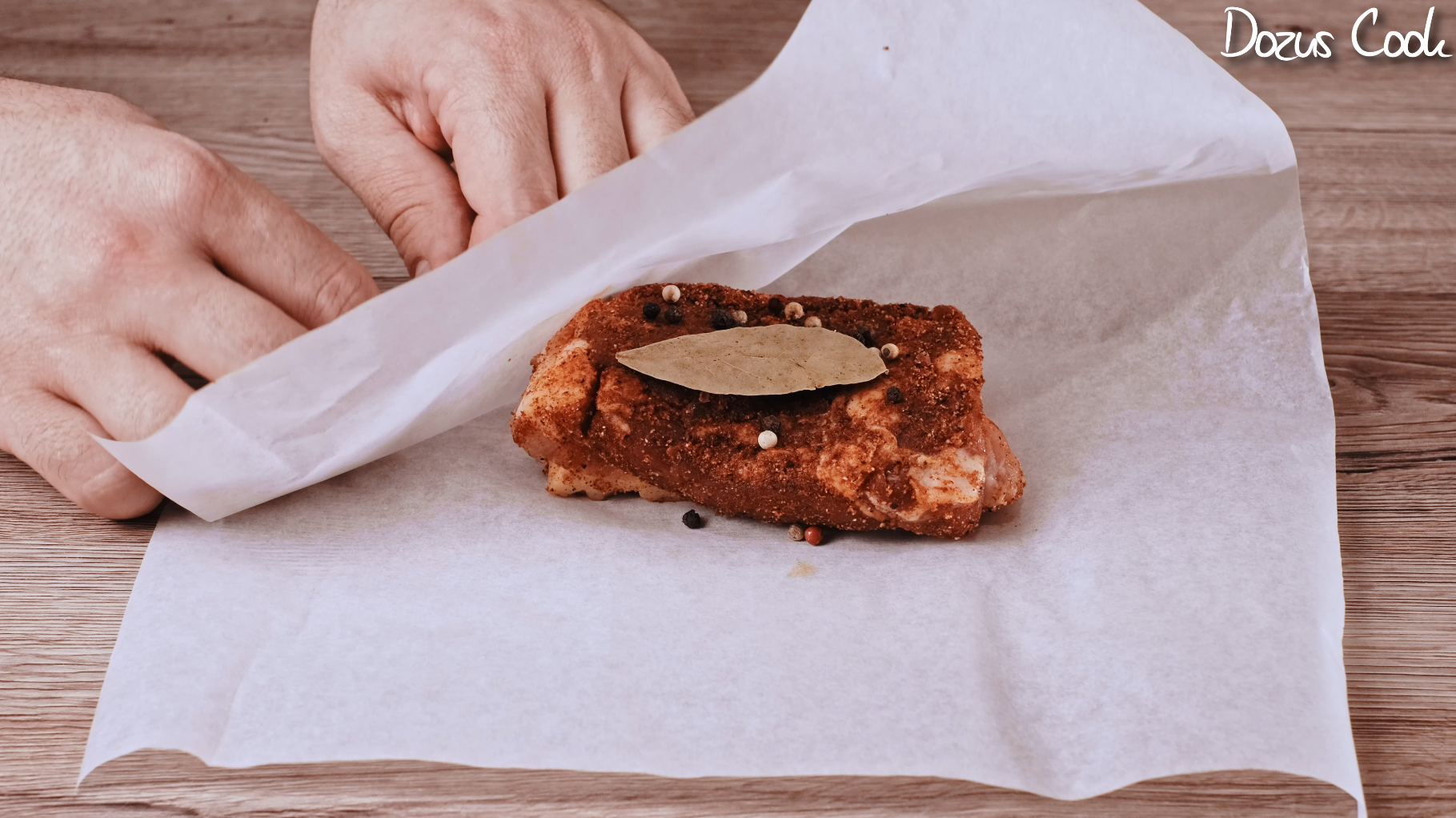

Roast until tender. Preheat the oven to 350°F (180°C). Place the wrapped pork belly on a baking sheet and roast on the middle rack for about 50 minutes, until the meat is tender and the fat has softened.
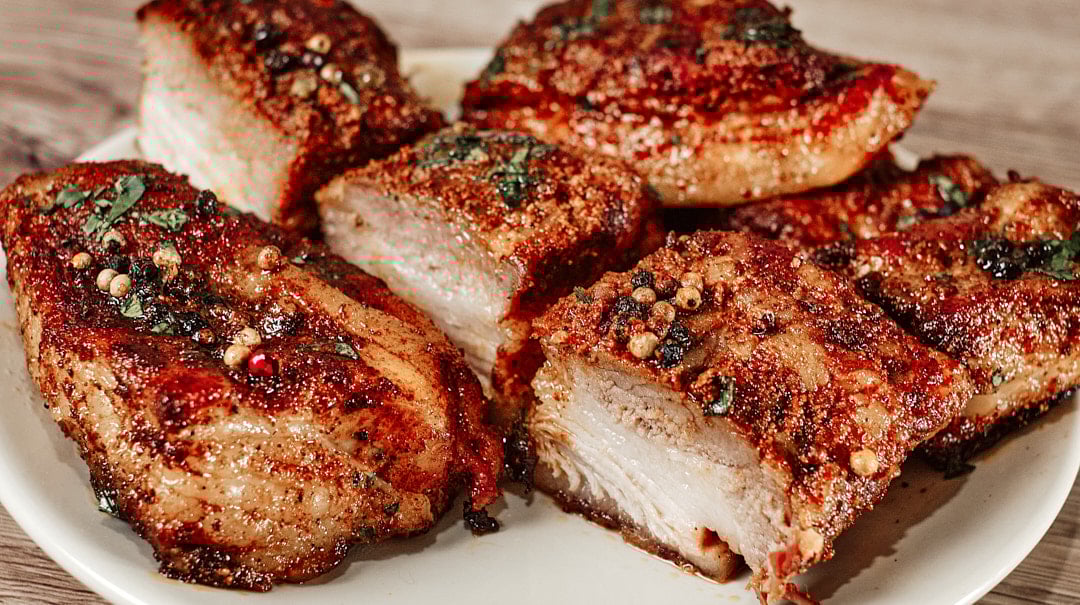
Carefully unwrap the pork belly and let it rest for a few minutes before slicing. Serve warm and enjoy the rich, comforting flavors.
Pro Tips for Tender Roasted Pork Belly
Broil only if you want crispier edges. Unwrap the pork and broil for 3 to 5 minutes at the end, watching closely so the seasoning does not burn.
Pat the pork belly dry first. Removing excess surface moisture helps the seasoning cling more evenly to the meat.
Keep the pieces similar in size. Evenly sized pieces roast at a similar rate, so you do not end up with some pieces dry while others are still firm.
Wrap the pork snugly. The parchment helps hold in moisture during the slow roast and keeps the meat tender as the fat renders.
Don’t rush the roasting time. Gentle heat is what gives pork belly its soft, rich texture, so avoid turning up the oven to speed things along.
Let it rest before slicing. Give the pork a few minutes out of the oven before cutting so the slices hold together better.
Slow Roasted Pork Belly
Ingredients
- 3 lb (1.5 kg) pork belly
- 1 tsp. garlic Powder
- 2 tsp. smoked paprika
- 1/3 tsp. chili powder
- 1/3 tsp. black pepper
- 10 – 13 peppercorns
- 1 1/2 tsp. salt
- 1 bay Leaf
Instructions
- Cut the pork belly into evenly sized pieces so they cook at the same rate.
- Season the pork belly generously with salt on all sides.
- In a small bowl, mix the garlic powder, smoked paprika, black pepper, and chili powder. Sprinkle the seasoning evenly over the pork and gently press it onto the surface.
- Let the seasoned pork belly rest at room temperature for 30 minutes.
- Scatter the whole peppercorns over the pork and place the bay leaf on top. Wrap the pork belly snugly in parchment paper.
- Preheat the oven to 350°F (180°C). Place the wrapped pork belly on a baking sheet and roast on the middle rack for about 50 minutes, until tender.
- Carefully unwrap the pork belly and let it rest for 5 to 10 minutes before slicing. Serve warm.
Video

Notes
- For the best texture, choose a thick piece of pork belly with a good balance of meat and fat.
- Let the seasoned pork rest for 30 minutes before roasting so the salt and spices have time to season the meat.
- Wrap the pork snugly in parchment paper to help it stay moist while the fat slowly renders.
- For slightly crispier edges, unwrap the pork after roasting and broil for 3 to 5 minutes, watching closely.
- Let the pork belly rest for 5 to 10 minutes before slicing.
What to Serve with Roasted Pork Belly
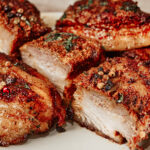
Because pork belly is rich and savory, I like serving it with simple sides that balance the meal. Creamy mashed potatoes are especially good with the roasting juices, while a crisp green salad or roasted vegetables add a lighter contrast.
You can also browse my Side Dish Recipes for more easy sides that pair well with roasted pork.
How to Store and Reheat Roasted Pork Belly
Refrigerator: Store leftover pork belly in an airtight container in the refrigerator for up to 4 days.
Freezer: Freeze cooled pork belly in an airtight container for up to 3 months. Thaw overnight in the refrigerator before reheating.
Reheating: Warm the pork gently in a 325°F (165°C) oven until heated through. If you want the edges a little crisper, unwrap the pork and broil it briefly at the end.
Frequently Asked Questions
Can I make slow roasted pork belly ahead of time?
Yes. You can roast the pork belly ahead of time, refrigerate it, and reheat it gently in the oven before serving. If you want slightly crispier edges, broil it briefly after reheating.
Is this slow roasted pork belly crispy?
This recipe is designed for tender, juicy pork belly rather than very crispy skin. For more texture around the edges, unwrap the pork after roasting and broil it for 3 to 5 minutes, watching it closely.
Can I use sweet paprika instead of smoked paprika?
Yes. Sweet paprika works well if that’s what you have, although the flavor will be milder and less smoky than with smoked paprika.
Does this recipe produce grease?
Yes, pork belly does release quite a bit of fat as it cooks, since it’s naturally a rich and fatty cut. Most of that fat stays inside the parchment while roasting, which helps keep the meat tender and juicy instead of greasy. Once it’s done, you can simply spoon off or discard any rendered fat left in the wrapping before serving. If you’d like it a little less rich, serve it with something light on the side like a fresh salad or simple vegetables.