
Pork and Cabbage Pasta with Bacon
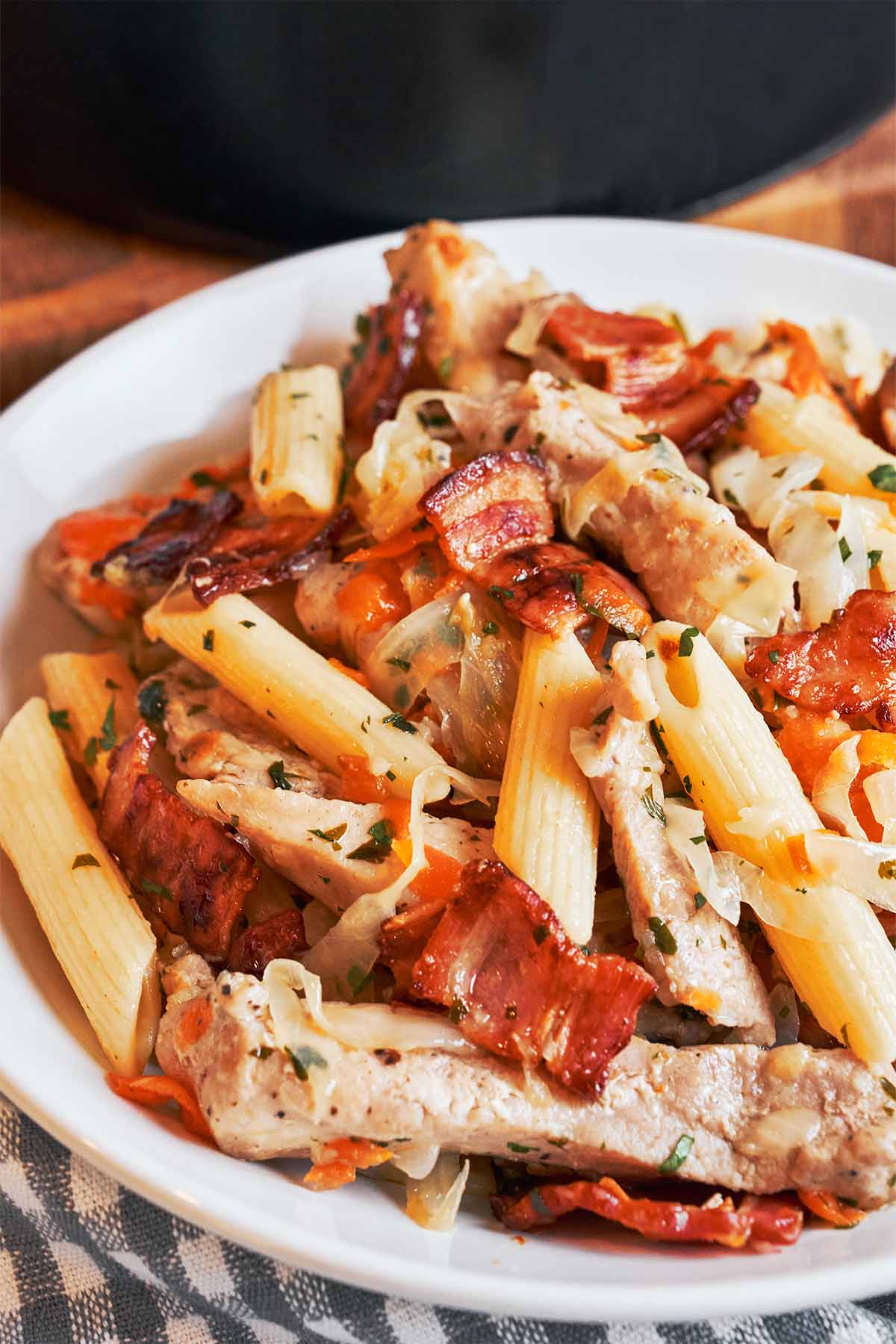
This pork and cabbage pasta is a hearty stovetop dinner with tender pork, smoky bacon, sautéed cabbage, and penne. It is simple, savory, and comforting without relying on a heavy cream or tomato sauce.
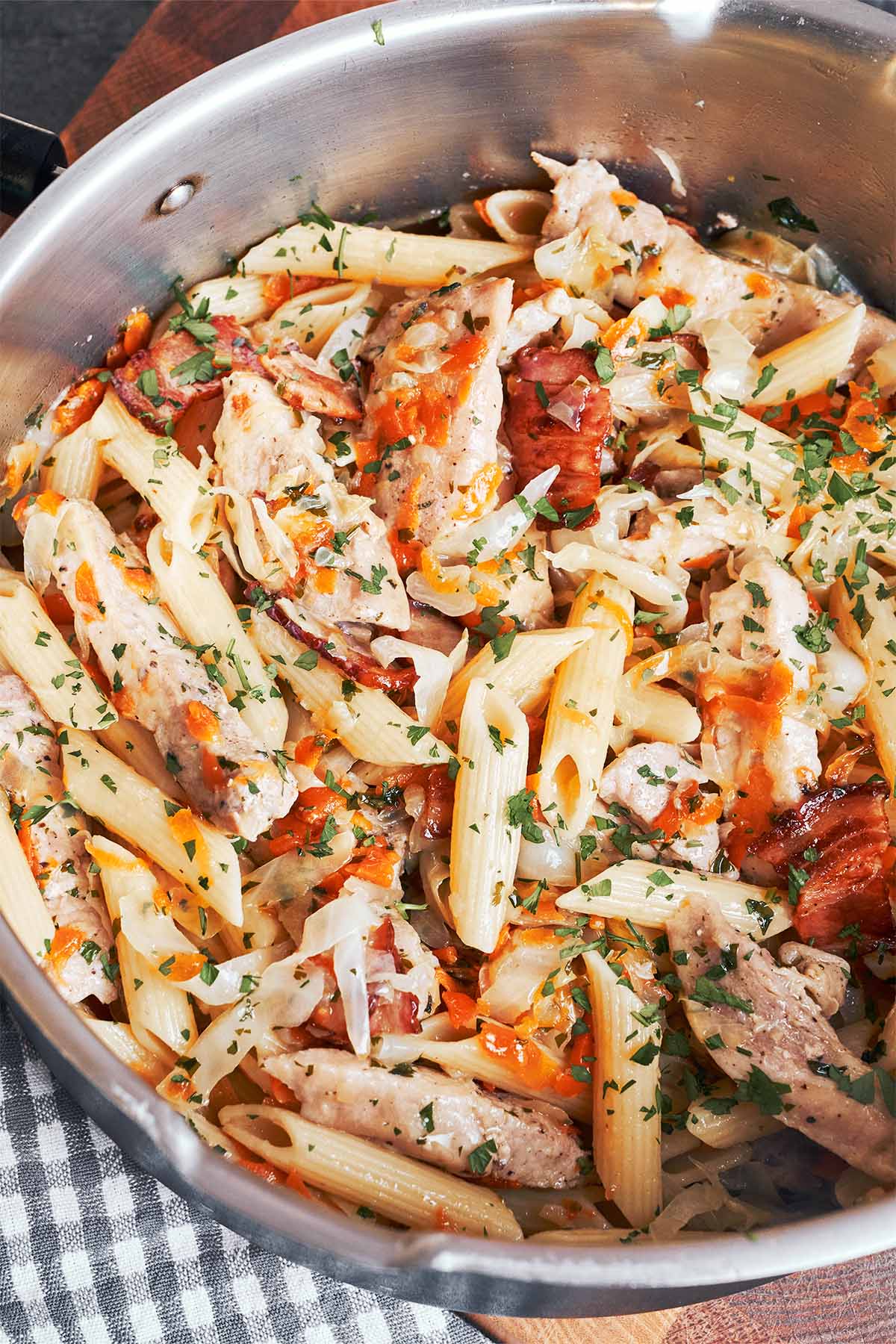
The cabbage cooks down until soft and lightly sweet, which pairs so well with the smoky bacon and savory pork. Once everything is tossed with the pasta, you get a cozy, satisfying dinner with tender vegetables and little bites of crisp bacon in every forkful.
Looking for more cozy meals made with pork? Browse my collection of pork recipes for more hearty skillet dinners, comforting stews, and family-friendly meal ideas.
Why This Recipe Works
Cooking the pork slowly with onion, bay leaves, and a little water keeps the pork shoulder tender while creating a light, savory base. The bacon is browned first, so its smoky flavor carries through the whole dish without needing a heavy sauce.
The cabbage and carrot are cooked separately so the cabbage can soften and become lightly sweet without its moisture and stronger flavor taking over the pork. This keeps the pork and smoky bacon rich and savory, while the vegetables bring their own gentle sweetness. Once everything is tossed with the penne, the flavors come together without losing what makes each part so delicious.
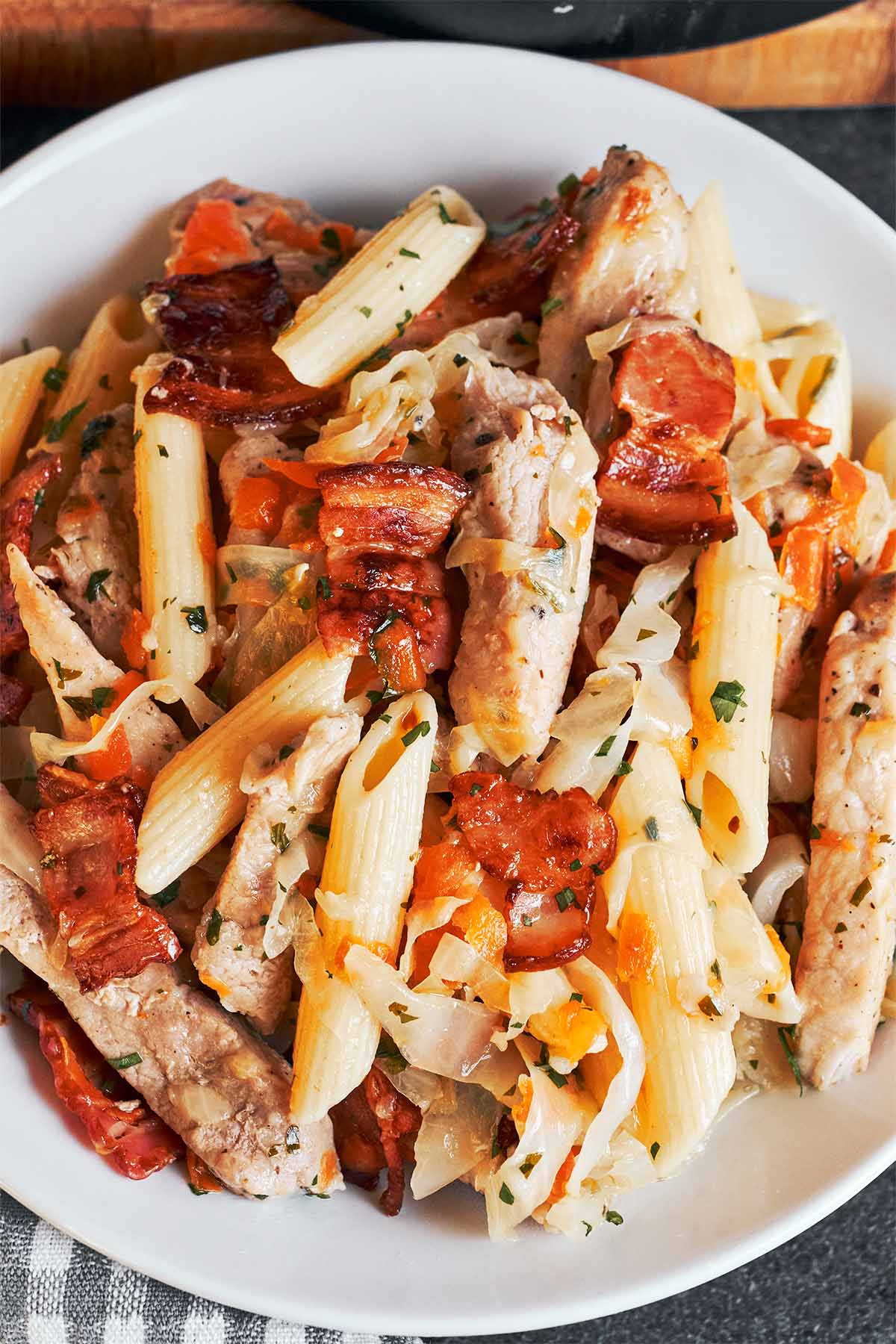
If you’re in the mood for another cozy pork dinner, try my rich Pork Bourguignon, these tender Creamy Dijon Pork Chops, or my comforting Braised Cabbage with Pork. Each one is hearty, full of savory flavor, and perfect for a relaxed family meal.
Quick Look at the Ingredients
This home-style pork and vegetable pasta uses simple ingredients you may already have on hand. Pork shoulder and smoked bacon create the rich, savory base, while green cabbage, carrot, and onion add softness, color, and a gentle sweetness.
- Pork shoulder: A flavorful cut that becomes tender as it gently simmers with the onion and bay leaves. It works especially well in this stovetop pasta because it stays juicy and does not dry out easily.
- Smoked bacon: A small amount adds plenty of smoky, salty flavor and gives the finished pasta those delicious golden bites throughout.
- Pasta: I used penne, but any sturdy short-cut pasta that holds up well with the pork and vegetables will work here.
- Cabbage: Thinly sliced cabbage softens beautifully in the skillet and develops a mild sweetness that balances the richer pork and bacon.
- Carrot: Adds a little extra sweetness, color, and a soft texture to the cabbage mixture.
- Onion: Cooked right alongside the pork, it adds a familiar savory base and blends into the cooking juices as everything simmers.
- Bay leaves: They give the pork a gentle, comforting aroma without overpowering the other flavors.
- Fresh parsley: Stirred into the cabbage for a fresh finish and a little color.
- Oil: Used in both skillets to brown the bacon and gently sauté the cabbage and vegetables.
- Water: Just enough to help the pork shoulder simmer until tender and leave a small amount of flavorful cooking liquid.
- Salt: Added in stages to season the pork, cabbage mixture, and pasta as they cook.
Note: Be sure to scroll down to the recipe card for the full ingredient list and exact measurements.
How to Make Pork and Cabbage Pasta
This easy pork and cabbage pasta recipe comes together in three simple parts: gently simmer the pork until tender, soften the cabbage and carrot in a separate skillet, and cook the penne. Toss everything together with the golden bacon just before serving.
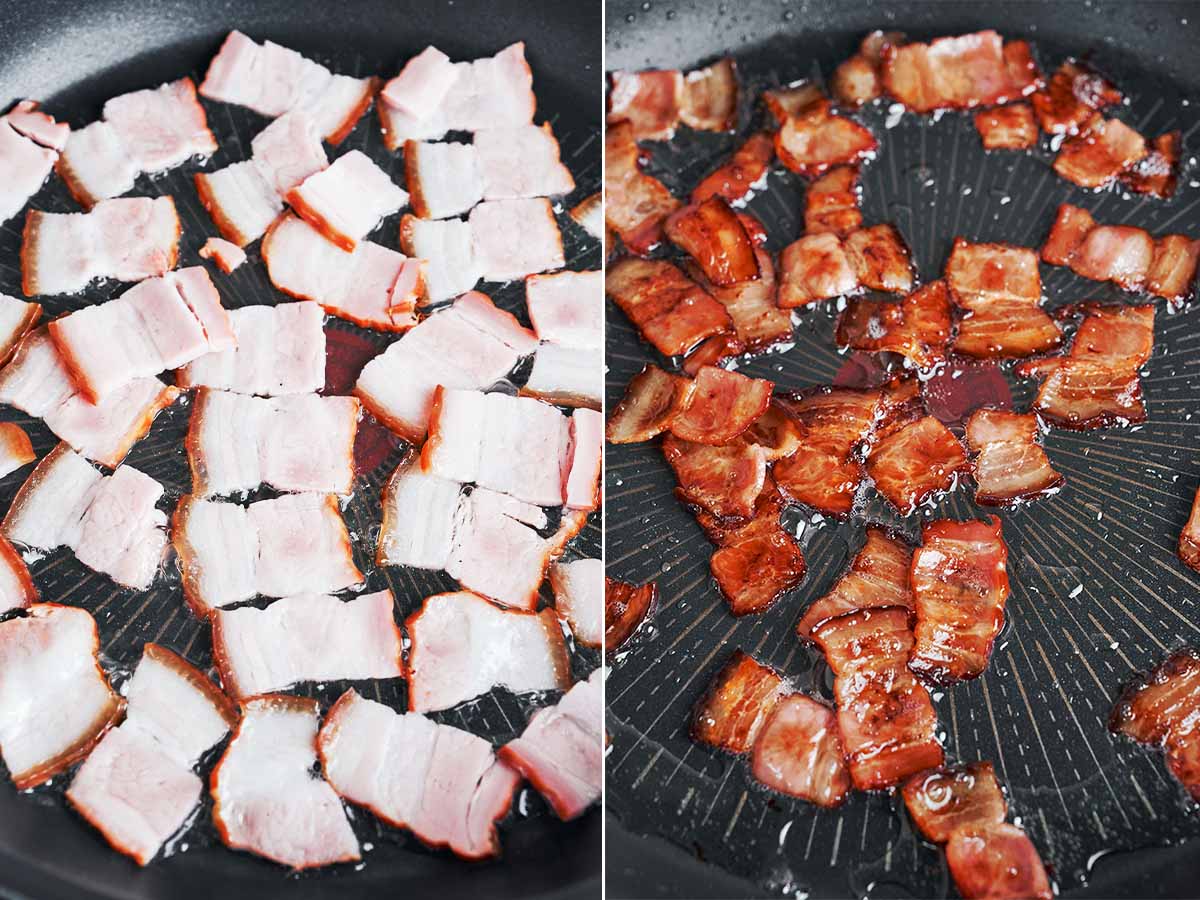
Start with the bacon: Warm 1 tablespoon of oil in a large skillet and add the chopped smoked bacon. Let it cook until golden and lightly crisp, then transfer it to a plate. Browning it first brings out its smoky flavor and leaves a tasty base in the skillet for the pork.
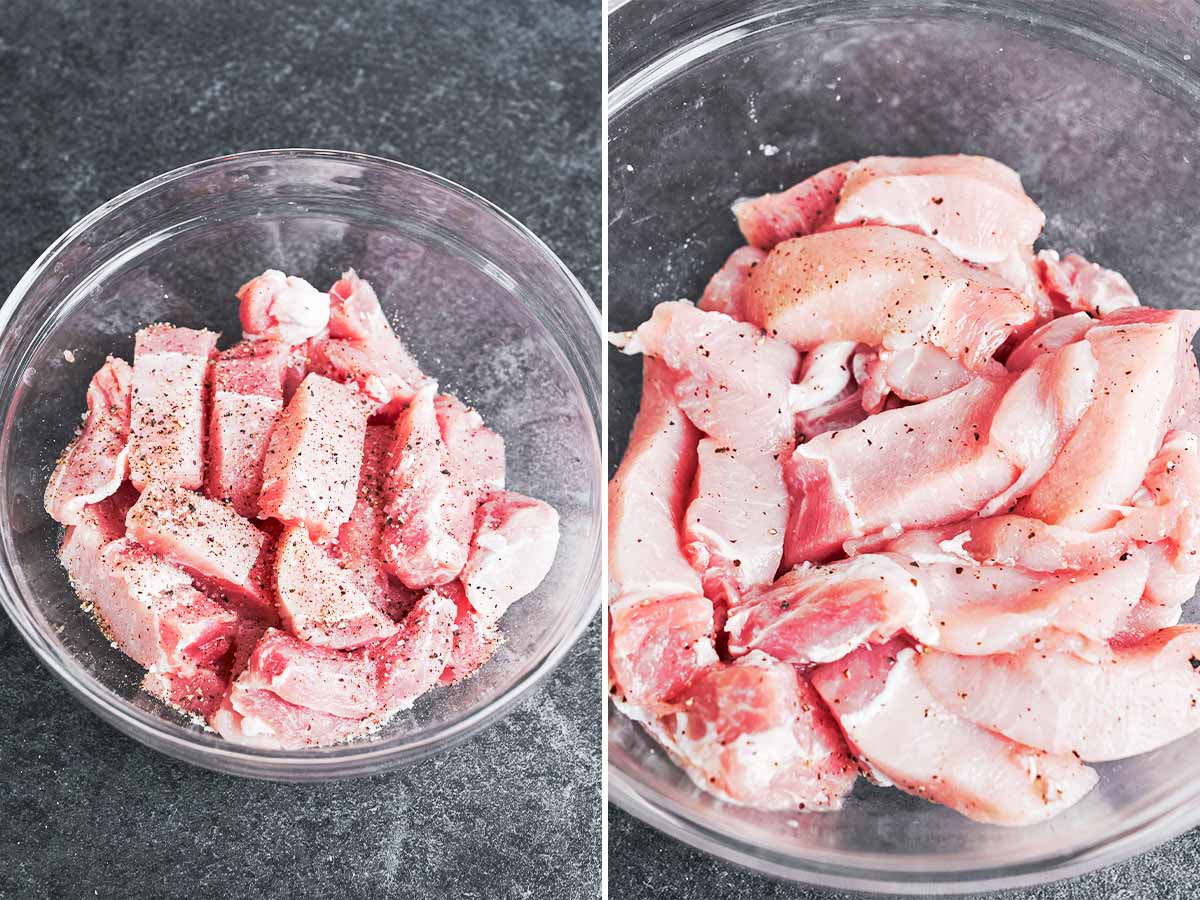
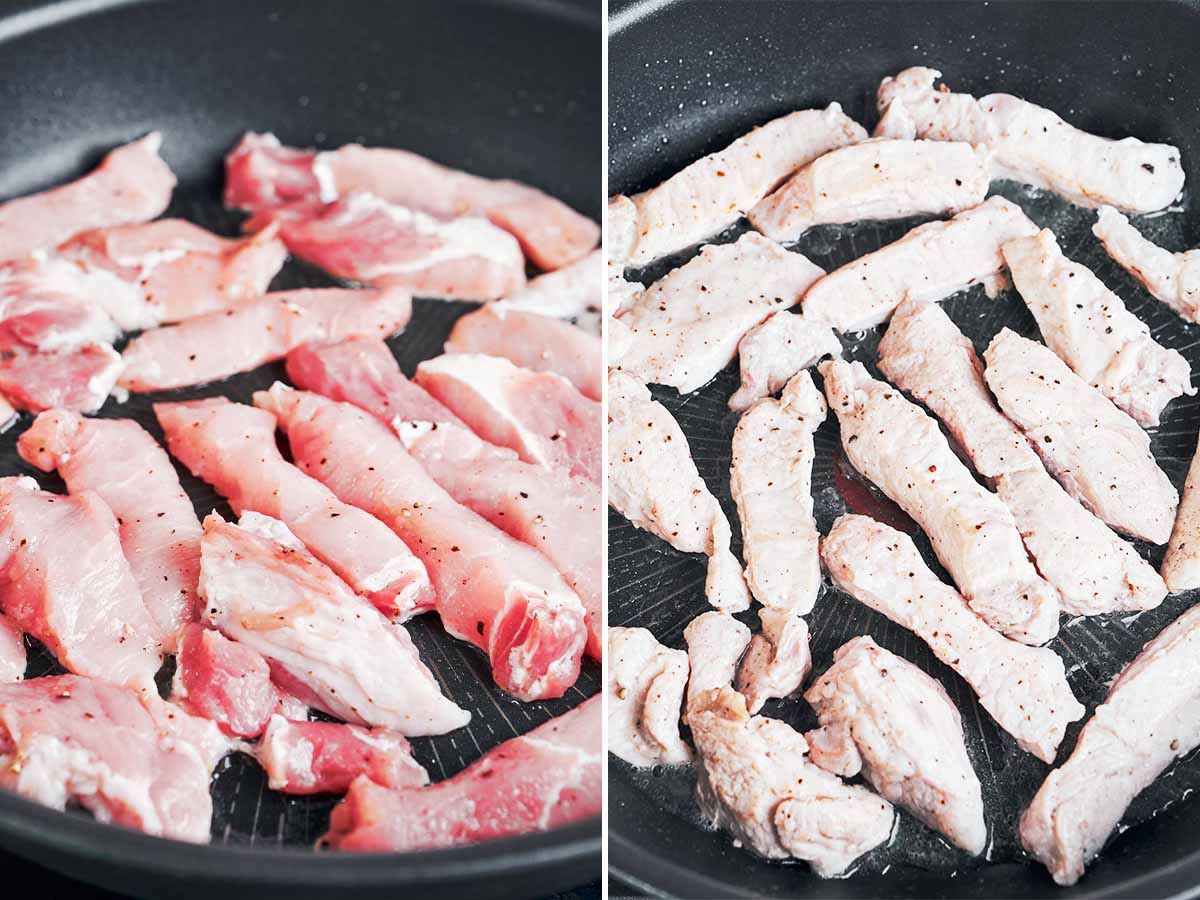
Season and cook the pork: Season the pork shoulder strips with salt and black pepper, then add them to the same skillet. Let them cook for about 3 minutes on each side. They do not need a deep golden crust, since the pork will finish cooking gently under the lid.
Soften the onion: Add the chopped onion and cook it with the pork for about 5 minutes. Stir occasionally, giving the onion time to soften and blend into the cooking juices.
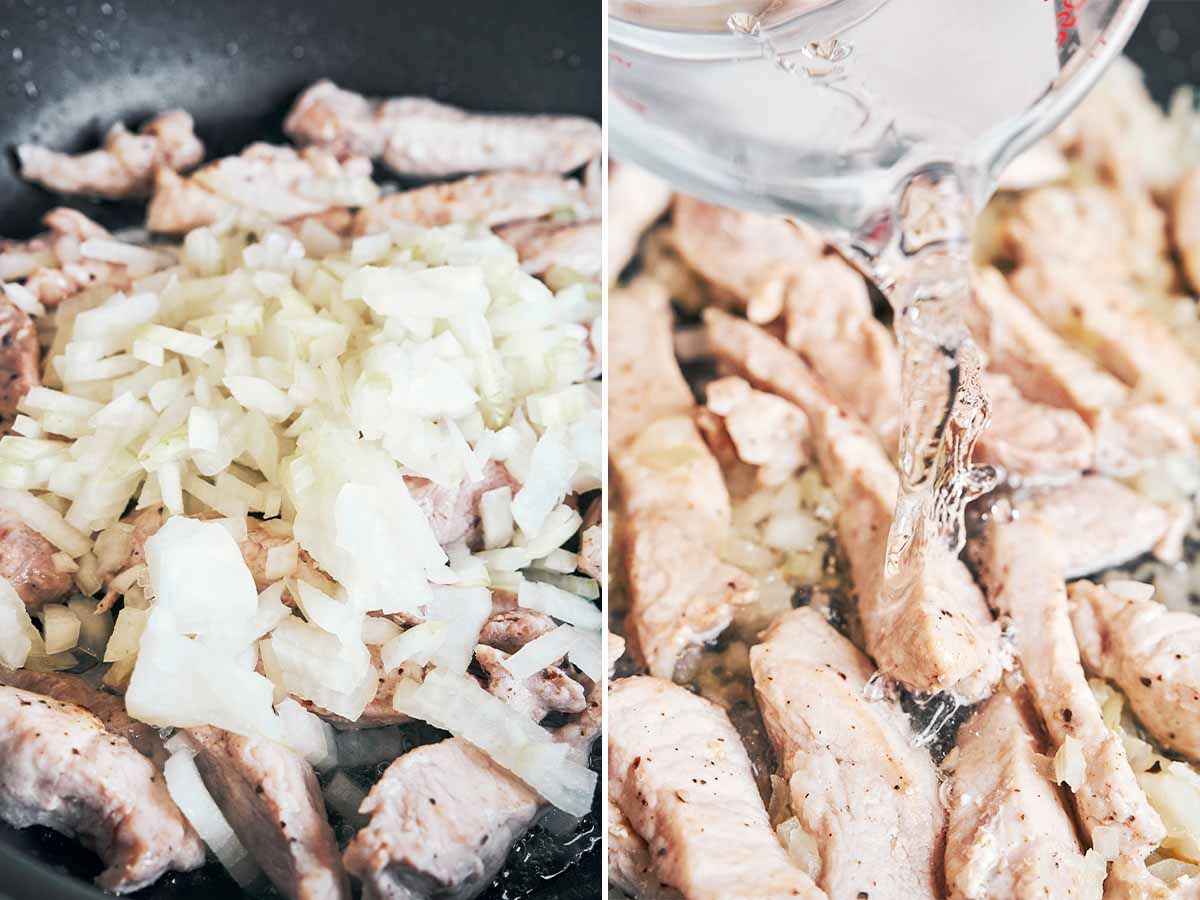
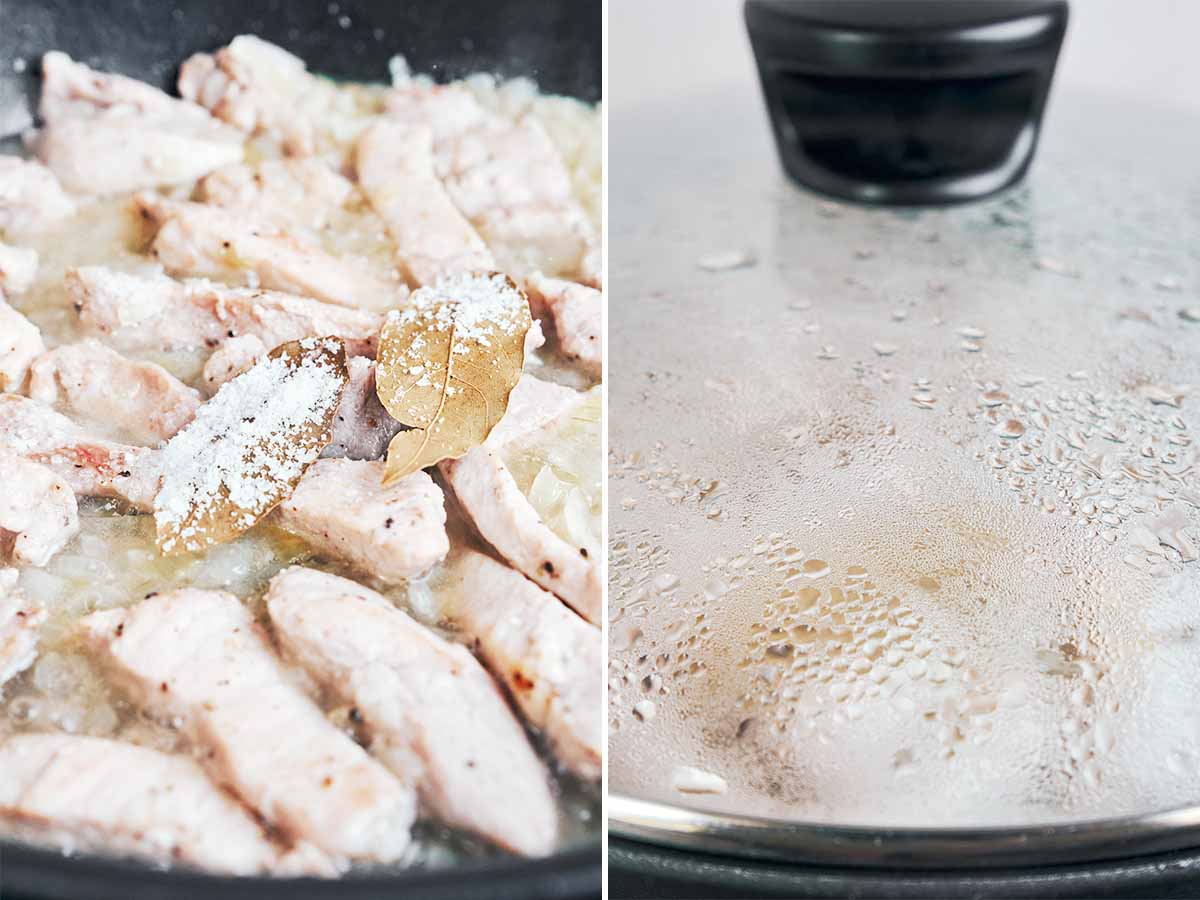
Let the pork simmer: Pour in 3/4 cup of water, then add the bay leaves and 1/2 teaspoon salt. Cover the skillet and let everything simmer gently for about 20 minutes. This gives the pork shoulder time to become tender without drying out.
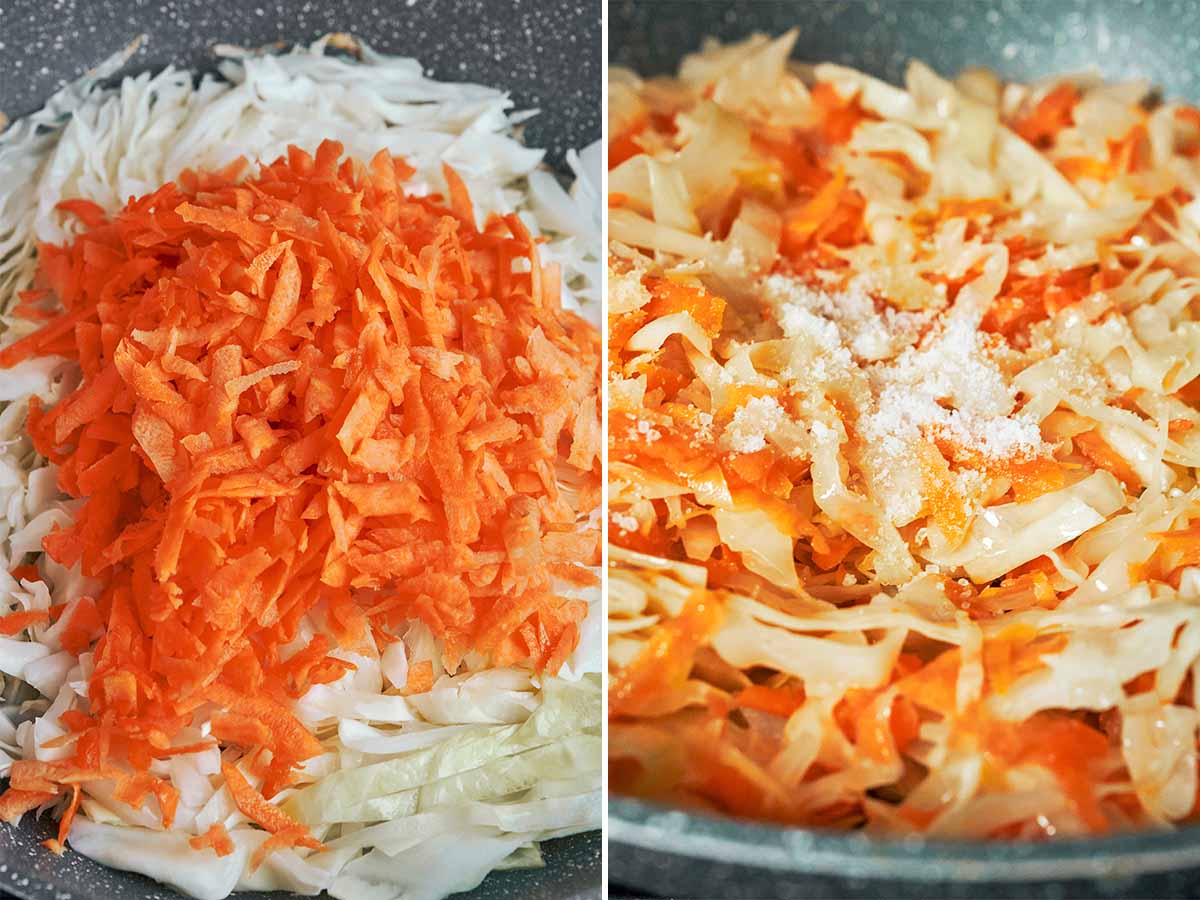
Begin the cabbage: While the pork is simmering, warm 2 tablespoons of oil in a separate large skillet. Add the sliced cabbage, cover, and let it cook over low heat for about 5 minutes. It will begin to soften and lose some of its volume.
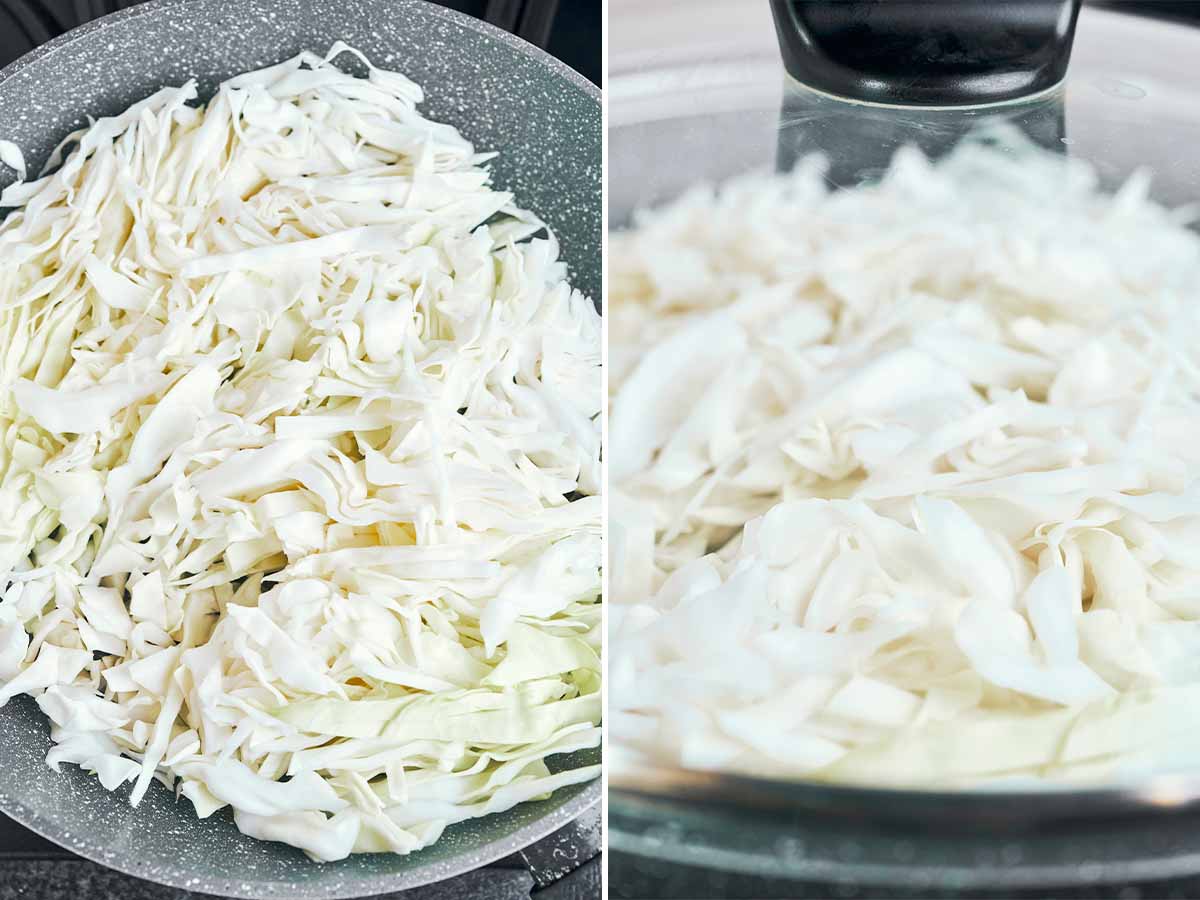
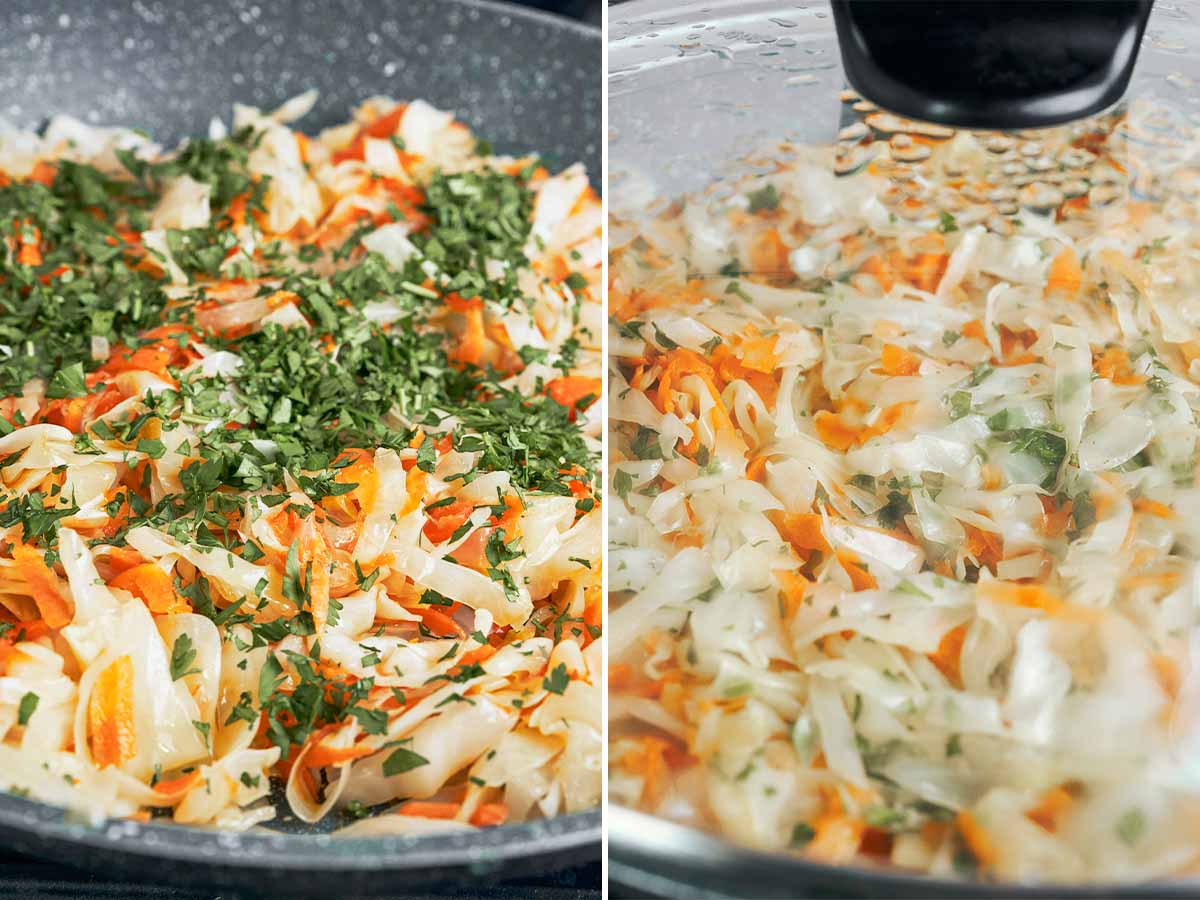
Add the carrot and parsley: Stir the grated carrot into the cabbage and cook for about 3 minutes. Add 1/2 teaspoon salt and the chopped parsley, then cover and cook for another 7 minutes. The vegetables should be tender but not completely falling apart.
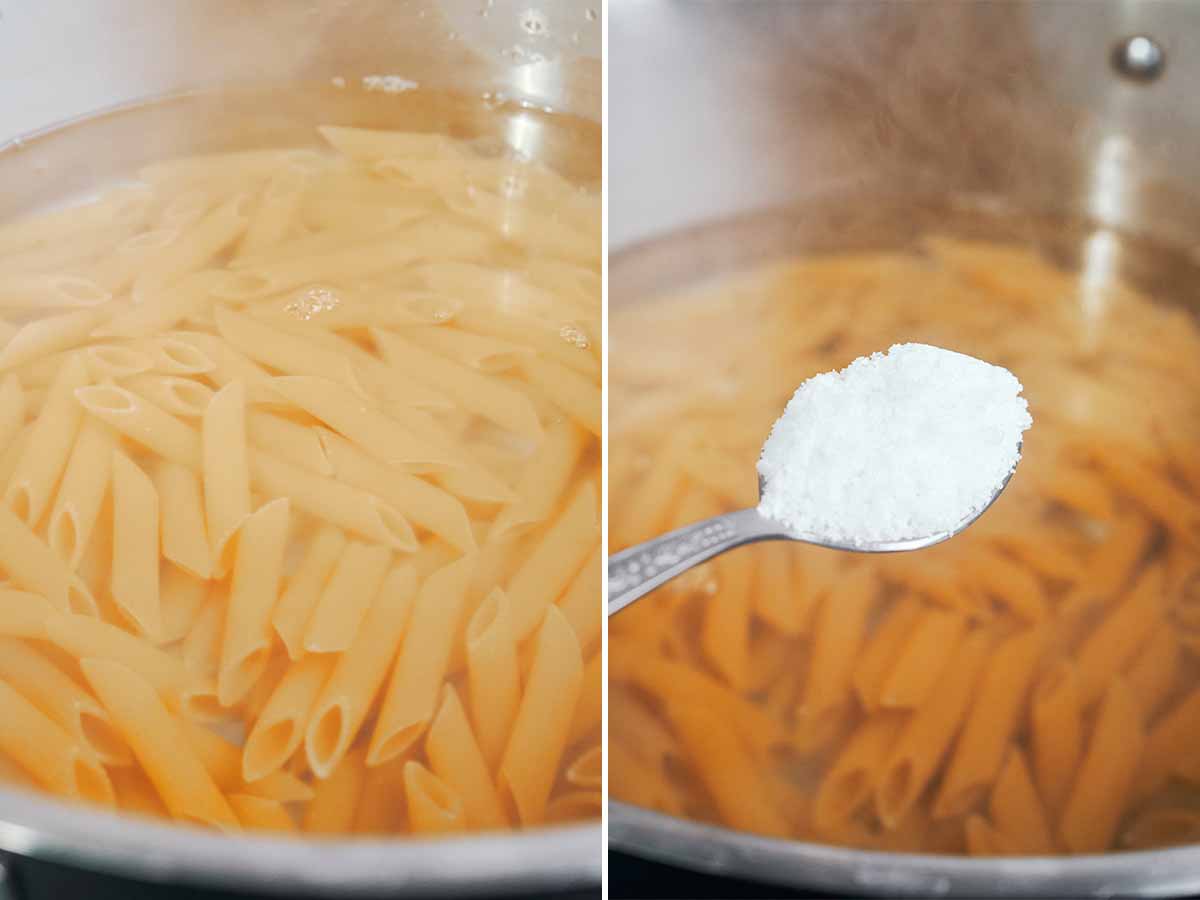
Cook the pasta: Meanwhile, bring 1 liter of water to a boil and add 1 teaspoon salt. Cook the penne according to the package directions, then drain it well. Keeping the pasta slightly firm helps it hold its shape when everything is mixed together.
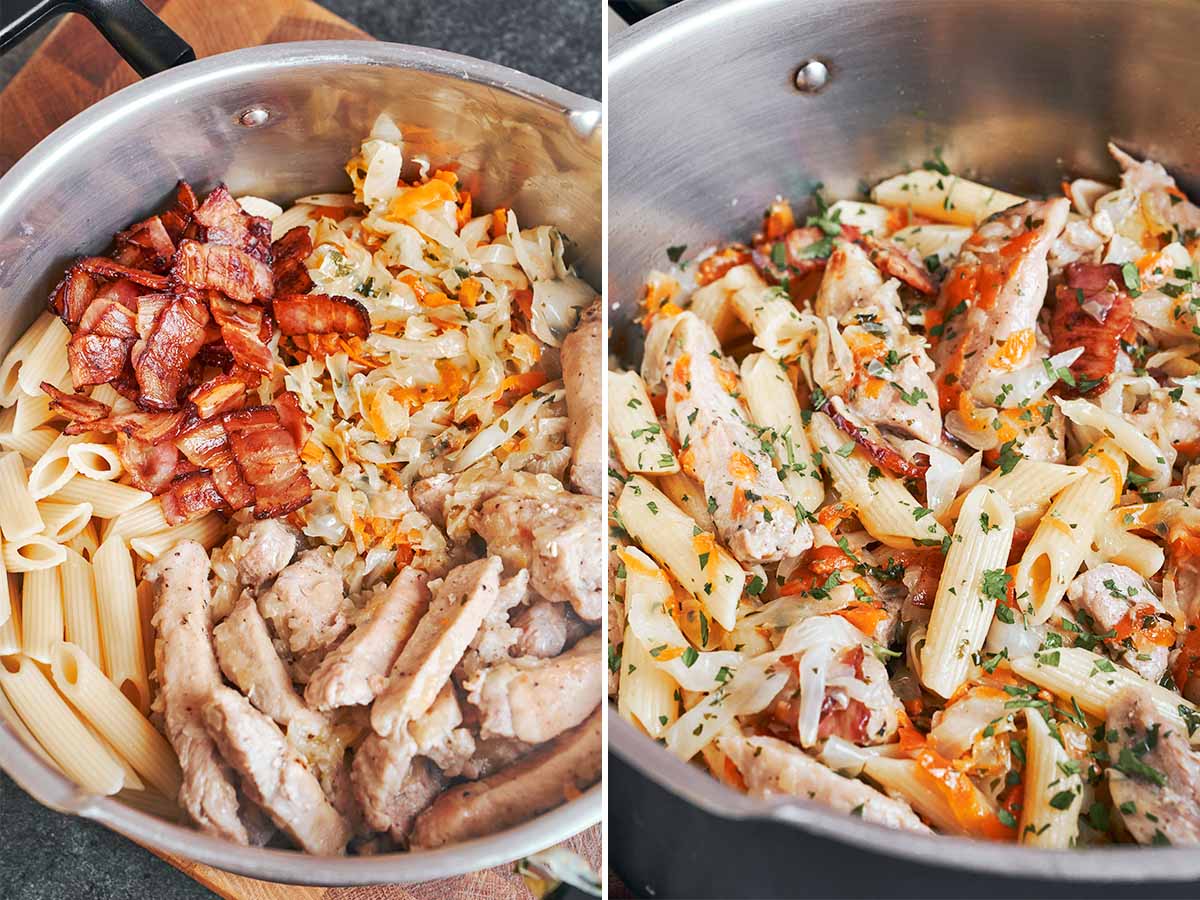
Bring everything together: Add the pork and onion mixture, cooked cabbage and carrot, and golden bacon to the pasta. Gently toss until everything is evenly mixed, then serve it warm while the bacon still has a little crispness.
Pro Tips
- Cut the pork into similar-sized strips. They will cook more evenly and become tender at about the same time.
- Do not worry about a deep crust on the pork. A little color is enough because the meat finishes cooking gently with the onion and water.
- Keep the pork at a gentle simmer. This helps the pork shoulder soften without the cooking liquid disappearing too quickly.
- Cook the cabbage separately. It keeps the cabbage from taking over the flavor of the pork and lets it develop its own mild sweetness.
- Do not cook the cabbage until mushy. It should be tender but still have enough texture to hold up when mixed with the pasta.
- Cook the pasta just until tender. Slightly firm penne is easier to toss with the meat and vegetables without breaking apart.
- Taste before adding more salt. The smoked bacon and salted pasta already bring plenty of seasoning to the finished dish.
- Mix everything while it is still warm. The flavors blend more naturally, and the bacon stays pleasantly crisp around the edges.
Variations and Substitutions
This pasta with pork shoulder, cabbage, and bacon is easy to adapt with a few simple swaps. Keep the same stovetop method and choose ingredients with a similar texture so the finished dish stays hearty, balanced, and easy to toss together.
- Pork: Pork shoulder gives the best flavor and stays tender as it simmers. Pork loin can also work, but it is leaner, so keep an eye on it and avoid cooking it longer than needed.
- Pasta: Penne holds up especially well with the pork and cabbage, but rigatoni, fusilli, or another short pasta shape would also be a good choice.
- Cabbage: Regular green cabbage works beautifully here. Savoy cabbage can be used for a softer, more delicate texture and may need a little less cooking time.
- Bacon: Smoked bacon gives the dish its deeper, savory flavor. Regular bacon can be used, although the finished pasta will taste a little milder.
- Fresh herbs: Parsley keeps the dish simple and fresh, but a little fresh dill can also be added if you enjoy its flavor with cabbage and pork.
- A little heat: A pinch of red pepper flakes can be stirred into the pork near the end for gentle warmth without changing the home-style character of the dish.
What to Serve with Pork and Cabbage Pasta
This pasta is filling enough to serve on its own, since it already has pork, vegetables, and pasta in every bowl. For a little contrast, I like pairing it with something fresh or tangy, such as a simple cucumber salad, crisp pickles, or a light green salad.
A slice of crusty bread also works well for catching any savory juices left at the bottom of the plate, but you really do not need much alongside this hearty dinner.
Storage and Reheating
Let any leftovers cool, then store them in an airtight container in the refrigerator for up to 3 days. The cabbage will soften a little more as it sits, and the bacon will lose some of its crispness, but the pasta will still have plenty of savory flavor.
For the best texture, warm the pasta gently in a skillet with a small splash of water. Cover for a minute or two so the pork and pasta heat through, then uncover and stir. You can also reheat individual portions in the microwave until hot.
Freezing is possible, but it is not my first choice for this recipe because the cooked cabbage and pasta can become softer after thawing.
Frequently Asked Questions
Can I cook the cabbage and pork in the same skillet?
You can, but cooking them separately gives the finished dish a better balance. The pork keeps its rich, savory flavor, while the cabbage has time to soften and develop its own gentle sweetness without releasing extra moisture around the meat.
How do I know when the pork shoulder is tender?
Try one of the thicker pieces after the 20-minute simmer. It should be easy to bite through without feeling chewy. If it is still firm, add a small splash of hot water, cover the skillet, and cook for another 5 minutes.
Can I use a different type of pasta?
Yes. Penne works especially well, but fusilli, rigatoni, farfalle, or another short pasta shape will also hold the pork and vegetables nicely.
What can I do if the finished pasta seems dry?
Stir in a small splash of reserved pasta water or warm water, about 1 tablespoon at a time. You only need enough to loosen everything slightly without making the dish watery.
Can I prepare any part of the recipe ahead?
The pork and cabbage mixtures can be cooked a day ahead and stored separately in the refrigerator. Reheat them gently, then combine them with freshly cooked pasta and the bacon for the best texture.
Final Thoughts
This pork and cabbage pasta is a simple, comforting way to turn everyday ingredients into a really satisfying dinner. Tender pork, softly cooked cabbage, smoky bacon, and penne all come together beautifully, especially when served warm right after mixing.
For more simple meals to enjoy around the table, explore my collection of dinner recipes filled with cozy, satisfying ideas for everyday cooking.
Pork and Cabbage Pasta with Bacon
Ingredients
For the Pork and Bacon:
- 3.5 ounces (100 g) smoked bacon, chopped
- 1 pound (450 g) pork shoulder, cut into bite-size strips
- Salt and black pepper to season the pork
- 3 tablespoons oil divided
- 1 medium onion chopped
- 3/4 cup water
- 2 bay leaves
- 1/2 teaspoon salt
For the Cabbage:
- 10.5 ounces (300 g) green cabbage, thinly sliced
- 1 medium carrot grated
- 1/2 teaspoon salt
- 3 tablespoons chopped fresh parsley
For the Pasta:
- 7 ounces (200 g) penne pasta
- 4 1/4 cups 1 liter water
- 1 teaspoon salt for the pasta water
Instructions
- Season the pork shoulder strips with salt and black pepper on all sides.
- Warm 1 tablespoon of oil in a large skillet over medium heat. Add the smoked bacon and let it cook until golden and lightly crisp. Transfer the bacon to a plate and set it aside.
- Add the seasoned pork to the same skillet. Let it cook for about 3 minutes on each side. The pork does not need a deep golden crust because it will finish cooking gently under the lid.
- Add the chopped onion and cook it with the pork for about 5 minutes, stirring occasionally, until the onion begins to soften.
- Pour in 3/4 cup of water, then add the bay leaves and 1/2 teaspoon salt. Cover the skillet, reduce the heat, and let the pork simmer gently for about 20 minutes, or until it is tender. If the liquid disappears too quickly, add a small splash of hot water.
- While the pork is simmering, warm the remaining 2 tablespoons of oil in a separate large skillet. Add the sliced cabbage, cover, and let it cook over low heat for about 5 minutes.
- Stir the grated carrot into the cabbage and cook for another 3 minutes. Add 1/2 teaspoon salt and the chopped parsley, then cover and cook for about 7 minutes more. The cabbage should be tender but still have a little texture.
- Meanwhile, bring 1 liter of water to a boil in a large pot and add 1 teaspoon salt. Add the penne and cook according to the package directions until tender. Drain the pasta well.
- Add the pork and onion mixture, cooked cabbage and carrot, and golden bacon to the drained pasta. Gently toss until everything is evenly combined. Taste and add more salt or black pepper only if needed.
Notes
- Pork shoulder can vary in tenderness. If the pork still feels firm after 20 minutes, add a small splash of hot water, cover, and cook for another 5 minutes.
- Cooking the cabbage separately keeps its moisture and stronger flavor from taking over the pork. It also allows the cabbage and carrot to develop their own lightly sweet flavor.
- Keep a little bacon aside and scatter it over the finished pasta for a crisper texture.
- Before draining the pasta, you can reserve about 1/2 cup of pasta water. If the finished dish seems dry, add 1 or 2 tablespoons at a time.
- Taste the finished dish before adding more salt because the bacon, pork mixture, cabbage, and pasta water are all seasoned.