
Pork Stew with Potatoes and Pickles
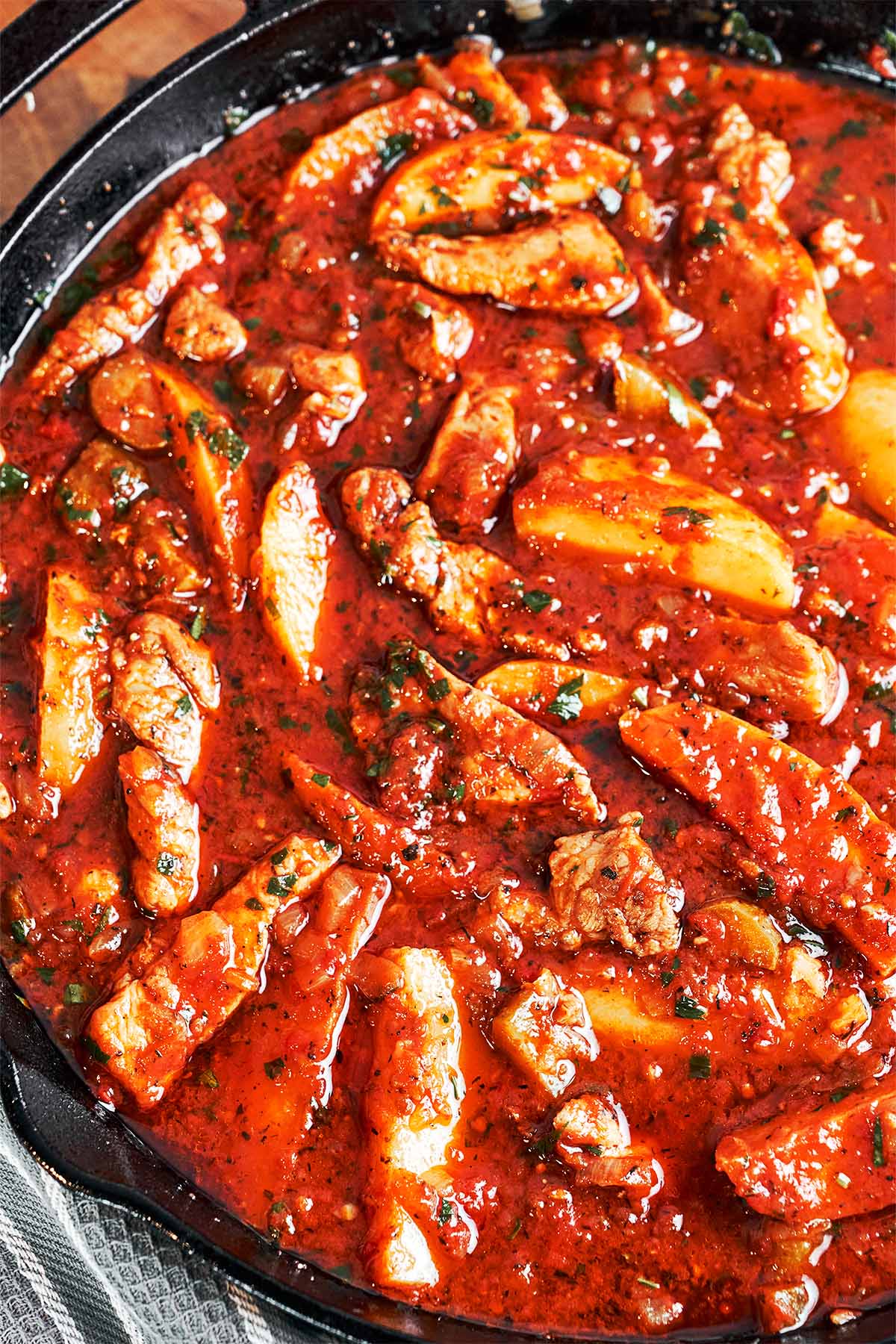
This Pork Stew with Potatoes and Pickles is rich, cozy, and full of bold savory flavor. Tender pork simmers in a hearty tomato-based sauce, while the pickles add a bright, salty tang that makes it taste more memorable than a regular pork stew.
Looking for more cozy pork dinners? Browse my collection of pork recipes, from easy skillet meals to slow-simmered comfort food.
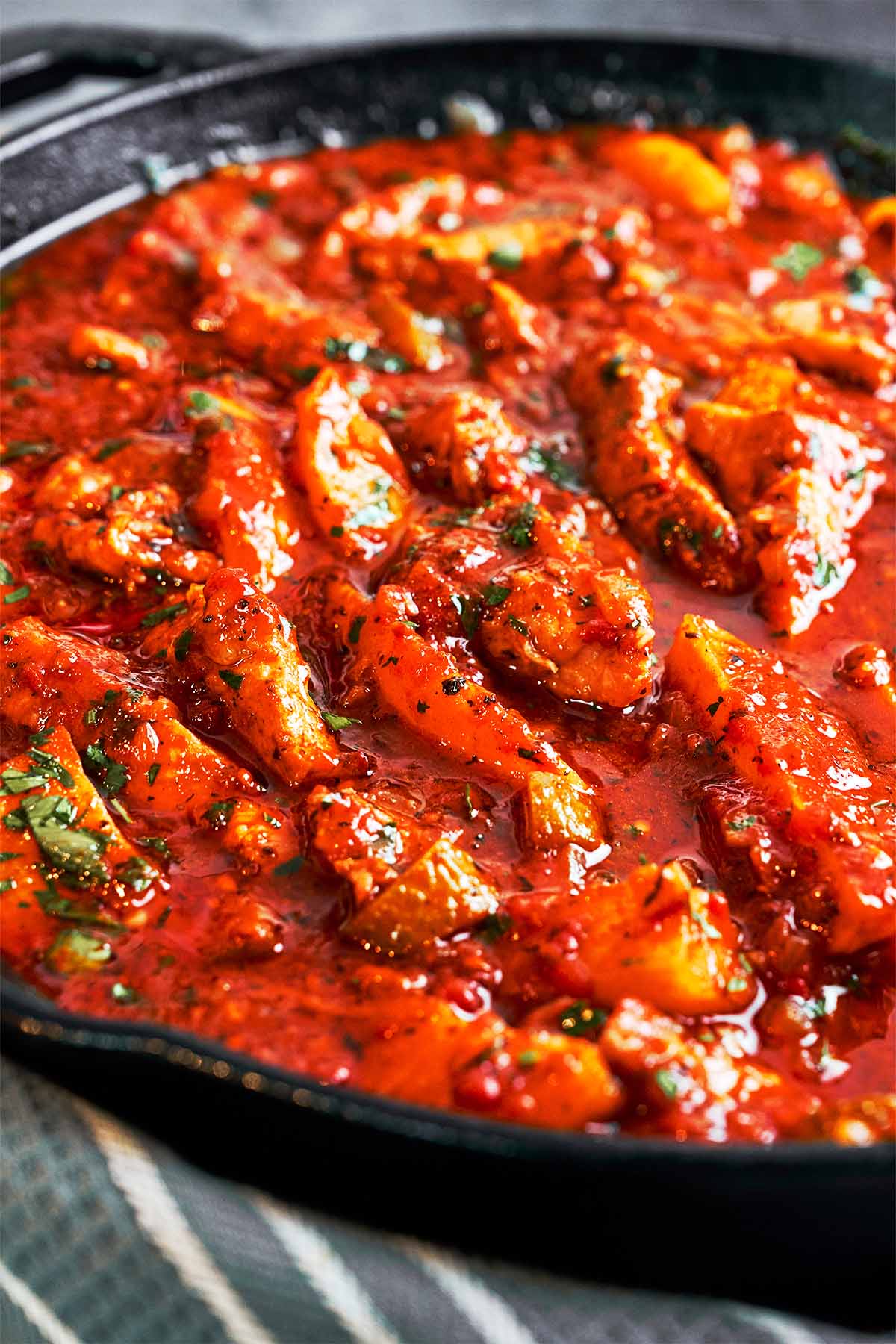
As the pickles simmer, their briny flavor melts into the tomato sauce, balancing the richness of the pork and giving every bite a savory, slightly tangy finish. The fried potatoes are stirred in near the end, where they soak up the bold sauce while staying tender and holding their shape.
Why This Recipe Works
This pork stew with pickles gets its signature flavor from dill pickles simmered directly in the tomato sauce. Their briny tang balances the richness of the pork and gives the sauce a deeper, more rounded taste than a standard pork and potato stew.
I keep coming back to this recipe because it’s simple, reliable, and always turns out delicious. Frying the potatoes separately over high heat for about 8 minutes gives them lightly golden edges, then they finish cooking in the sauce and absorb the tomato and pickle flavor without falling apart.
If you’re in the mood for another comforting pork dinner, try my hearty pork stew with vegetables, this tender pork tenderloin with creamy cognac mushroom sauce, or these cozy pork chops with sour cream sauce.
Quick Look at the Ingredients
This stew is made with simple ingredients, but each one plays an important part in building its bold, savory flavor.
- Pork shoulder: Boneless pork shoulder or pork butt works especially well because the marbling keeps the meat juicy and tender as it simmers, while also adding more body to the tomato sauce.
- Potatoes: Choose potatoes that hold their shape well. Frying them first gives the edges a light golden color before they finish cooking in the sauce.
- Dill pickles: These are the key ingredient, adding the salty, tangy flavor that makes this stew so distinctive. Avoid sweet pickles here.
- Tomato paste: It creates the rich red base and gives the sauce a deeper, more concentrated tomato flavor.
- Onion and garlic: They soften into the sauce and build a warm, savory foundation for the pork.
- Paprika and thyme: Paprika gives the sauce its warm color, while a little thyme adds a subtle savory note without overpowering the tomato and pickle flavor.
This is an overview with step-by-step photos. Full ingredients & instructions are in the recipe card below.
If you enjoy hearty recipes built around golden, tender potatoes, you can find more ideas in my collection of potato recipes.
How to Make Pork Stew with Potatoes and Pickles
This stovetop pork stew comes together in a few simple stages, giving the pork time to become tender while the sauce develops and the potatoes keep their shape.
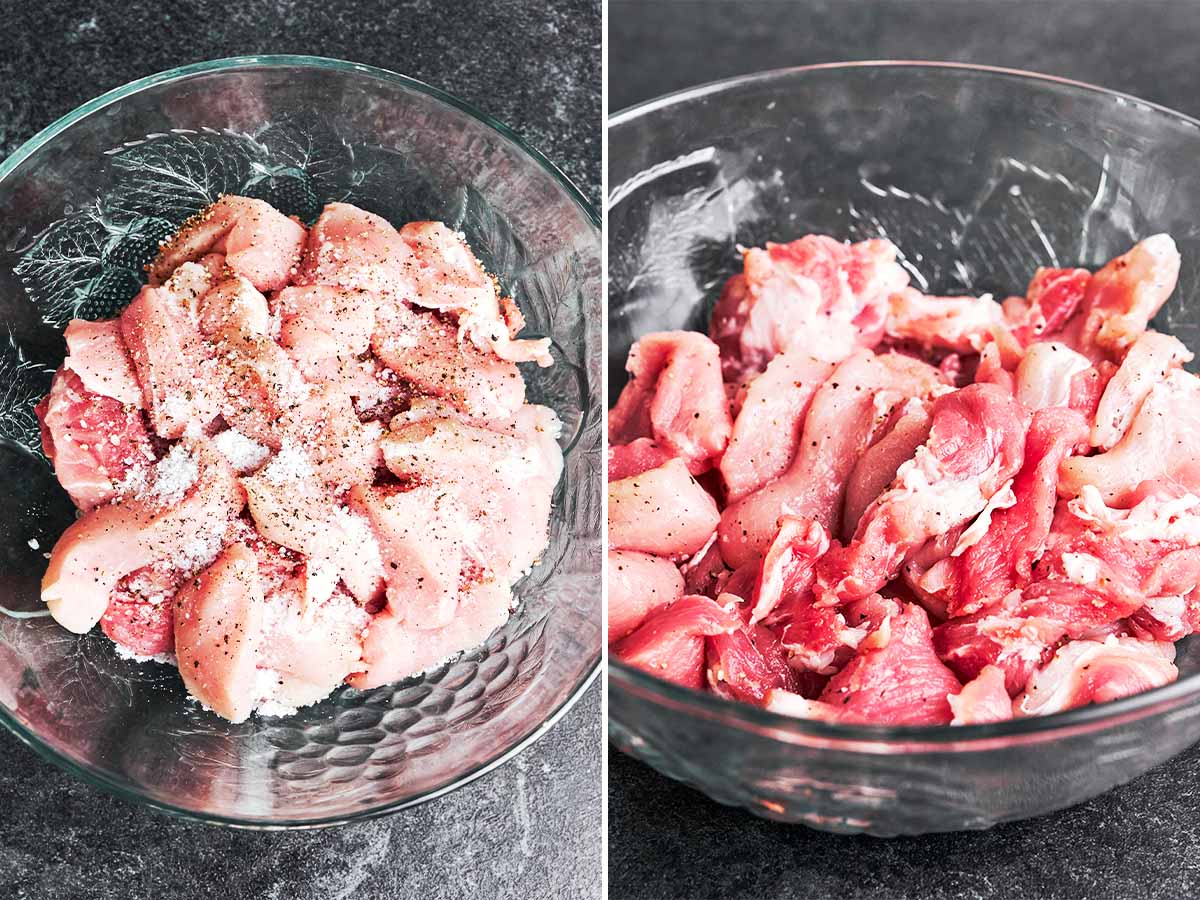
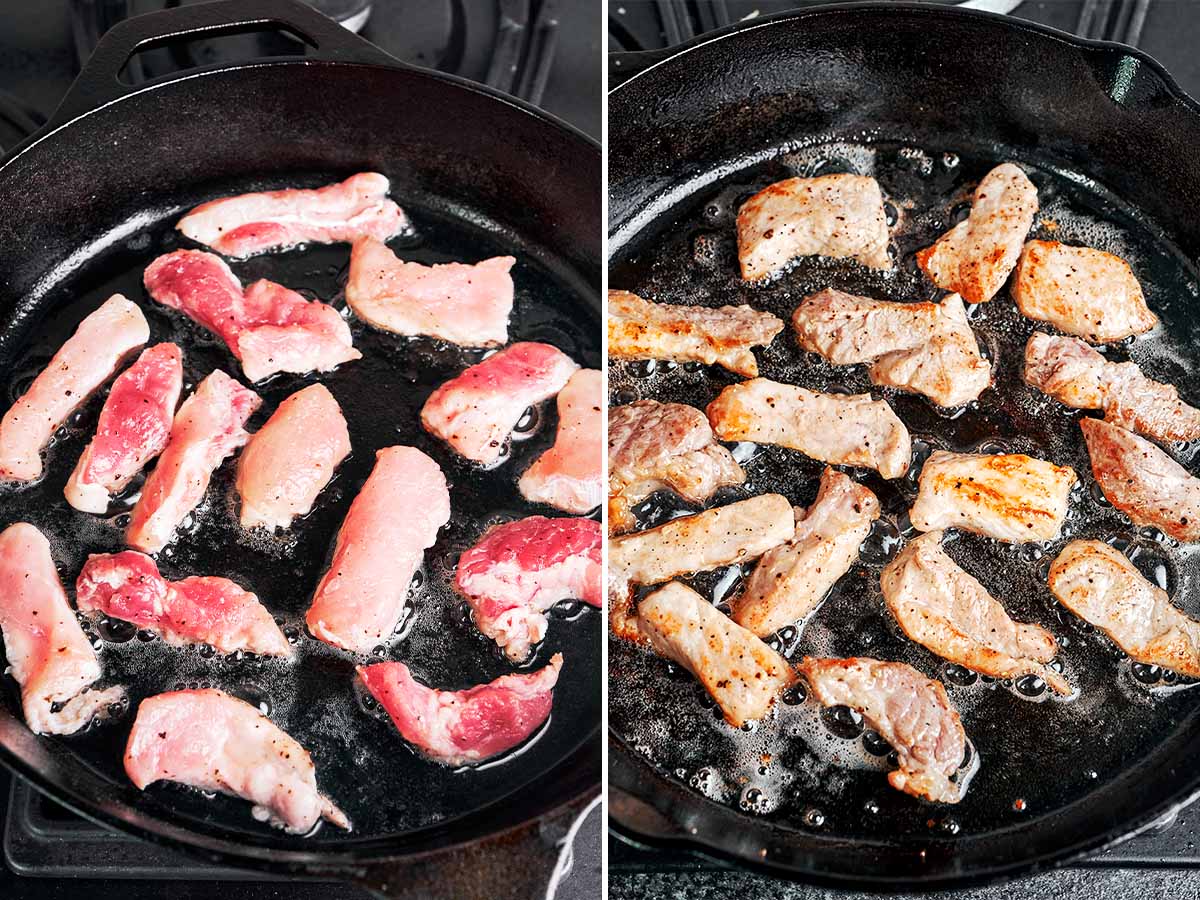
Brown the pork: Season the pork with salt and black pepper, then add it to a hot skillet with oil. Let the pieces sit long enough to develop some golden color before turning them. They do not need to cook through at this point. Once browned, transfer the pork to a plate.
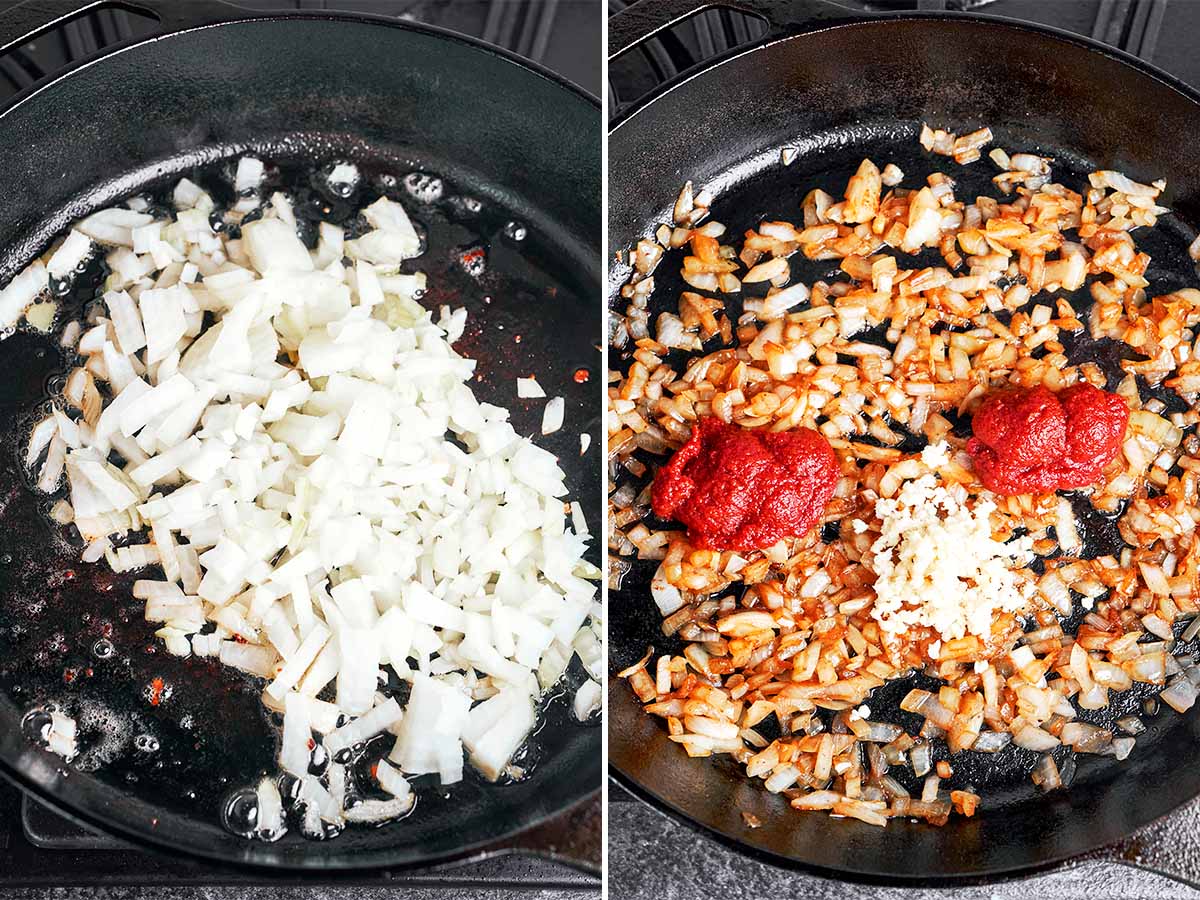
Start the sauce: Add the onion to the same skillet and cook until softened and lightly golden. Stir in the garlic and tomato paste, then let them cook for about a minute. You will know it is ready when the tomato paste darkens slightly and starts smelling rich and savory.
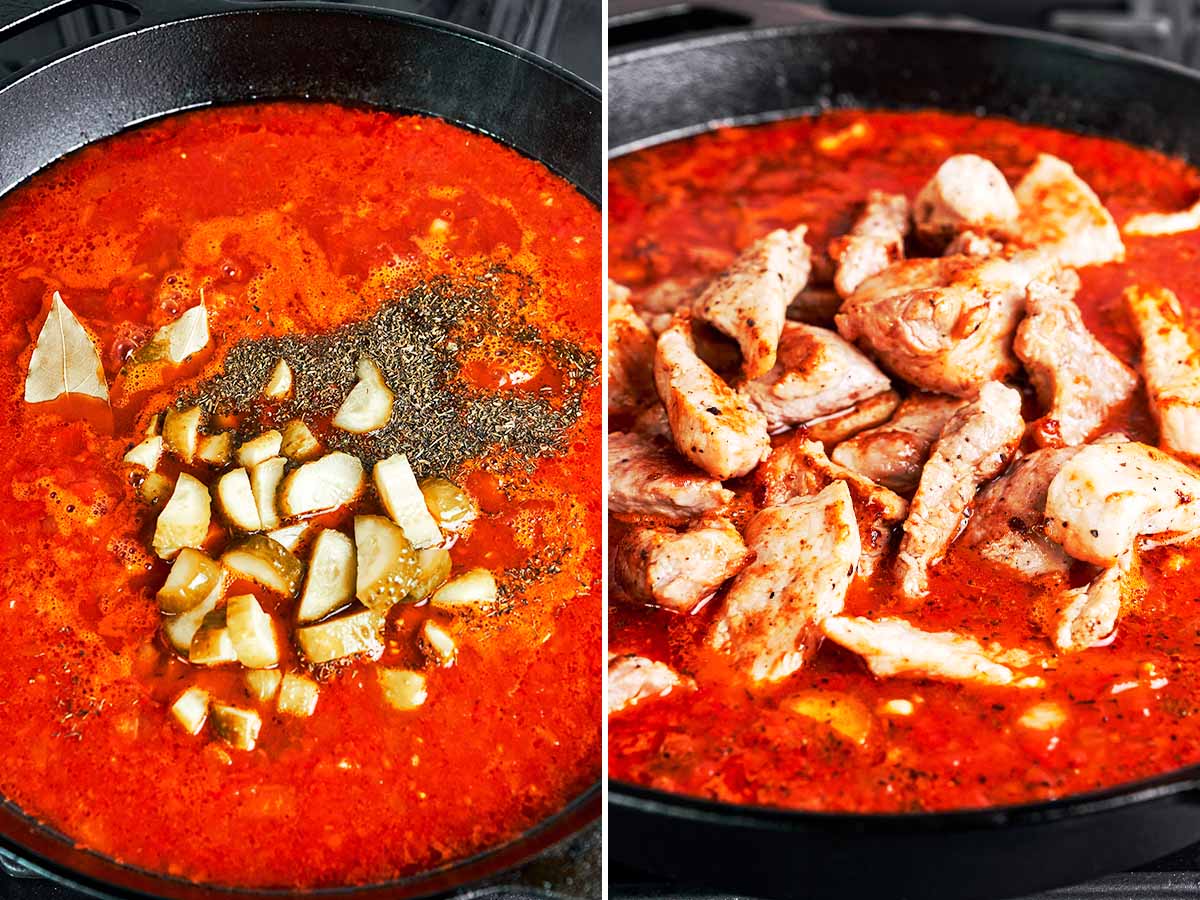
Let the pork simmer: Pour in the liquid and scrape up all those flavorful browned bits from the bottom of the skillet. Add the diced pickles, bay leaf, and thyme, then return the pork to the sauce. Cover and simmer gently over low heat for about 25 minutes, giving the pickles time to soften and flavor the tomato sauce.
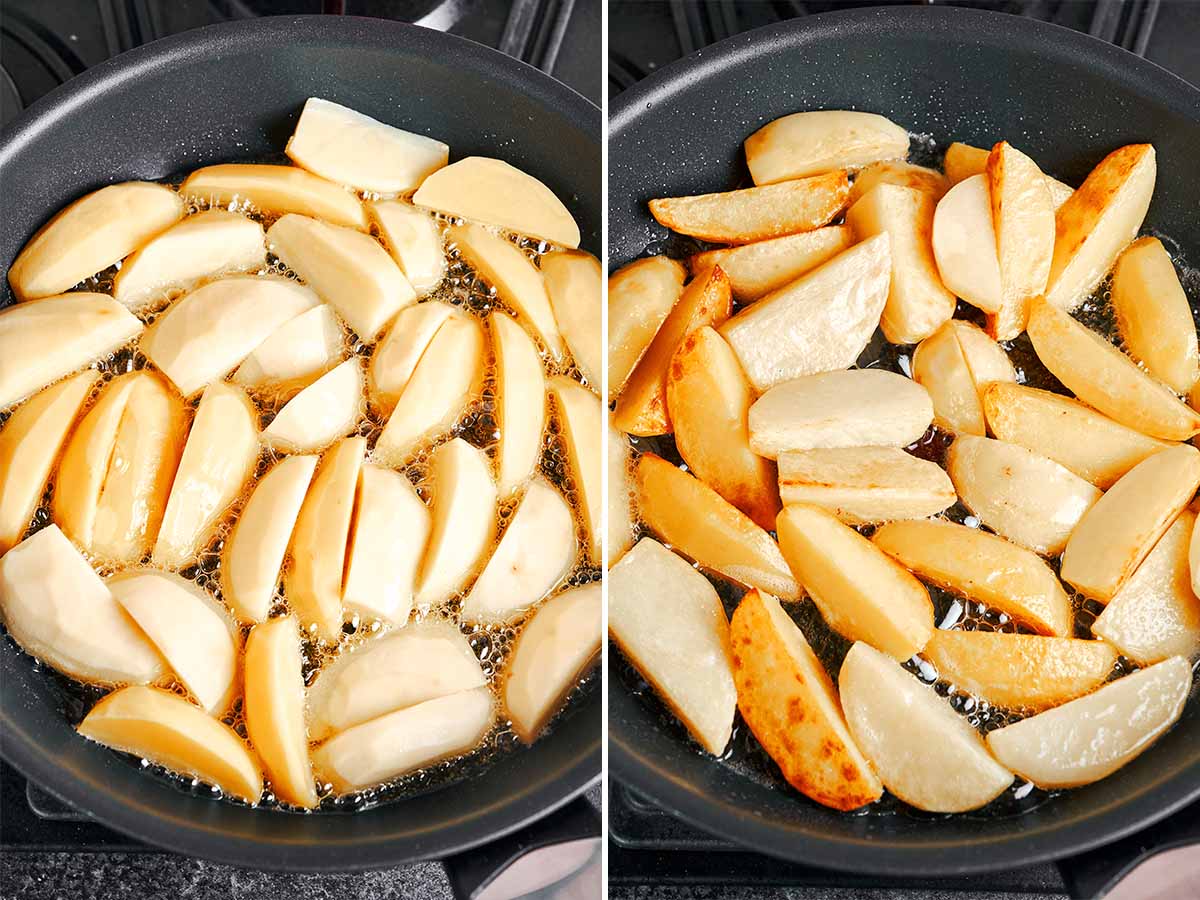
Give the potatoes some color: While the pork simmers, heat oil in a separate skillet over high heat. Add the potato wedges and cook for about 8 minutes, turning them from time to time. You are only looking for lightly golden edges here, since the potatoes will finish cooking in the sauce.
Bring everything together: Add the fried potatoes to the pork along with the paprika, 1/2 teaspoon salt, and 1/3 teaspoon black pepper. Gently fold them into the sauce so every wedge is coated without breaking apart.
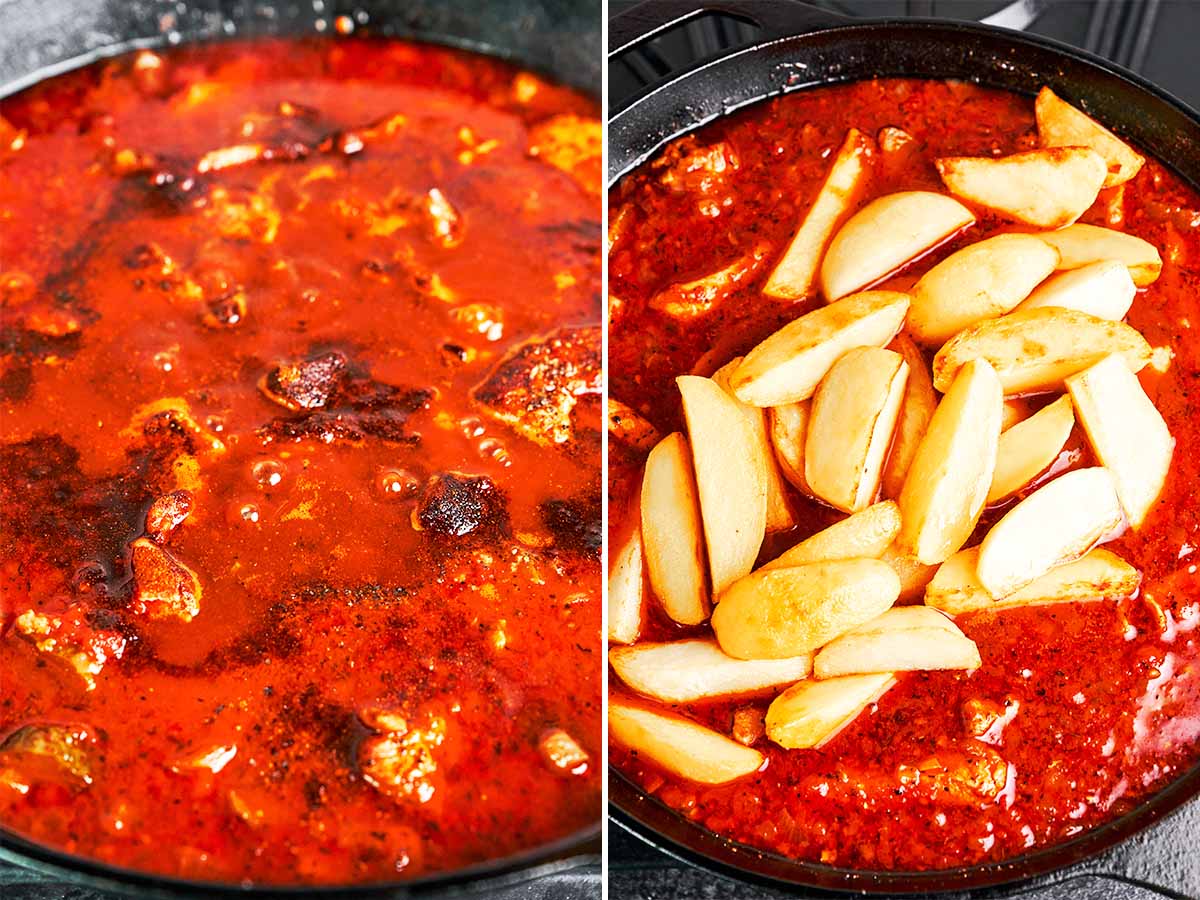
Finish the stew: Cover and simmer over low heat for another 20 minutes, or until the pork is tender and the potatoes are cooked through. Stir in the fresh parsley, then let the stew rest for a few minutes so the sauce settles before serving.

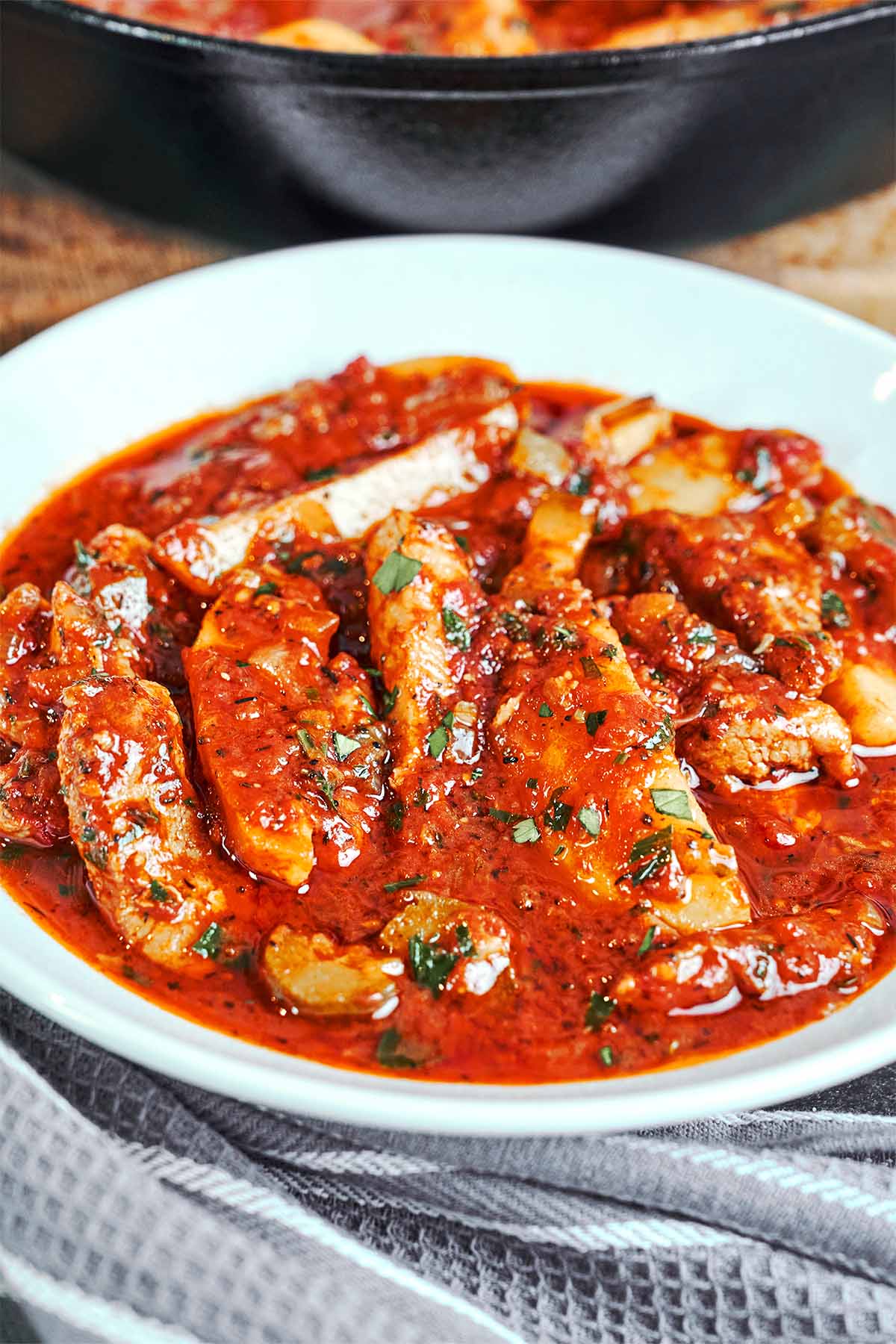
Serve: Spoon the stew into bowls while it is still hot, making sure each serving gets plenty of tender pork, golden potatoes, and rich tomato sauce. Finish with a little fresh parsley and serve with crusty bread to soak up every last bit of the sauce.
Pro Tips
- Brown the pork in batches: Give the pieces a little space in the skillet so they sear instead of releasing too much liquid. That golden color adds a lot of flavor to the finished sauce.
- Do not rush the tomato paste: Let it cook with the onion and garlic for about a minute. This takes away the raw tomato taste and gives the sauce a deeper, richer flavor.
- Use dill pickles: Sweet pickles will change the flavor of the stew. Dill pickles give the sauce the salty, tangy bite that makes this recipe so distinctive.
- Be careful with the salt: Pickles already bring plenty of saltiness, so add the final 1/2 teaspoon with the potatoes and taste again near the end before adding more.
- Fry the potatoes over high heat: About 8 minutes is enough to give the wedges lightly golden edges. They should still be firm in the center because they will finish cooking in the sauce.
- Keep the simmer gentle: A low, steady simmer helps the pork become tender without reducing the tomato sauce too quickly.
- Stir carefully after adding the potatoes: Gently fold them into the sauce so they stay intact while soaking up the pork, tomato, and pickle flavors.
Variations and Substitutions
This stew is best when the tomato and pickle flavor stays front and center, but a few simple swaps can work without changing the character of the dish.
- Use another cut of pork: Pork shoulder gives the most tender, juicy result, but pork loin can also work. Just watch it closely, since leaner pork can dry out if it simmers too long.
- Adjust the pickles: Add a little less for a milder flavor or slightly more for a sharper, brinier sauce. Stick with dill or naturally sour pickles rather than sweet pickles.
- Change the potatoes: Yukon Gold or other waxy potatoes hold their shape especially well, but russet potatoes can be used for a softer, more rustic texture.
- Make the sauce thinner: Stir in a small splash of broth or water if the tomato sauce reduces too much before the potatoes are tender.
- Add gentle heat: A small pinch of red pepper flakes can add warmth without covering up the savory tomato and pickle flavor.
- Use fresh herbs: Parsley keeps the finished dish fresh and balanced, but a little fresh dill also pairs naturally with the pickles.
What to Serve with Pork Stew
This pork stew is already a hearty, complete meal, so it does not need much on the side. I usually serve it with a piece of crusty bread to catch the tomato and pickle sauce, plus something fresh and simple to balance the richness.
- Crusty bread: Perfect for soaking up the savory tomato sauce left in the bowl.
- Cucumber salad: A cool, crisp salad adds freshness without competing with the pickles in the stew.
- Simple green salad: Keep the dressing light and slightly tangy for an easy contrast to the rich pork.
- Sour cream: A small spoonful on top softens the tomato flavor and makes each serving feel even more comforting.
Looking for a different take on stew? Browse my stew recipes for creamy French favorites, classic beef stews, and more pork dinners.
Storage and Leftovers
Store leftover pork stew in an airtight container in the refrigerator for up to 4 days. The flavor becomes even deeper after a night in the fridge, but the potatoes will continue to soften as they sit in the sauce.
Reheat it gently in a covered skillet or saucepan over low heat, adding a small splash of water or broth if the sauce has thickened too much. Freezing is not my first choice for this recipe because the potatoes can lose their texture after thawing, but it can still be frozen for up to 2 months if needed.
Frequently Asked Questions
Does this pork stew with dill pickles taste sour?
The pickles give the sauce a noticeable briny tang, but the finished stew should not taste sharply sour. As they simmer, their flavor softens and blends with the tomato paste, pork, and potatoes for a balanced savory finish.
How do I know when the pork is tender?
The pork should feel soft when pierced with a fork and be easy to bite without feeling chewy. If it is still firm, cover the skillet and let it simmer a little longer before adding the potatoes.
What can I do if the sauce is too thin?
Remove the lid and let the stew simmer gently for a few extra minutes. The sauce will naturally reduce and thicken as some of the liquid evaporates.
Can I make this stew ahead of time?
Yes. The pork and tomato sauce taste even richer after resting overnight. Reheat the stew gently and add a small splash of water or broth only if the sauce has become too thick.
If you’re looking for a pork stew that feels familiar but tastes a little different, this is such a comforting one to try. The tender pork, golden fried potatoes, and briny tomato sauce make every bowl hearty and satisfying, especially with fresh parsley and crusty bread on the side.
Pork Stew with Potatoes and Pickles

Ingredients
- 1 1/2 lb (700 g) boneless pork shoulder or pork butt cut into bite-size strips
- 1/2 teaspoon black pepper
- 2 tablespoons vegetable oil for browning the pork
- 1 large onion diced
- 3 garlic cloves minced
- 2 tablespoons tomato paste
- 2 cups water or broth
- 3/4 cup diced dill pickles
- 1 bay leaf
- 1/2 teaspoon dried thyme
- 1 1/2 lb (700 g) potatoes peeled and cut into wedges
- 4 tablespoons vegetable oil for frying the potatoes, plus more if needed
- 1 teaspoon paprika
- 1/3 teaspoon black pepper
- 1/2 teaspoon salt plus more to taste if needed
- 2 tablespoons chopped fresh parsley
Instructions
- Season the pork with black pepper. Heat 2 tablespoons of oil in a large deep skillet over medium-high heat.
- Add the pork in a single layer and let it brown before turning. Cook it in batches if needed so the pieces sear instead of steaming. Transfer the browned pork to a plate.
- Add the diced onion to the same skillet and cook for 4 to 5 minutes, until softened and lightly golden.
- Stir in the garlic and tomato paste. Cook for about 1 minute, stirring often, until the tomato paste darkens slightly and smells rich and savory.
- Pour in the water or broth and scrape up the browned bits from the bottom of the skillet. Add the diced pickles, bay leaf, and dried thyme.
- Return the pork to the skillet and bring the sauce to a gentle simmer. Cover and cook over low heat for 35 to 45 minutes, until the pork is tender.
- While the pork simmers, heat 3 tablespoons of oil in a separate skillet over high heat. Add the potato wedges and fry for about 8 minutes, turning them occasionally, until lightly golden around the edges. The potatoes do not need to be fully cooked yet.
- Add the fried potatoes to the pork and tomato sauce. Sprinkle in the paprika and 1/2 teaspoon salt, then gently stir everything together.
- Cover and continue cooking for 15 to 20 minutes, until the potatoes are tender and have absorbed some of the tomato and pickle sauce. Add a small splash of water if the sauce becomes too thick before the potatoes are ready.
- Remove the bay leaf, taste, and add more salt only if needed. Finish with fresh parsley and let the stew rest for 5 minutes before serving.
Notes
- Use dill or naturally sour pickles, not sweet pickles. Their briny flavor is what makes this stew different from a regular pork stew.
- Pork shoulder or pork butt works best because it becomes tender and juicy during the longer simmer.
- Do not cook the potatoes completely during frying. Eight minutes over high heat is enough to give them lightly golden edges before they finish cooking in the sauce.
- Add the salt near the end because the pickles already bring saltiness to the sauce.
- Stir gently after adding the potatoes so the wedges hold their shape.