
Chicken Stew with Potatoes
This Chicken Stew with Potatoes is warm, hearty, and full of tender chicken, soft potatoes, and rich homemade flavor that makes every spoonful extra comforting.
If you’re craving more cozy dinners like this one, browse my Stew Recipes for more hearty, slow-simmered meals with tender meat, vegetables, and rich, savory sauces.
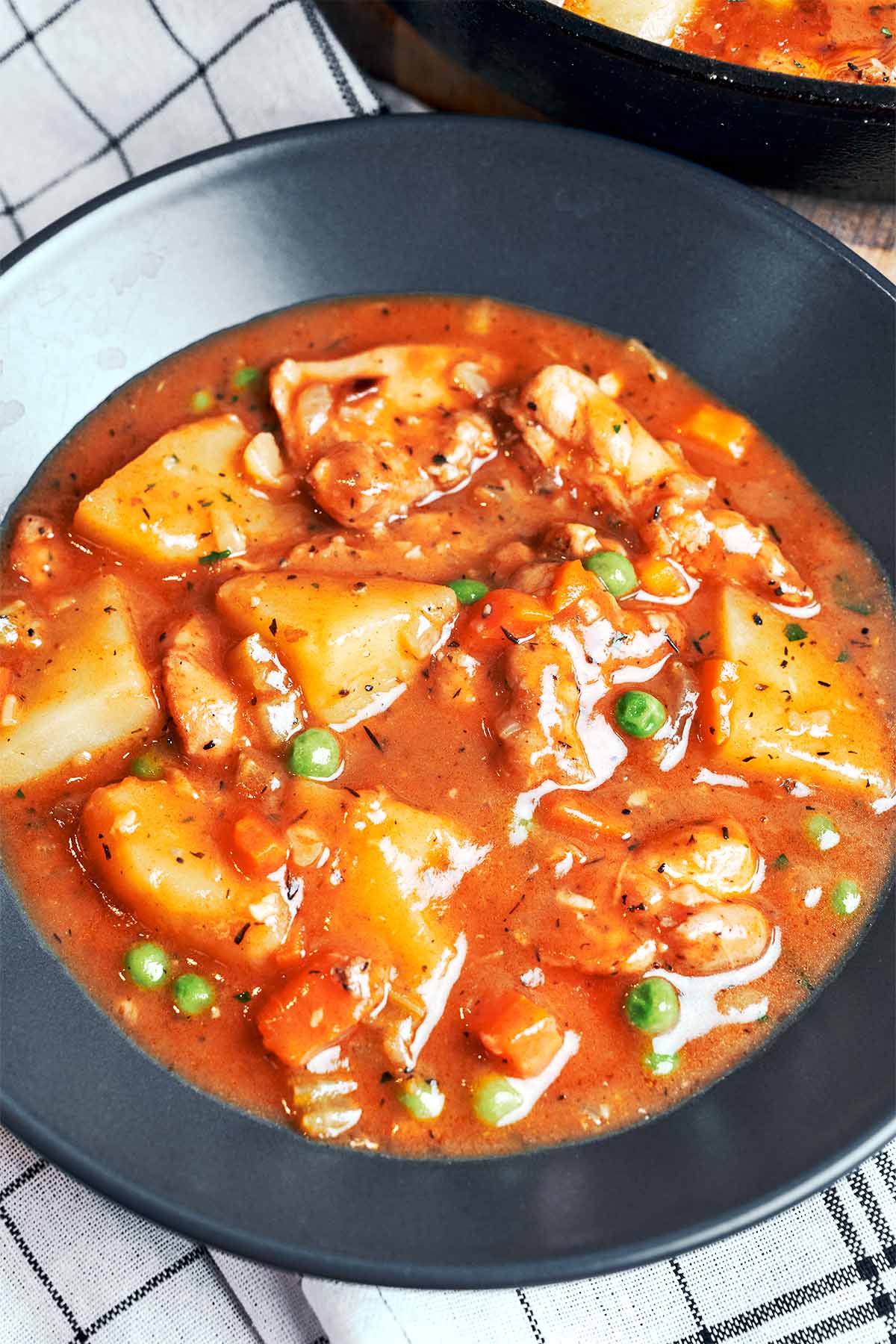
It’s the kind of dinner I love when I want cozy comfort food without a lot of fuss. This easy one-pot chicken stew starts with golden-browned chicken, then everything gently simmers together until the vegetables are tender and the broth turns into a rich, savory sauce.
If you’re in the mood for more cozy dinners, try my Creamy Cheddar Chicken Potato Chowder, Beef Stew with Vegetables, or Pork Stew with Potatoes and Pickles next.
Why You’ll Love This Chicken Stew
There’s nothing complicated about this hearty chicken stew, but the little details make it especially good. Browning the chicken first builds deeper flavor in the sauce, and chicken thighs stay tender and juicy even after they simmer with the vegetables.
The potatoes and carrots make it filling enough to serve on its own, while a handful of peas at the end adds a little sweetness and color. I also use just enough flour to give the broth some body without turning it into a heavy gravy.
- Made with simple, everyday ingredients.
- Tender chicken thighs that stay juicy as they cook.
- Soft potatoes and carrots in a rich, savory broth.
- Everything comes together in one pan.
- Comforting enough for a Sunday dinner, but easy enough for a weeknight.
Ingredients You’ll Need
- Chicken thighs: Boneless, skinless thighs stay tender and juicy as the stew simmers.
- Potatoes: Yukon Gold potatoes become soft and creamy inside while still holding their shape.
- Carrots, onion, and celery: These simple vegetables build the base of the stew and add natural sweetness and flavor.
- Garlic: Fresh garlic adds a warm, savory note to the sauce.
- Butter and flour: Butter adds richness, while flour helps thicken the broth into a smooth, cozy sauce.
- Chicken broth: I prefer unsalted broth so it’s easier to control the seasoning.
- Tomato paste: Just 1 tablespoon adds depth and color without making the stew taste too tomato-heavy.
- Worcestershire sauce: Adds a deeper savory flavor that works really well with the chicken and vegetables.
- Thyme and bay leaves: They give the stew that classic homemade flavor without overpowering everything else.
- Frozen peas: Added near the end for a little sweetness and fresh color.
- Fresh parsley: A simple finishing touch that brightens up the whole dish.
How to Make Chicken Stew with Potatoes
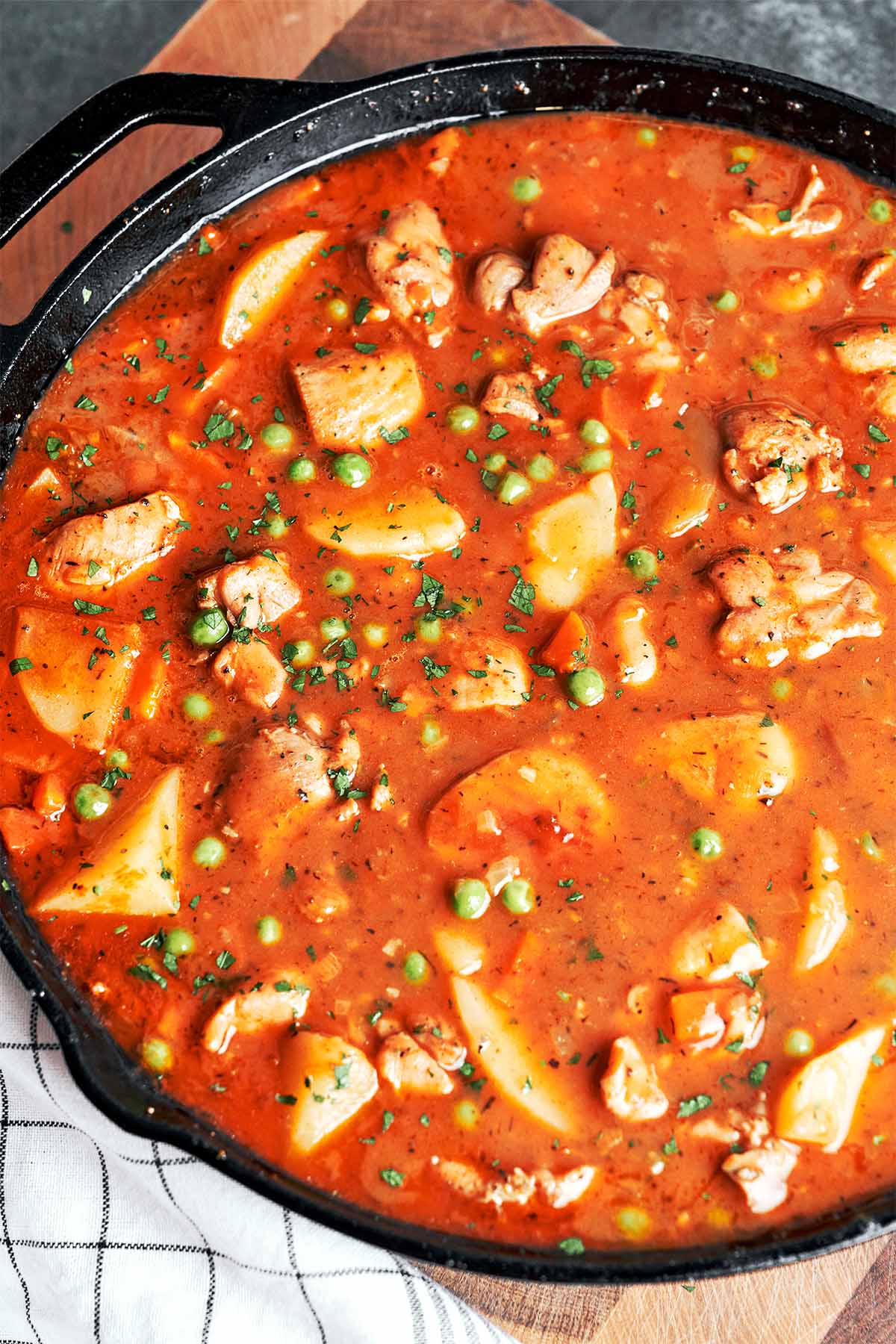
This stovetop chicken stew comes together in a few simple stages. The chicken gets browned first for extra flavor, then the vegetables soften in the same pan before everything gently simmers together in the broth. Giving the potatoes a little head start before adding the tomato paste helps them turn fork-tender without losing their shape.
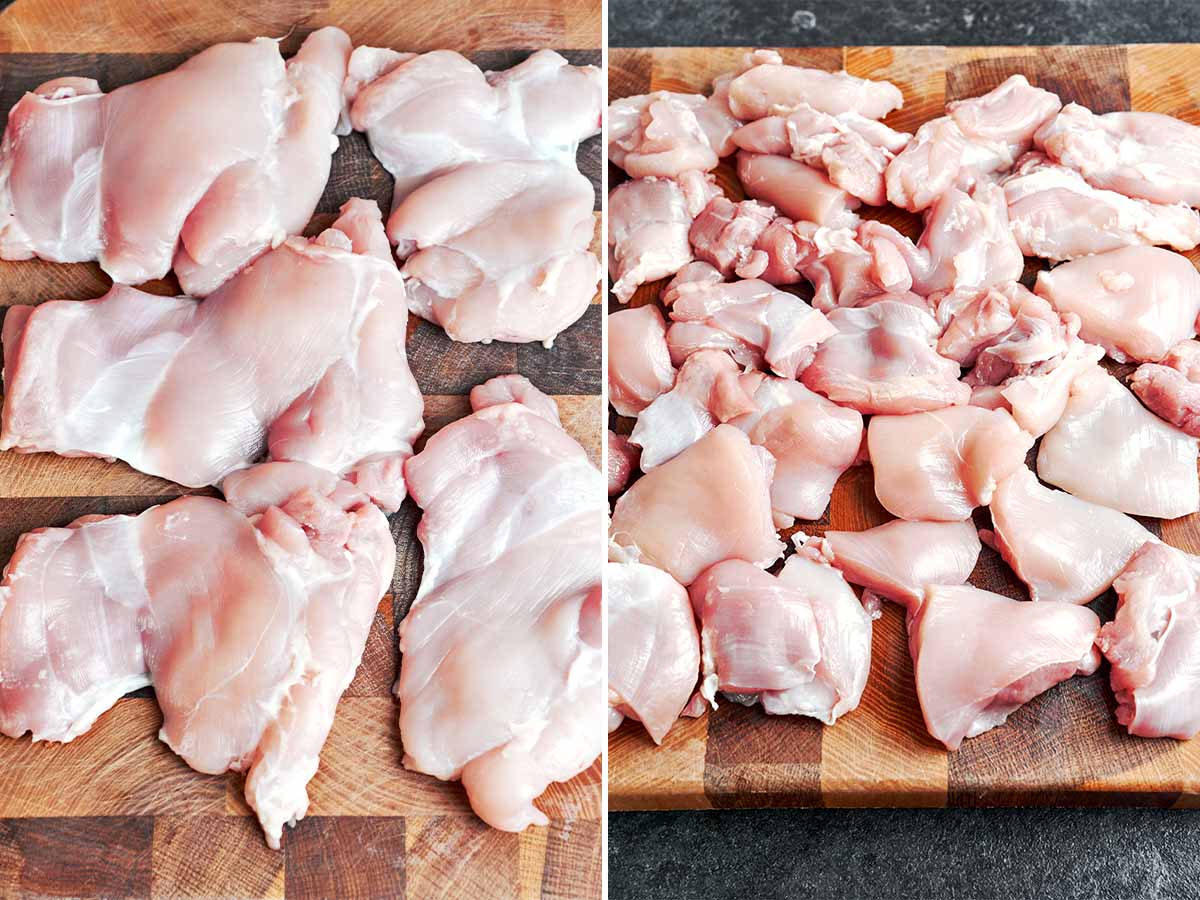
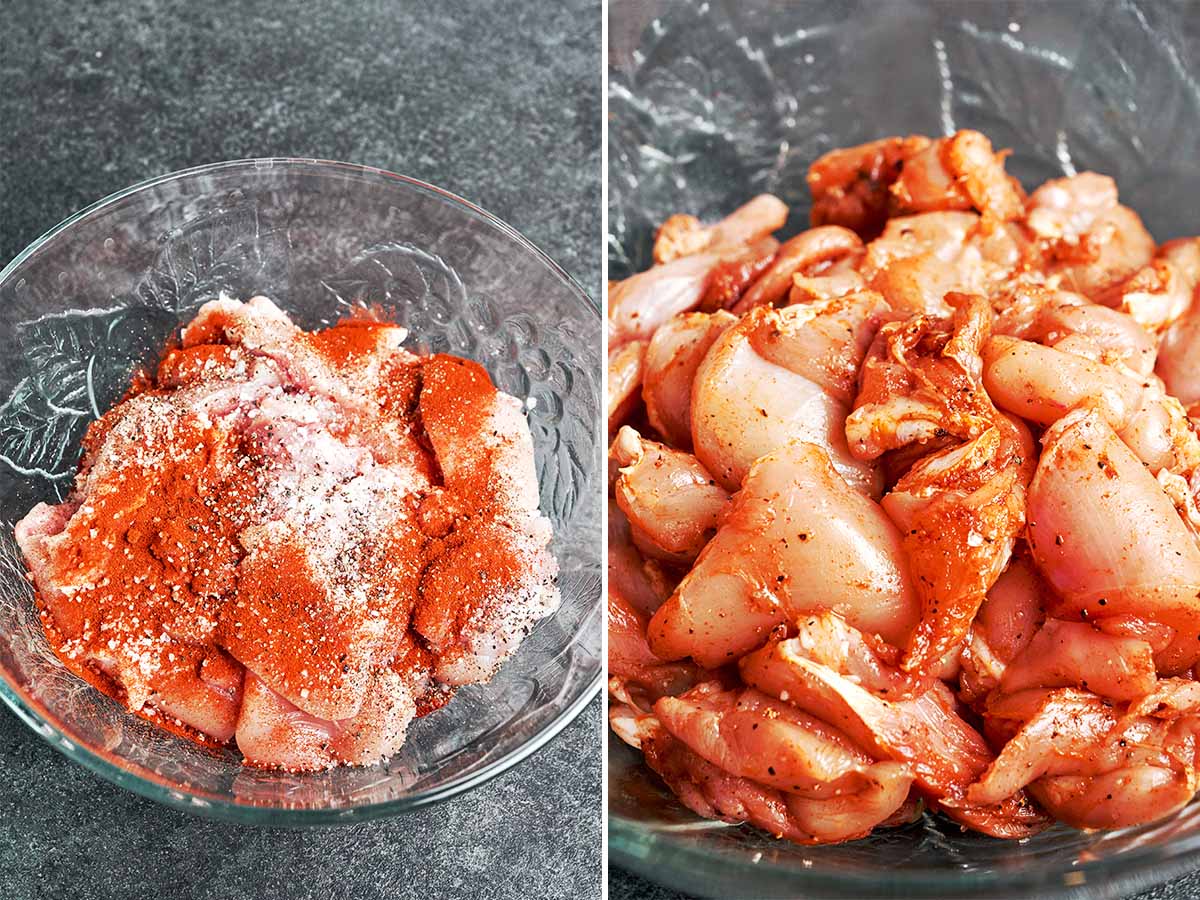
Start with the chicken. I cut the chicken thighs into fairly large pieces so they stay juicy while the stew cooks. A simple mix of salt, black pepper, and paprika is enough to season them before they go into the pan.
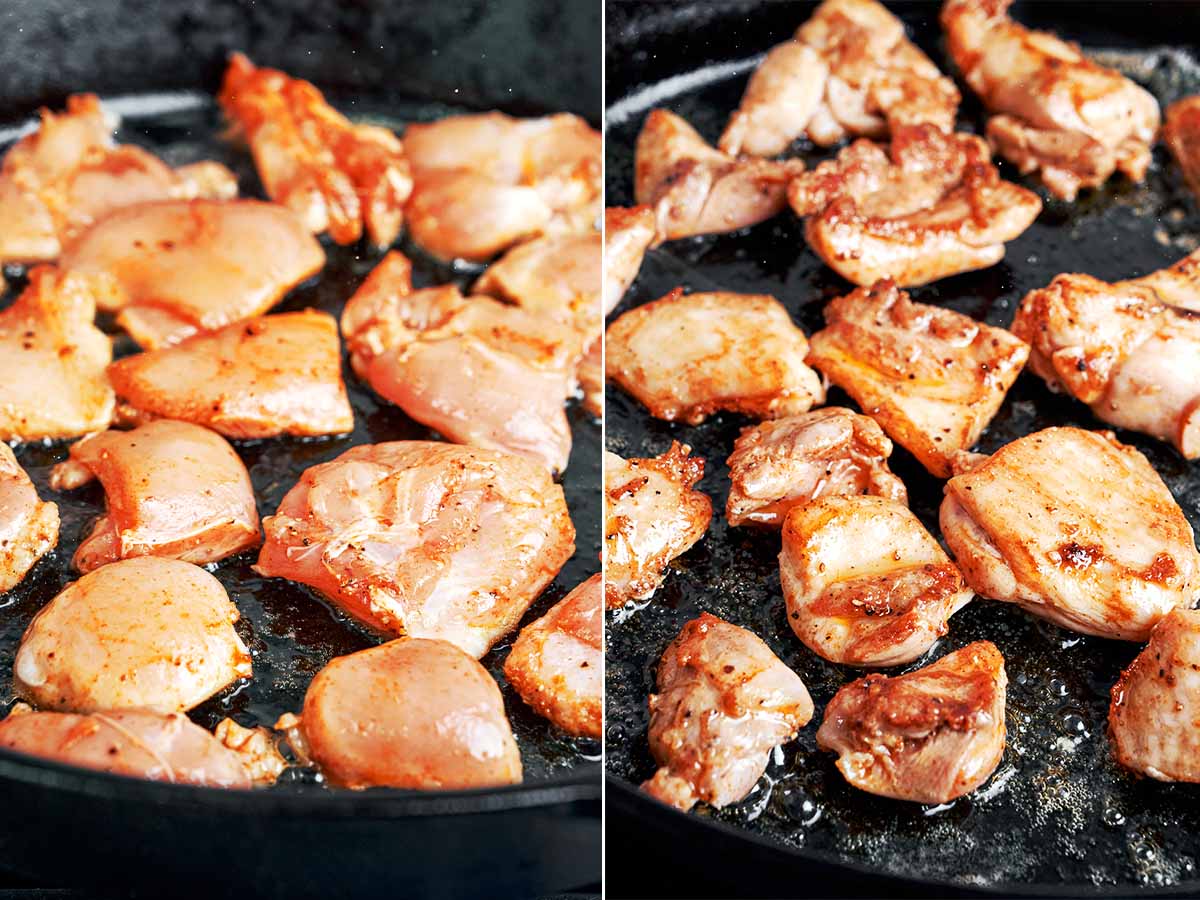
Give the chicken some color. A little olive oil goes into a hot pan, then the chicken cooks until it develops a nice golden surface. It doesn’t need to be cooked all the way through yet. At this point, I’m really looking for those browned edges that will add more flavor to the sauce later.
Let the vegetables soften. Once the chicken is out of the pan, the onion, carrots, and celery go straight into those flavorful browned bits. After a few minutes, they start to soften and pick up some of that flavor from the bottom of the pan.
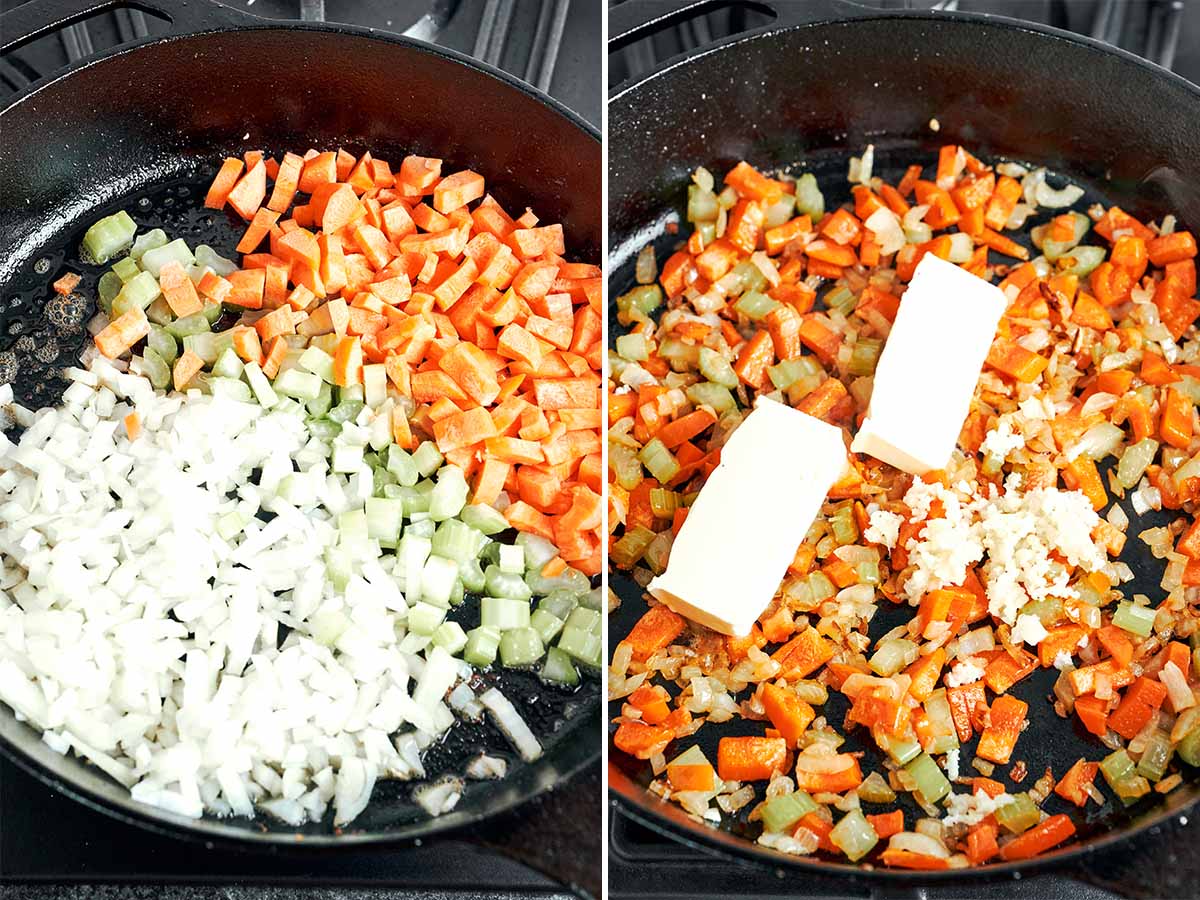
Add the garlic and butter. When the vegetables are looking softer, I add the butter and garlic. They only need a short moment here, just until the butter melts and everything smells really good.
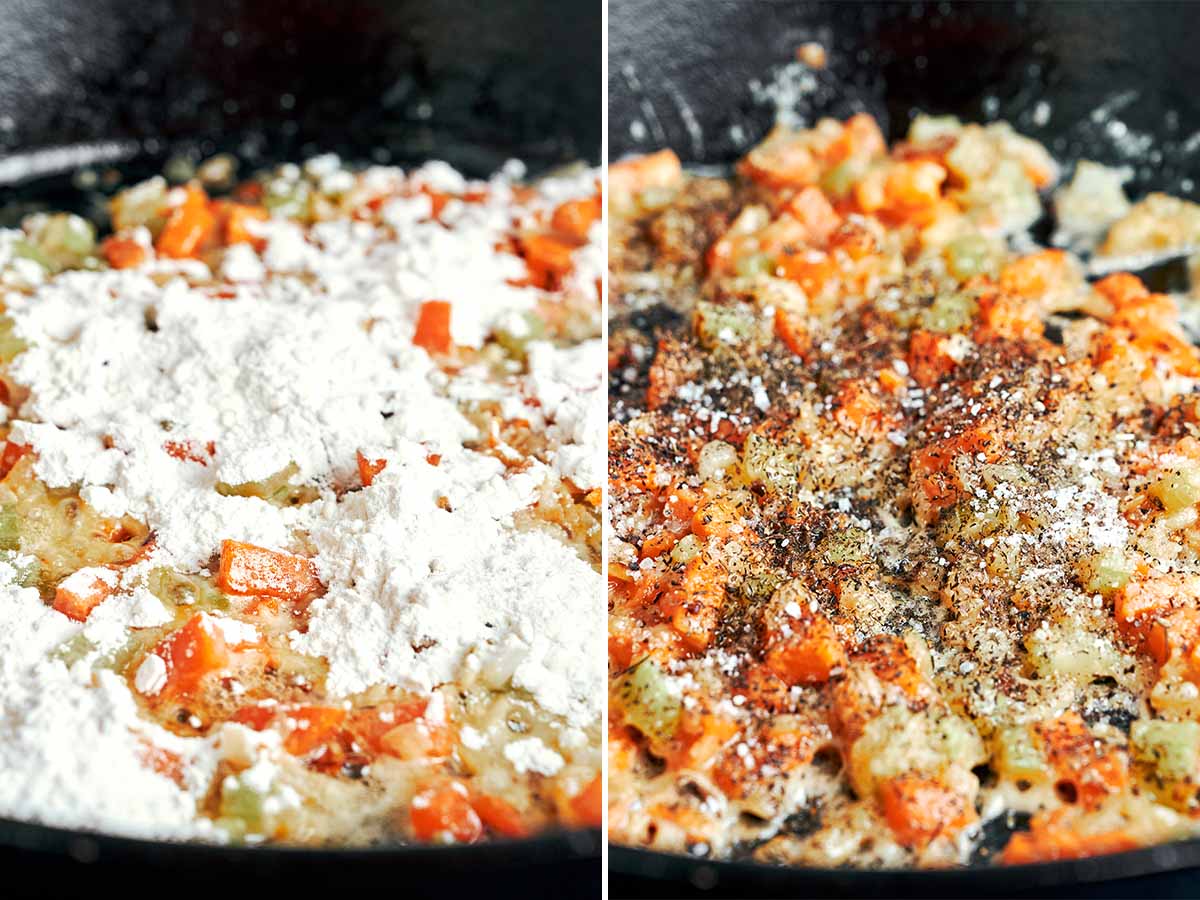
Build the base of the sauce. Sprinkle the flour over the vegetables and stir until everything is evenly coated. Let it cook briefly, then add the salt, dried thyme, and black pepper. Stir again before slowly pouring in the chicken broth.
Add the potatoes and chicken. Once the broth is smooth, add the potatoes and return the browned chicken along with any juices from the plate. This is where it really starts to look like a hearty chicken and potato stew. Bring everything to a gentle simmer.
Give the potatoes a head start. I cover the pan and let the stew simmer for about 15 minutes before adding the tomato paste. This gives the potatoes time to start softening while still holding onto their shape.
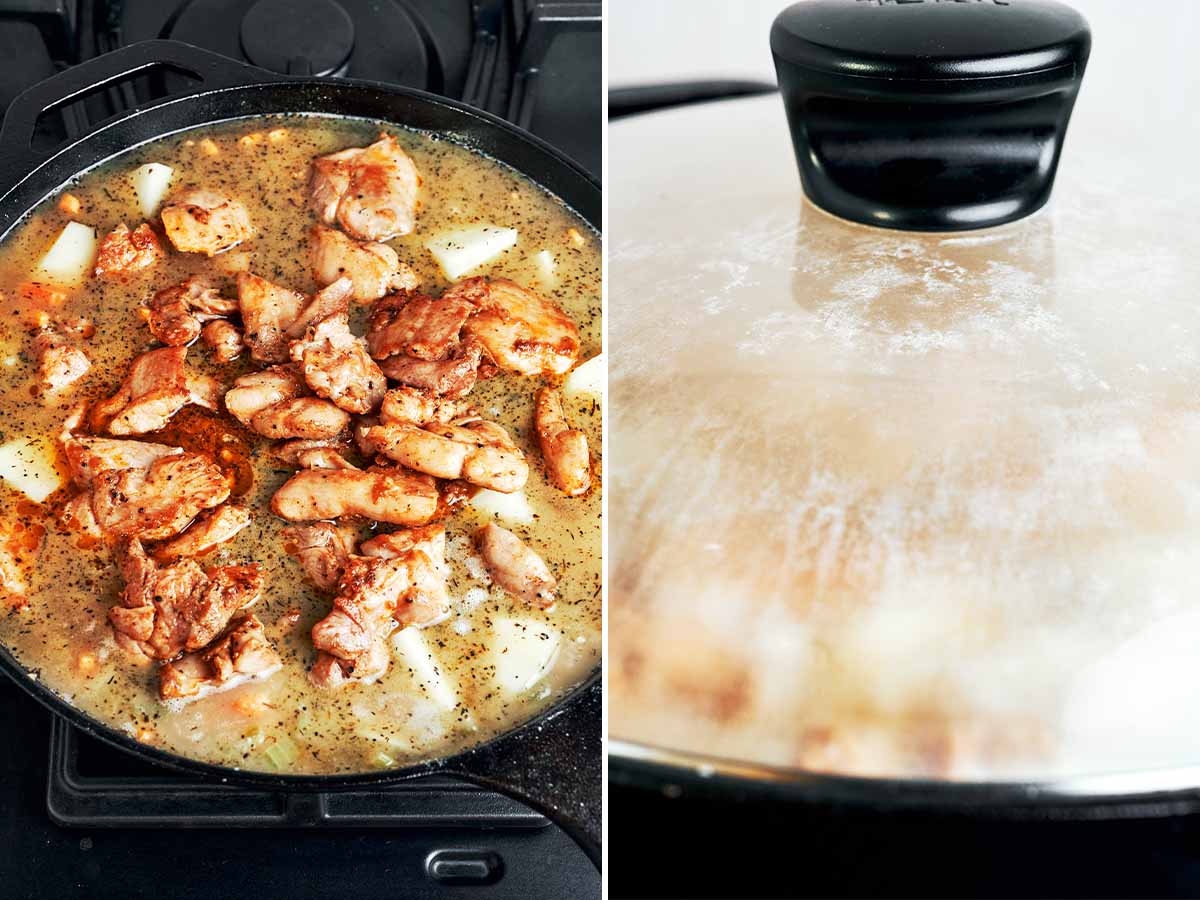
Add the tomato paste and deeper flavors. Scoop about 1/2 cup of hot broth from the pan into a small bowl and stir in the tomato paste until smooth. Pour it back into the stew, then add the Worcestershire sauce and bay leaves. Give everything a gentle stir so the tomato mixture blends evenly into the sauce.
Let everything finish together. Cover the pan again and let the stew gently simmer for another 10 to 15 minutes. By then, the potatoes and carrots should be tender, the chicken should be cooked through, and the sauce will have thickened nicely around everything.
Finish with peas and parsley. The frozen peas only need the last few minutes. Once they’re warmed through, I remove the bay leaves, taste the sauce, and finish the stew with fresh parsley.
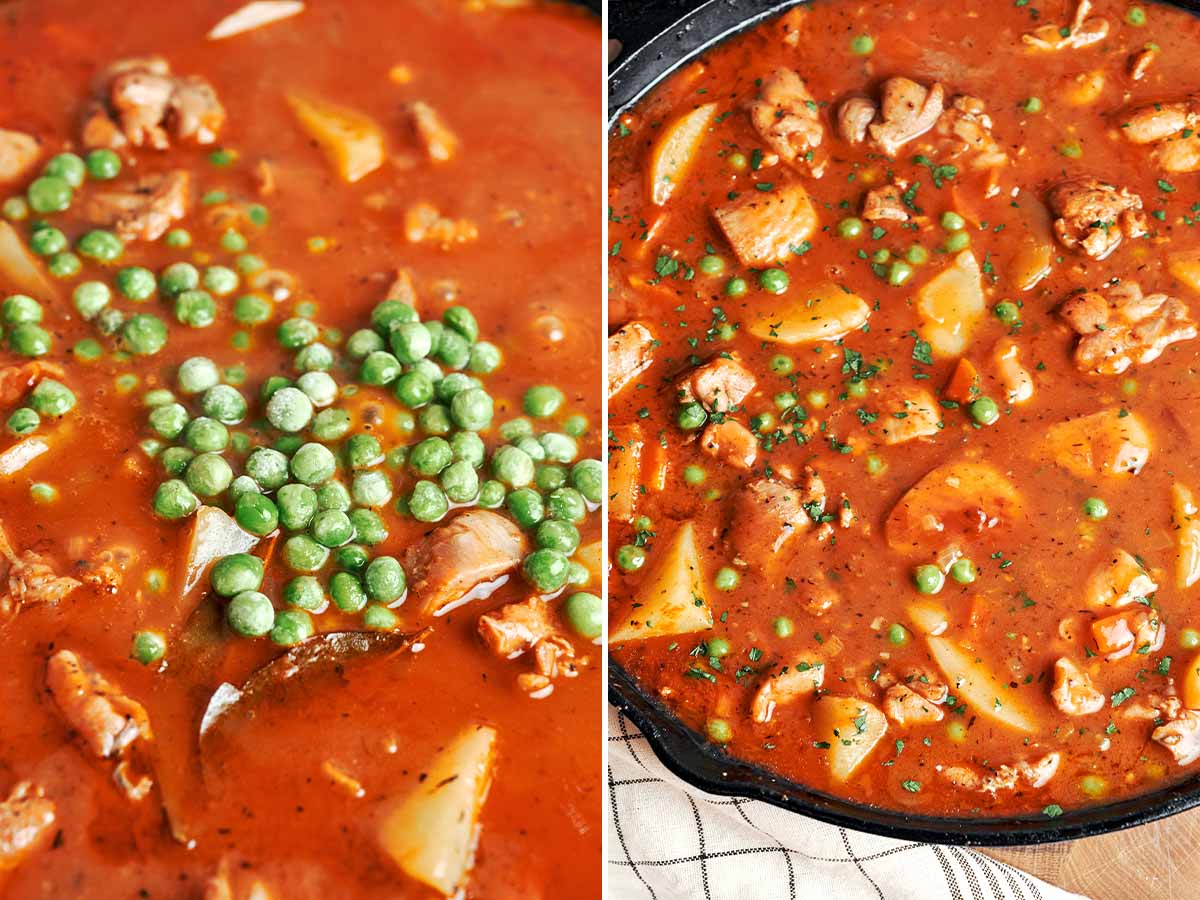
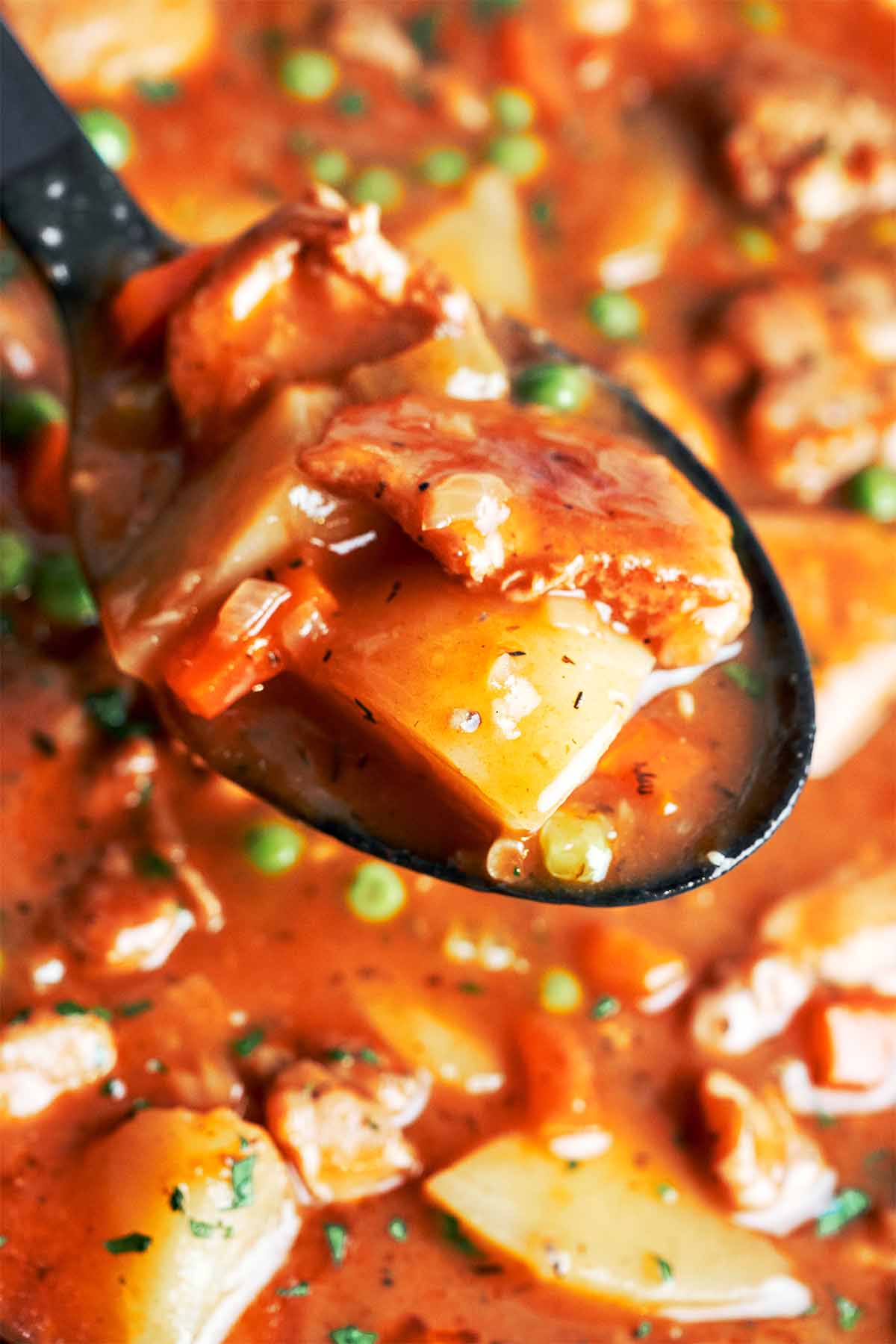
Serve and enjoy. Spoon the chicken stew into bowls while it’s still warm, making sure each serving gets plenty of tender chicken, potatoes, vegetables, and that rich savory sauce. Finish with a little extra parsley on top and serve with crusty bread if you like.
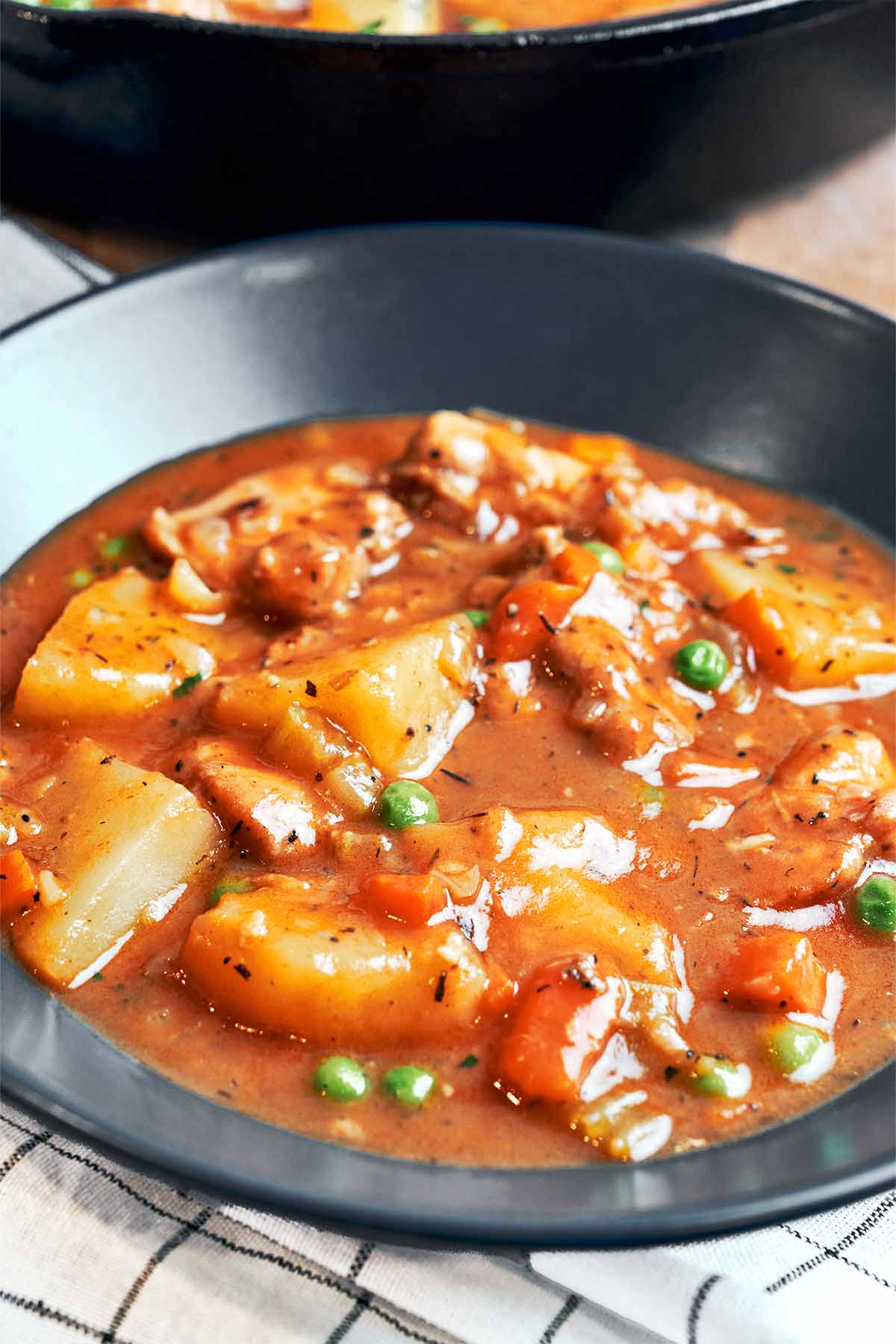
Why I Add the Tomato Paste Later
You’ll notice the tomato paste doesn’t go in with the garlic like it does in many stew recipes. I prefer giving the potatoes about 15 minutes in the broth first.
Tomato paste adds some acidity to the sauce, and potatoes can take longer to soften once acidic ingredients are in the pot. Adding it a little later gives the potatoes a head start while still giving the finished stew that rich color and savory tomato flavor.
It also means the potatoes stay in nice, chunky pieces instead of having to cook forever while the rest of the stew is already done.
Pro Tips
Don’t make the chicken pieces too small. Slightly larger chunks stay much juicier during the simmer.
Give the chicken room to brown. If your pan feels crowded, cooking it in two batches is worth the extra few minutes. The browned edges add a lot of flavor later.
Keep the potatoes fairly even in size. Around 1-inch pieces work nicely here. That way they soften at about the same time instead of having some pieces falling apart while others are still firm.
Keep the simmer gentle. Once the broth is in, there’s no need for a hard boil. A relaxed simmer keeps the chicken tender and helps the potatoes hold their shape.
Give the finished stew a few minutes to sit. The sauce thickens a little more as it rests, and I think the flavor is even better after everything settles for a moment.
Can I Use Chicken Breast?
You can. I still prefer chicken thighs for this recipe because they stay especially tender in a stew, but chicken breast works if that’s what you have.
I would keep the pieces fairly large and avoid simmering them longer than needed. Breast meat is leaner, so it can dry out faster than thighs.
How Thick Should Chicken Stew Be?
A good chicken stew should feel heartier and thicker than chicken soup, but it doesn’t need to be as heavy as a traditional gravy. I like the sauce thick enough to lightly coat the chicken and potatoes while still leaving plenty in the bowl for spooning up with bread.
The flour thickens the broth while it cooks, and the potatoes naturally release a little starch too. If it still looks thinner than you’d like once the vegetables are tender, leaving the pan uncovered for a few extra minutes usually takes care of it.
Variations
Leave out the peas. They’re nice for a little sweetness and color, but the stew is still complete without them.
Add mushrooms. Browned mushrooms would fit naturally into this recipe. I’d cook them separately and add them back toward the end so they keep a nice texture.
Use red potatoes. They’re another good choice when you want potatoes that hold their shape well in a stew.
Add a little rosemary. If you like rosemary with chicken and potatoes, a small amount works nicely. I wouldn’t use too much because thyme and bay leaves already give the stew plenty of flavor.
What to Serve with Chicken Stew
This hearty one-pot chicken dinner really doesn’t need much on the side. With chicken, potatoes, carrots, celery, and peas all simmered together, it’s filling enough to serve as a complete meal.
A slice of homemade bread is probably my favorite thing to serve with it, especially when there’s plenty of that savory sauce left in the bowl. A simple green salad also works well if you want something fresh alongside it.
Storage
This also makes a really good make-ahead chicken stew. Leftovers keep well in an airtight container in the refrigerator for about 3 to 4 days, and the flavor is often even better once everything has had time to sit together.
The sauce usually gets a little thicker after chilling, which is completely normal. When reheating, a small splash of chicken broth or water loosens it back up without taking away from the flavor.
I usually prefer this stew from the refrigerator rather than freezing it. The chicken freezes well, but potatoes can become softer and a little grainy after they’ve been frozen and thawed.
FAQ
Why are my potatoes still hard in chicken stew?
Acidic ingredients such as tomato paste can slow down how quickly potatoes soften. That’s why I let the potatoes simmer in the broth first and add the tomato paste later.
What potatoes are best for chicken stew?
Yukon Gold potatoes are my favorite because they become soft and creamy while still holding their shape. Red potatoes are another good option.
Can I make this chicken stew ahead of time?
Yes. It reheats very well, and the flavor is often even better the next day. The sauce will thicken in the refrigerator, so just add a small splash of broth when reheating if needed.
How can I thicken chicken stew?
This recipe already uses flour to give the broth some body. If you want it a little thicker, let the stew gently simmer uncovered for a few minutes once the potatoes are tender.
Can I make chicken stew without peas?
Absolutely. The peas are an easy finishing addition, but leaving them out won’t change the rest of the recipe.
What’s the difference between chicken stew and chicken soup?
Chicken stew usually has less liquid and a thicker, richer sauce than chicken soup. The potatoes, vegetables, and chicken should feel coated in the broth rather than floating in a thin soup base.
Chicken Stew with Potatoes
Ingredients
For the Chicken
- 2 lb (900 g) boneless, skinless chicken thighs, cut into generous bite-size pieces
- 1 tsp salt
- 1/2 tsp black pepper
- 1/2 tsp paprika
- 2 tbsp olive oil
For the Stew
- 2 tbsp unsalted butter
- 1 medium yellow onion diced
- 2 large carrots chopped
- 2 celery ribs chopped
- 4 garlic cloves minced
- 3 tbsp all-purpose flour
- 1/2 tsp salt
- 1 tsp dried thyme
- 1/4 tsp black pepper
- 4 cups unsalted chicken broth
- 1 1/2 lb (700 g) Yukon Gold potatoes, cut into about 1-inch pieces
- 1 tbsp tomato paste
- 1 tbsp Worcestershire sauce
- 2 bay leaves
- 3/4 cup frozen peas
- 2 tbsp fresh parsley chopped
Instructions
- Season the chicken. Cut the chicken thighs into fairly large bite-size pieces. Add the salt, black pepper, and paprika, then toss until the chicken is evenly coated.
- Brown the chicken. Heat the olive oil in a large deep skillet or Dutch oven over medium-high heat. Brown the chicken in batches until nicely golden on the outside. It does not need to cook through yet. Transfer to a plate and set aside.
- Soften the vegetables. Add the onion, carrots, and celery to the same pan. Cook over medium heat for about 5 minutes, stirring occasionally, until the vegetables begin to soften.
- Add butter and garlic. Stir in the butter and minced garlic. Cook briefly, just until the butter melts and the garlic becomes fragrant.
- Build the stew base. Sprinkle the flour over the vegetables and stir until evenly coated. Cook briefly, then add the salt, dried thyme, and black pepper. Stir well.
- Add the broth. Slowly pour in the chicken broth while stirring, scraping up the flavorful browned bits from the bottom of the pan.
- Add potatoes and chicken. Add the potatoes and return the browned chicken along with any juices from the plate. Bring everything to a gentle simmer.
- Give the potatoes a head start. Cover the pan and simmer gently for about 15 minutes. This gives the potatoes time to begin softening before the tomato paste goes in.
- Add the tomato paste. Scoop about 1/2 cup of hot broth from the pan into a small bowl and stir in the tomato paste until smooth. Pour the mixture back into the stew, then add the Worcestershire sauce and bay leaves. Stir gently to combine.
- Finish simmering. Cover again and continue to simmer gently for another 10 to 15 minutes, until the potatoes and carrots are tender and the sauce has thickened nicely.
- Add the peas. Stir in the frozen peas during the last 3 to 5 minutes of cooking, just until warmed through.
- Finish the stew. Remove the bay leaves, taste, and adjust the seasoning if needed. Stir in the fresh parsley.
- Serve. Spoon the chicken stew into bowls while warm, making sure each serving gets plenty of tender chicken, potatoes, vegetables, and rich savory sauce. Finish with a little extra parsley if you like.
Notes
- Boneless, skinless chicken thighs work especially well because they stay tender and juicy during simmering.
- Keep the potato pieces around 1 inch so they cook evenly and still hold their shape.
- The potatoes simmer before the tomato paste is added so they have time to soften properly.
- Use unsalted chicken broth if possible so you have better control over the final seasoning.
- If the stew looks thinner than you like once the potatoes are tender, let it simmer uncovered for a few extra minutes.
- The sauce will thicken slightly as the stew rests.
Store leftovers in an airtight container in the refrigerator for 3 to 4 days.