
Homemade Chicken Stock
This Homemade Chicken Stock is slowly simmered with chicken bones, vegetables, and herbs to create a beautifully golden, full-flavored stock. It’s a simple kitchen staple that brings homemade depth to soups, sauces, and everyday cooking.
If you enjoy cooking from scratch, you can also explore my Chicken Recipes for more easy chicken dinners and comforting homemade meals.
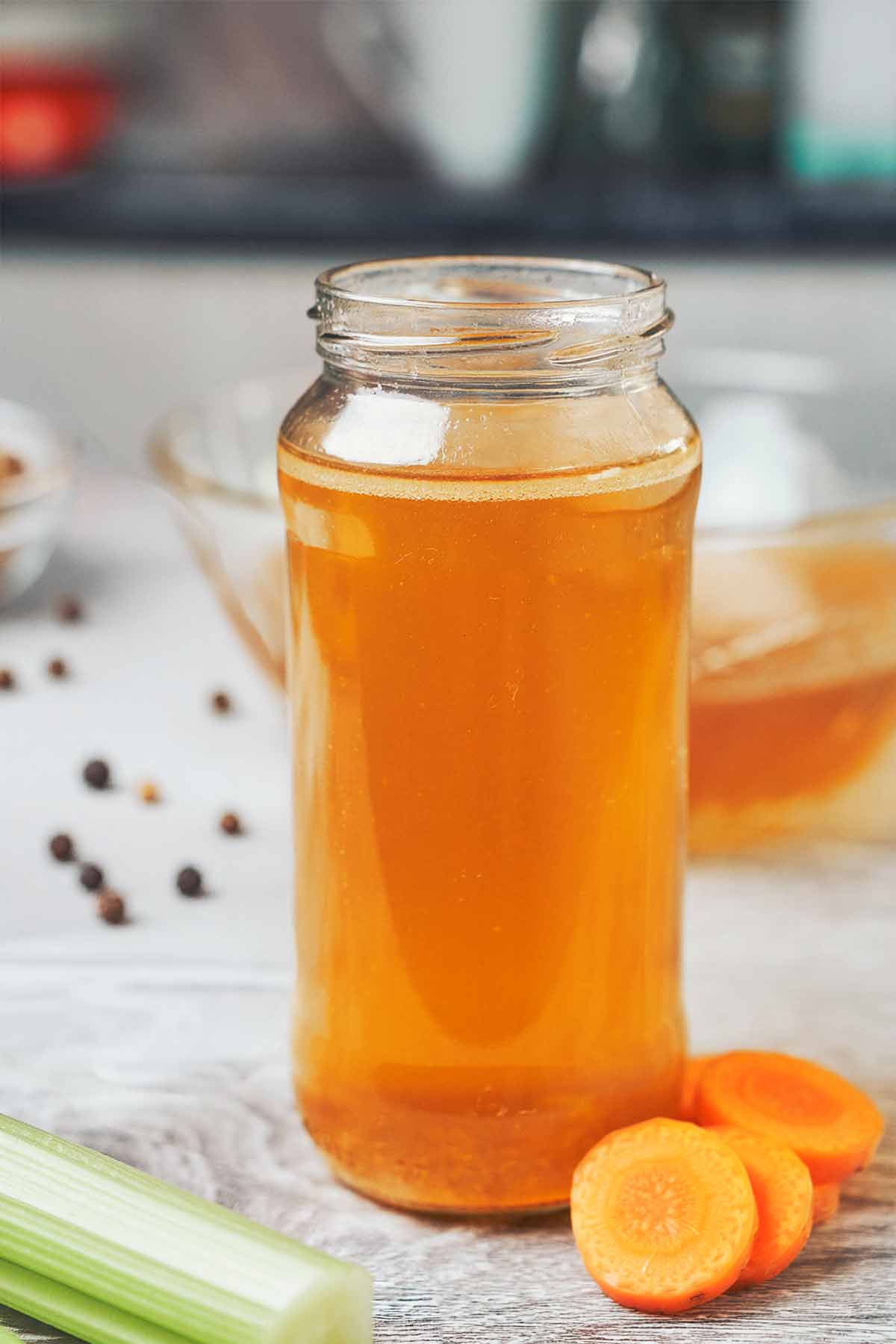
This is a classic homemade chicken stock recipe made the traditional way with simple ingredients. It’s an easy kitchen staple that works as a base for soups, sauces, and everyday cooking.
The slow simmering process creates a clear golden broth with deep flavor and natural richness. It’s one of those simple kitchen basics that makes everyday meals taste better.
Why This Recipe Works
There’s something special about having homemade chicken stock ready in your kitchen. It has a deep, savory chicken flavor and a natural richness that makes soups, stews, and sauces taste so much better. The slow simmer creates a beautifully golden stock with plenty of body, giving everyday recipes that homemade quality you just don’t get from plain water.
- A useful kitchen staple. Make a batch ahead and keep portions in the freezer whenever you need a flavorful base for cooking.
- Full, homemade flavor. The stock adds a deeper, more rounded taste to everything from hearty soups to homemade sauces.
- Richness from the bones. Natural gelatin gives the stock more body and a lovely texture without needing extra ingredients.
Why Chicken Bones Work Best
Chicken carcasses are an excellent choice for homemade chicken stock because they contain bones, cartilage, and connective tissue that give the finished stock its natural body. During the slow simmer, collagen breaks down into gelatin, creating a silky texture that becomes more noticeable as the stock cools.
A little meat left on the carcasses is actually a good thing. It adds a fuller chicken flavor, while the bones and connective tissue provide the richness that makes homemade stock especially useful for soups, stews, and sauces.
Other Chicken Cuts You Can Use
Chicken carcasses are my first choice for homemade stock, but you can also use other bone-in chicken parts. The best options have plenty of bones, cartilage, and a little meat to give the stock both flavor and body.
- Chicken backs and necks. Excellent for making traditional chicken stock. They’re often inexpensive and contain plenty of bones and connective tissue.
- Chicken wings. One of the best alternatives because they contain skin, bones, and connective tissue that give the stock a fuller texture.
- Chicken feet. Great for adding extra gelatin and body, especially when combined with carcasses or other meaty chicken pieces.
- Bone-in chicken thighs or drumsticks. These add plenty of chicken flavor, although they’re usually more expensive than using leftover carcasses or backs.
- Leftover roasted chicken carcass. A practical way to make stock after a roast chicken dinner. It gives the finished stock a slightly different, roasted flavor.
Quick Look at the Ingredients
A good homemade chicken stock doesn’t need a long ingredient list. Chicken carcasses provide the foundation, while fresh vegetables and a few simple aromatics give the stock its balanced, savory flavor.
- Chicken carcasses. The main ingredient for a traditional chicken stock. Bones, cartilage, and any meat left on them contribute flavor and natural gelatin.
- Cold water. Use enough to cover the bones and vegetables. Starting with cold water allows everything to heat gradually before the gentle simmer begins.
- Onion. Adds a mild savory sweetness. I leave the skin on to give the finished stock a beautiful golden color.
- Carrots and celery. These classic stock vegetables add a gentle sweetness and fresh, aromatic flavor without overpowering the chicken.
- Bay leaf and black peppercorns. Add subtle warmth and depth while keeping the stock versatile enough for different recipes.
- Fresh parsley. Brings a light herbal note that rounds out the flavor.
That’s really all you need to make a classic chicken broth with deep, comforting flavor. This traditional mirepoix combination of onion, carrot, and celery is what gives classic chicken stock its balanced taste.
How to Make Chicken Stock
Making homemade chicken stock is mostly hands-off. Once the chicken bones, vegetables, and aromatics are in the pot, the key is to maintain a gentle simmer and give everything time to develop a full, savory flavor.
Prepare the vegetables. Roughly chop the carrots and celery into large pieces. Gather the onion, fresh parsley, bay leaf, and black peppercorns so everything is ready for the stockpot.
Prepare the chicken carcasses. Trim away any large pieces of excess fat and small tail pieces. Leave any remaining meat and connective tissue attached, as they add flavor and natural richness to the finished stock.
Add everything to the pot. Place the chicken carcasses in a large stockpot, then add the carrots, celery, onion with its skin on, parsley, bay leaf, and black peppercorns.
Pour in the cold water. Add 10 cups of cold water, making sure the chicken bones and vegetables are covered. Place the pot over medium heat and slowly bring the water just to the point of simmering.

Skim the foam. As the stock begins to heat, use a spoon or fine-mesh skimmer to remove any foam that rises to the surface. This helps keep the finished chicken stock clearer.
Simmer gently. Reduce the heat to low and let the stock simmer uncovered for 3 to 4 hours. Keep the heat gentle, with only occasional small bubbles breaking the surface, rather than a rolling boil.
Strain the chicken stock. Carefully pour the stock through a fine-mesh sieve into a large heatproof bowl or clean pot, separating the liquid from the bones and vegetables. Discard the solids.

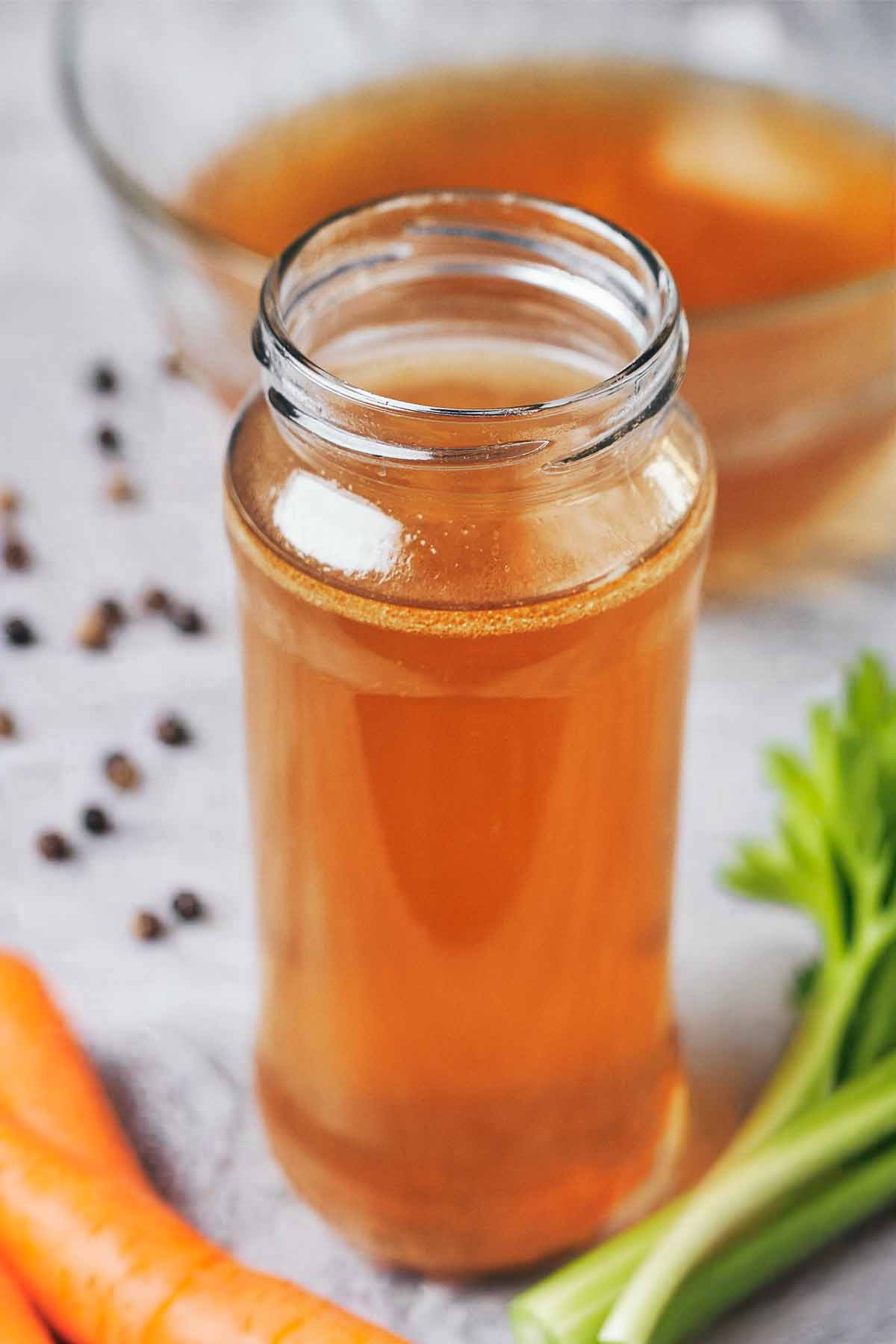
Cool and store. You’ll be left with a beautifully golden homemade chicken stock. Divide it into smaller, shallow containers and cool it quickly before refrigerating or freezing. Portioning the stock into 1-cup servings makes it especially convenient for soups, sauces, and other recipes.
Pro Tips for the Best Homemade Chicken Stock
- Leave the salt out. Keep your chicken stock unsalted so you can control the seasoning when using it in soups, stews, sauces, or other recipes. This is especially helpful if you plan to reduce the stock later.
- Don’t keep adding water. Some evaporation is normal during a long, uncovered simmer. Add a little hot water only if the bones become exposed, since too much extra water can dilute the flavor.
- Strain for a clearer stock. Use a fine-mesh sieve, or line it with cheesecloth if you want an especially clear result. Avoid pressing down on the cooked vegetables and bones, which can push fine particles into the stock.
- Remove excess fat after chilling. Once refrigerated, the fat rises and forms a firm layer on top. You can easily lift it off with a spoon for a cleaner, lighter stock.
- Don’t worry if your stock turns jelly-like. A homemade stock may become thick or gelatinous in the refrigerator. That’s natural gelatin from the chicken bones and connective tissue, and it will melt again when heated.
- Cool the stock quickly. Divide it into smaller, shallow containers or use an ice bath before refrigerating. Avoid leaving a large pot of hot stock sitting at room temperature for hours.
Ways to Use Homemade Chicken Stock
Homemade chicken stock is one of those kitchen staples that makes everyday cooking a little better. Its savory flavor and natural richness make it especially useful for soups, stews, creamy sauces, and rice dishes. You can use it in place of store-bought chicken stock whenever a recipe calls for it.
- Homemade soups. Use chicken stock as a flavorful base for chicken noodle soup, vegetable soup, or other homemade favorites.
- Homemade sauces. Use it as the flavorful base for my Homemade Enchilada Sauce, where chicken stock helps create a smooth, rich sauce.
- Creamy chicken dinners. Add it to recipes like my Creamy Garlic Chicken for a more flavorful sauce.
- Skillet sauces. Try it in my Creamy Mushroom Chicken, where the stock complements the mushrooms and cream.
- Chicken stews and braised dishes. It’s a great addition to recipes like my Creamy Paprika Chicken, adding savory depth to the sauce.
- Rice and grains. Replace some or all of the cooking water with unsalted chicken stock for rice, couscous, or other savory grains.
Having homemade chicken stock ready in your kitchen is one of the easiest ways to upgrade everyday cooking and add real homemade flavor to simple meals.
Substitutions and Variations
This classic chicken stock is easy to adapt depending on what you have in the kitchen. I prefer keeping the seasonings fairly mild so the finished stock works in all kinds of recipes, but a few small changes can give it a slightly different character.
- Use roasted chicken bones. Leftover roasted chicken carcasses give the stock a deeper, slightly roasted flavor and a darker golden color.
- Add fresh herbs. A few sprigs of thyme can give the stock a more aromatic flavor. Keep the amount modest so the chicken remains the main focus.
- Try leeks instead of onion. Leeks bring a milder, slightly sweeter flavor that works beautifully in homemade chicken stock.
- Add a little garlic. One or two lightly crushed garlic cloves can add another layer of savory flavor without overpowering the stock.
How to Store and Freeze Chicken Stock
Homemade chicken stock is perfect for making ahead, especially when you want a flavorful base ready for soups, sauces, or weeknight dinners. It keeps well in the refrigerator and freezes beautifully, so you can save the extra stock for another meal.
- Refrigerate. Divide the strained stock into smaller, shallow containers and refrigerate promptly. Store in airtight containers in the refrigerator for up to 3–4 days.
- Freeze. Pour the cooled stock into freezer-safe containers or bags, leaving a little room for expansion. Freeze for up to 3 months for best quality.
- Freeze in small portions. I like using 1-cup portions for soups and sauces. Ice cube trays are also handy when you only need a few tablespoons for a skillet sauce.
- Thaw and reheat. Thaw frozen chicken stock overnight in the refrigerator, or warm it directly from frozen in a saucepan over low heat until fully heated through.
Good to know: Homemade chicken stock may turn thick and jelly-like after refrigeration. That’s completely normal and comes from natural gelatin released by the chicken bones. It becomes liquid again when heated.
Frequently Asked Questions
What is the difference between chicken stock and chicken broth?
Chicken stock is traditionally made by slowly simmering bones and connective tissue, giving it a fuller body and naturally gelatin-rich texture. Chicken broth is usually made with more meat and tends to be lighter. The two can often be used interchangeably in everyday cooking.
Why is my homemade chicken stock cloudy?
Cloudy chicken stock usually happens when the liquid boils too vigorously or fine particles remain suspended after straining. A cloudy stock is generally still perfectly usable, although it may not have the clear, golden appearance of a gently simmered stock.
How long should I simmer chicken stock?
For this recipe, 3 to 4 hours of gentle simmering gives the chicken bones and vegetables enough time to develop a flavorful stock. You can taste it toward the end and continue simmering a little longer if you prefer a more concentrated flavor.
Why didn’t my chicken stock turn into gelatin?
Homemade chicken stock doesn’t always become jelly-like when chilled. The texture depends on the amount of cartilage and connective tissue in the bones, as well as how much water you use. A stock that stays liquid can still have excellent flavor.
Can I use homemade chicken stock instead of chicken broth?
Yes. Homemade chicken stock works well in most recipes that call for chicken broth, including soups, stews, sauces, and rice dishes. Because this stock is unsalted, you can adjust the seasoning to suit whatever you’re cooking.
Homemade chicken broth is one of those simple things that can completely change your cooking. It adds real flavor to soups, sauces, rice, and everyday dinners. Once you start making your own, it is hard to go back to store-bought.
Homemade Chicken Stock

Ingredients
- 3 lb (1.4 kg) chicken carcasses
- 10 cups cold water
- 1 onion skin on
- 2 carrots roughly chopped
- 2 celery stalks roughly chopped
- 1 bay leaf
- 10-12 black peppercorns
- 3-4 fresh parsley sprigs
Instructions
- Prepare the vegetables. Roughly chop the carrots and celery into large pieces. Gather the onion, parsley, bay leaf, and peppercorns.
- Prepare the chicken carcasses. Trim away large pieces of excess fat and small tail pieces. Leave any remaining meat and connective tissue attached.
- Add everything to the pot. Place the chicken carcasses in a large stockpot with the carrots, celery, onion with its skin on, parsley, bay leaf, and black peppercorns.
- Pour in the cold water. Add 10 cups of cold water, making sure the bones and vegetables are covered. Slowly bring the water toward a simmer over medium heat.
- Skim the foam. Remove any foam that rises to the surface using a spoon or fine-mesh skimmer.
- Simmer gently. Reduce the heat to low and simmer uncovered for 3–4 hours, maintaining only occasional small bubbles rather than a rolling boil.
- Strain the stock. Carefully pour the stock through a fine-mesh sieve into a clean heatproof container. Discard the bones and vegetables.
- Cool and store. Divide the stock into smaller, shallow containers and cool it quickly before refrigerating or freezing.
Notes
- Keep it unsalted. Leaving out the salt makes this stock more versatile for soups, sauces, and recipes that require reducing the liquid.
- Maintain a gentle simmer. Avoid a rolling boil, which can make the stock cloudy.
- Adjust the water only if needed. Add a little hot water if the bones become exposed during cooking. Too much water can dilute the flavor.
- Remove the fat. After refrigerating, skim off the solidified fat from the surface if you prefer a lighter stock.
- Don’t worry about gelatin. The stock may become jelly-like when cold because of natural gelatin from the bones. It will become liquid again when heated.
- Store safely. Refrigerate promptly in small containers for up to 3–4 days, or freeze for up to 3 months for best quality.

If you try this recipe, I would really love to hear how you used your broth. Leave a comment and a rating below, it really helps the site and other readers too.