Hearty Pork Stew with Vegetables
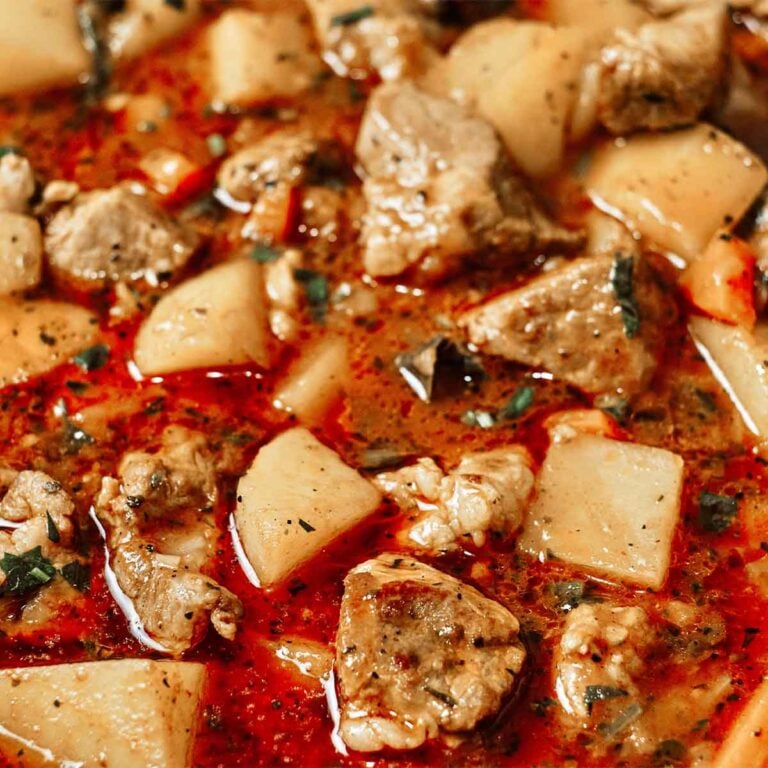
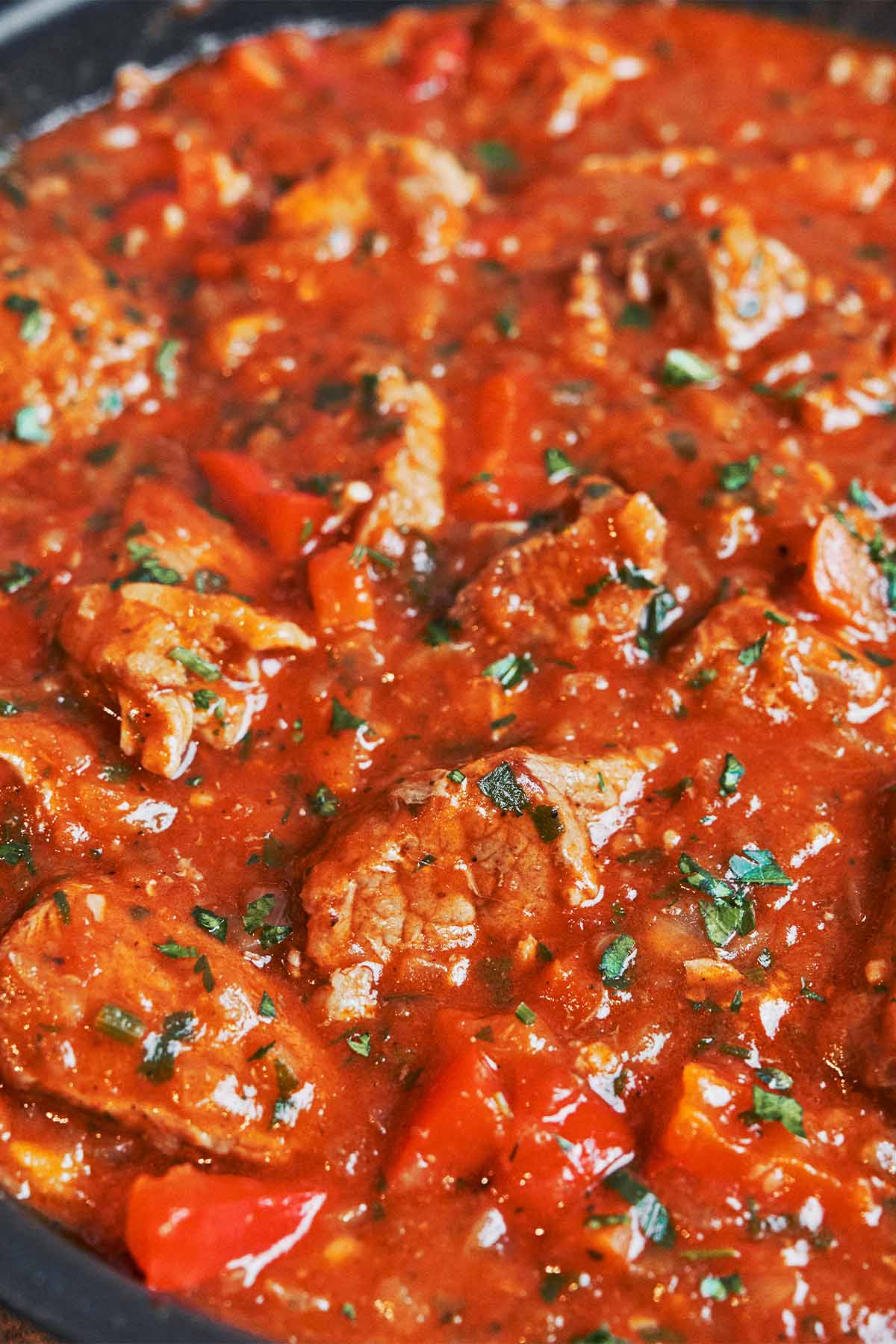
This hearty pork stew with vegetables is pure comfort in a bowl. It’s a cozy one pot pork stew with tender pork shoulder simmered in a rich tomato-based sauce, perfect for a relaxed family dinner.
If you enjoy comforting pork dinners like this one, you can explore more easy and cozy ideas in my Pork Recipes collection. You will find simple weeknight meals, rich creamy sauces, and hearty one pan dinners perfect for family cooking.
If you love cozy pork dinners, you might also enjoy this Pork Tenderloin in Creamy Cognac Mushroom Sauce, these comforting Stewed Potatoes with Pork, or my classic Pork Stew Recipe for another hearty one pot meal.
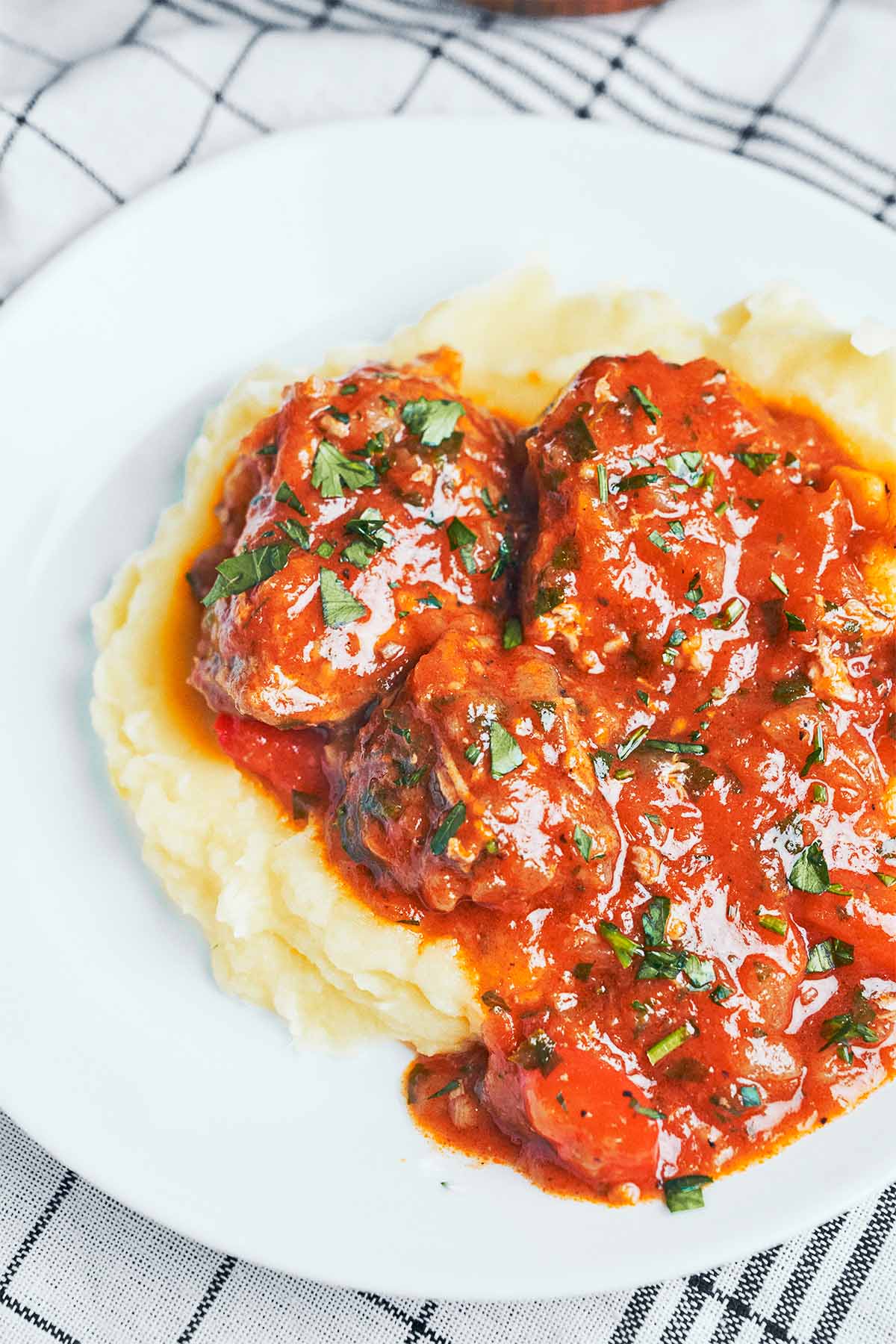
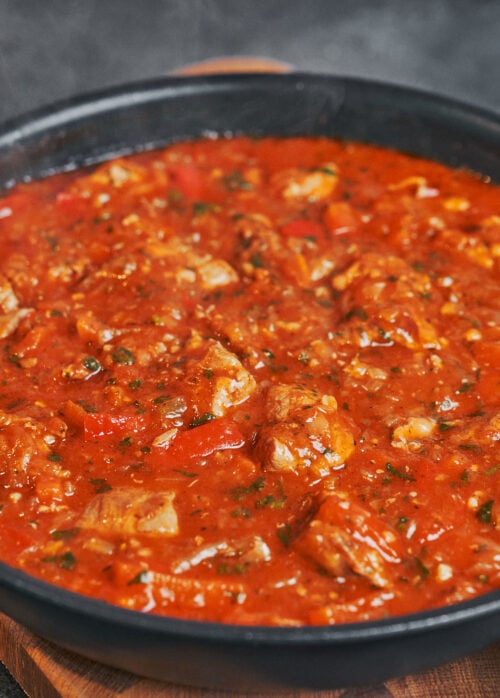
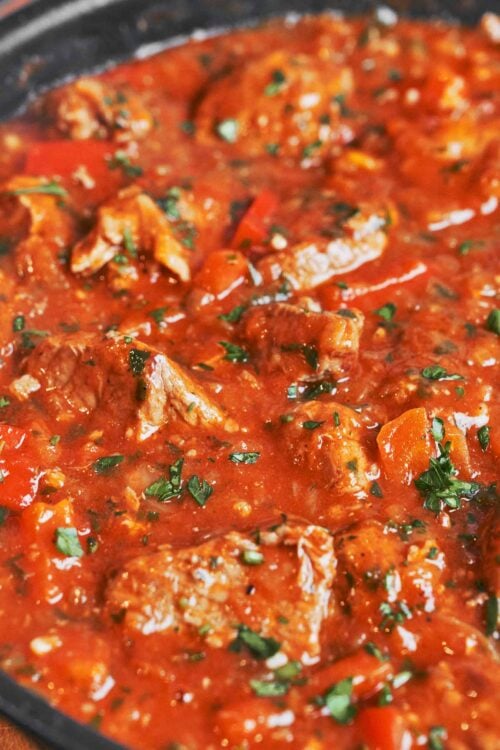
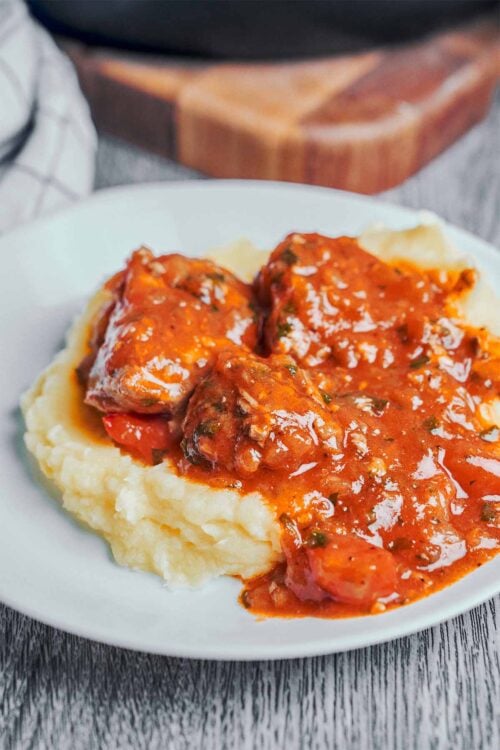
Tender chunks of pork shoulder gently cook in a rich tomato based sauce with sweet bell pepper and warm spices. As everything simmers, the flavors deepen and the sauce thickens naturally. Serve it over creamy mashed potatoes and let that savory sauce soak into every bite.
Why This Recipe Works
This recipe works because pork shoulder becomes incredibly tender when it cooks slowly, while the tomato sauce develops deep, rich flavor as it simmers. Simple ingredients and gentle cooking create a stew that tastes like it cooked all day.
It’s also a very practical meal. Everything cooks in one pot, the ingredients are affordable, and the leftovers taste even better the next day, making it perfect for meal prep or cozy weeknight dinners.
Quick Look at The Ingredients
This is one of those recipes where simple ingredients really shine. As the pork slowly cooks, it becomes incredibly tender and the sauce develops a rich, homemade flavor that makes the whole kitchen smell amazing.
Don’t let the cooking time fool you. The steps are simple and most of the time is completely hands-off while everything gently simmers.
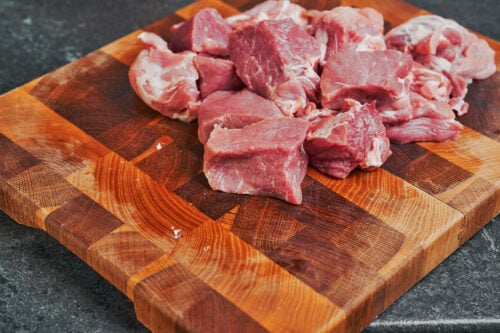
- Pork shoulder – This is the best cut for a stew like this because it has enough marbling to stay juicy while simmering. It’s also one of the best cuts of pork for stew because it turns tender without drying out. After about an hour of gentle cooking, it becomes beautifully tender. Don’t worry if it feels firm at first. That’s exactly what you want. Just trim off any large pieces of tough fat and cut it into even chunks so it cooks evenly.
- Onions – These build the foundation of flavor. As they cook down, they soften and almost melt into the sauce, adding natural sweetness and depth. Let them turn lightly golden before adding anything else since that step makes a big difference.
- Carrot – Adds subtle sweetness that balances the tomatoes. As it simmers, it helps round out the sauce and gives the stew a little more body.
- Fresh tomatoes – Grating the tomatoes keeps the flavor fresh and slightly bright. It gives the stew that homemade taste you just don’t get from canned sauce alone.
- Tomato paste – Just a couple of tablespoons deepen the flavor and give the sauce richness. Cooking it briefly before adding water helps remove any raw taste.
- Bell pepper – I like adding it toward the end so it keeps a bit of texture and gentle sweetness instead of completely breaking down.
- Garlic – Fresh garlic added near the end keeps the flavor warm and aromatic. If you add it too early, it can lose that fresh punch.
- Bay leaves – A small detail that quietly infuses the stew with that classic slow-cooked aroma while everything simmers.
- Flour – Sprinkled in at the end to lightly thicken the sauce so it coats the pork and vegetables beautifully without turning heavy.
- Water – Keeps everything gently simmering and allows the flavors to slowly come together into a rich, comforting stew.
How to Make Pork Stew with Vegetables
This stew is made the traditional way, starting with a flavorful vegetable base and finishing with a slow simmer that makes the pork incredibly tender. The steps are simple, and once everything is in the pot, the stove does most of the work.
Cook the vegetables.
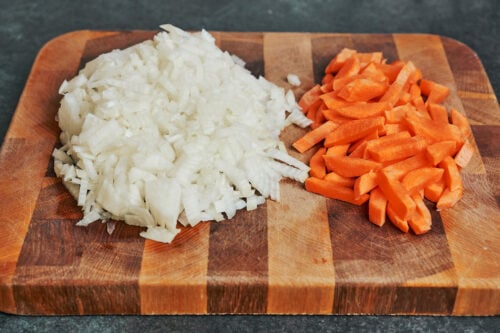
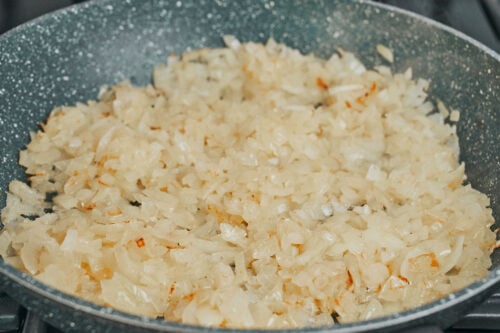
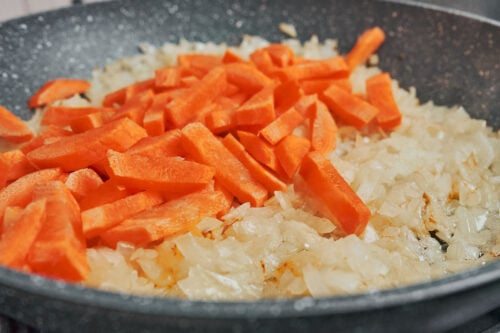
Chop the onions and slice the carrots. Heat 4 tablespoons of oil in a skillet over medium heat and cook the onions until soft and lightly golden. Stir in the carrots and cook just until tender. Transfer to a plate and set aside.



Brown the pork.
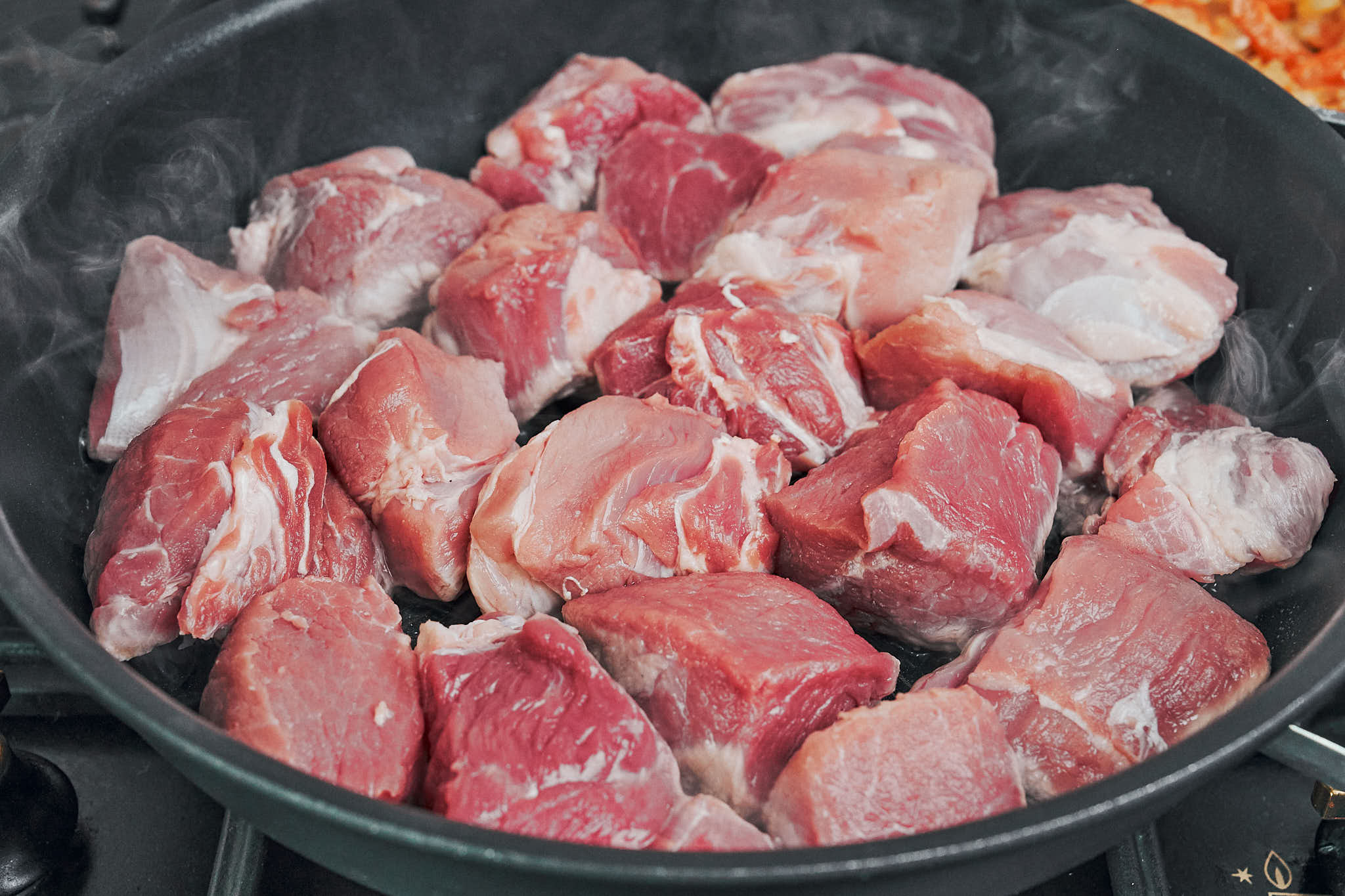
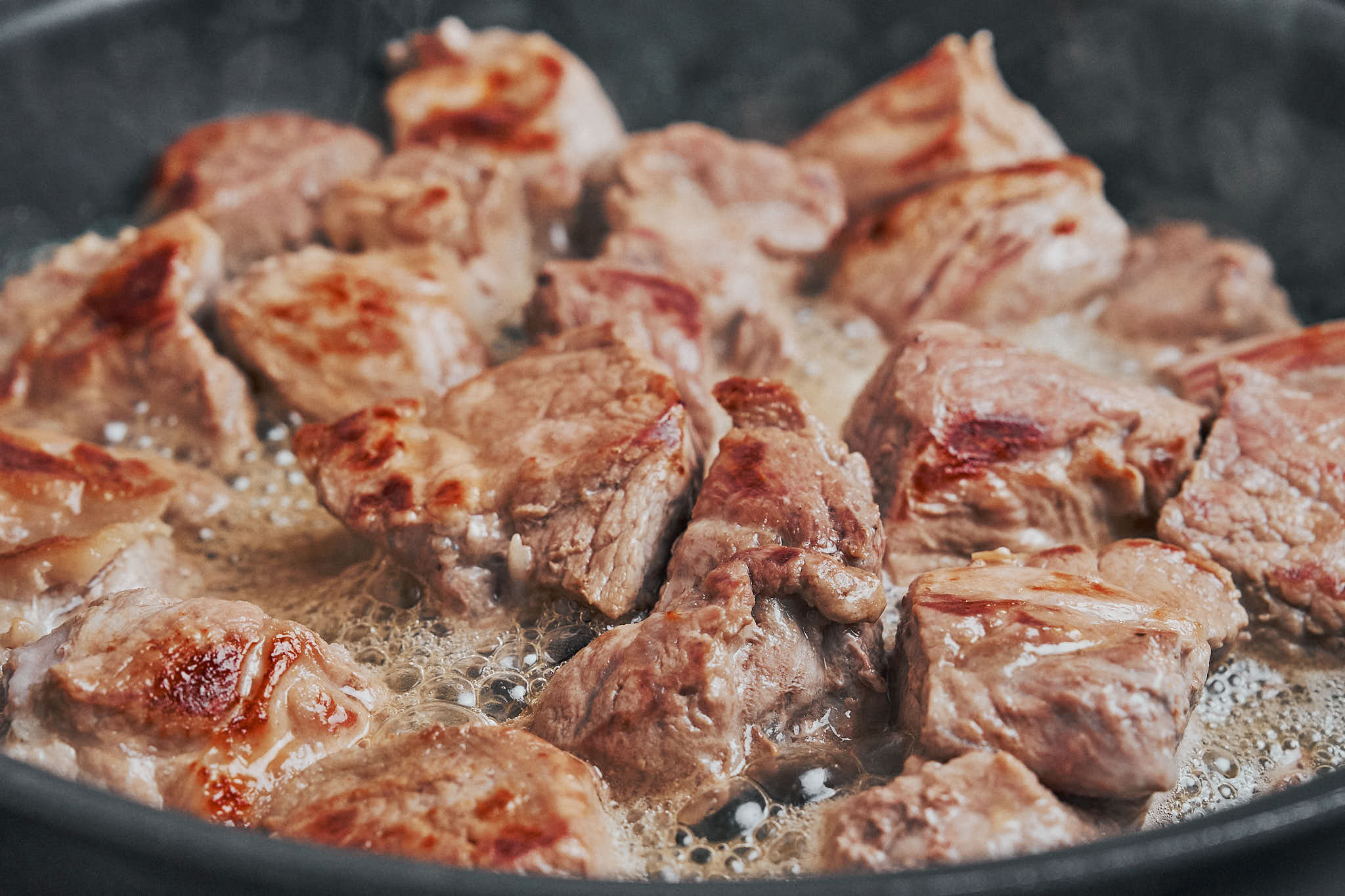
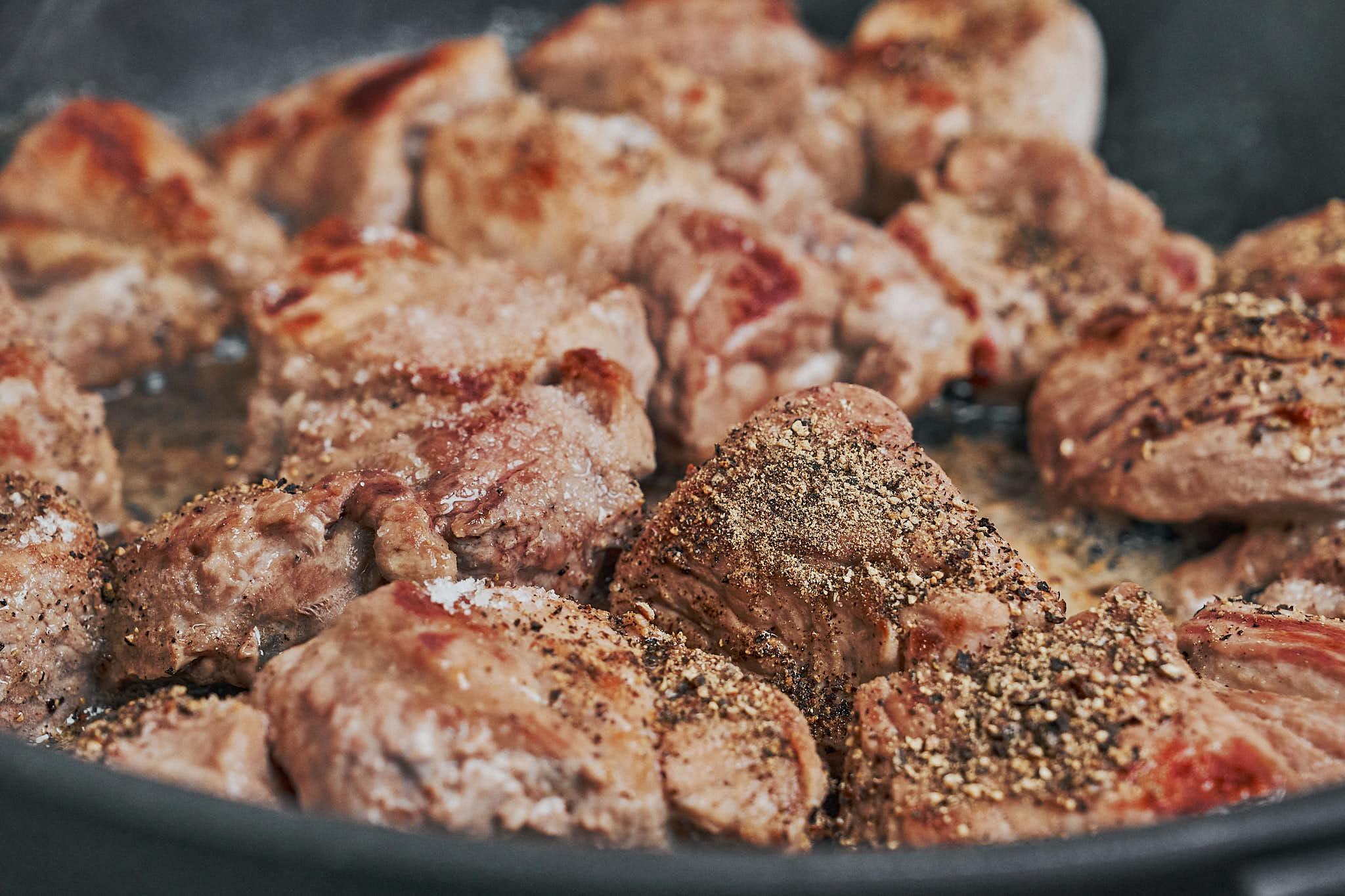
Cut the pork shoulder into roughly 2 cm cubes. In a deeper pan, heat 2 tablespoons of oil over high heat. Add the pork in a single layer and let it sear without moving it at first. After about 6 minutes, turn the pieces and cook until browned and most of the moisture has cooked off. Season with salt and black pepper.
Add the tomato mixture.
While the pork is browning, grate the fresh tomatoes into a bowl, letting all those natural juices collect. Stir in the tomato paste until smooth and well combined. The paste will deepen the color and add richness to the sauce.

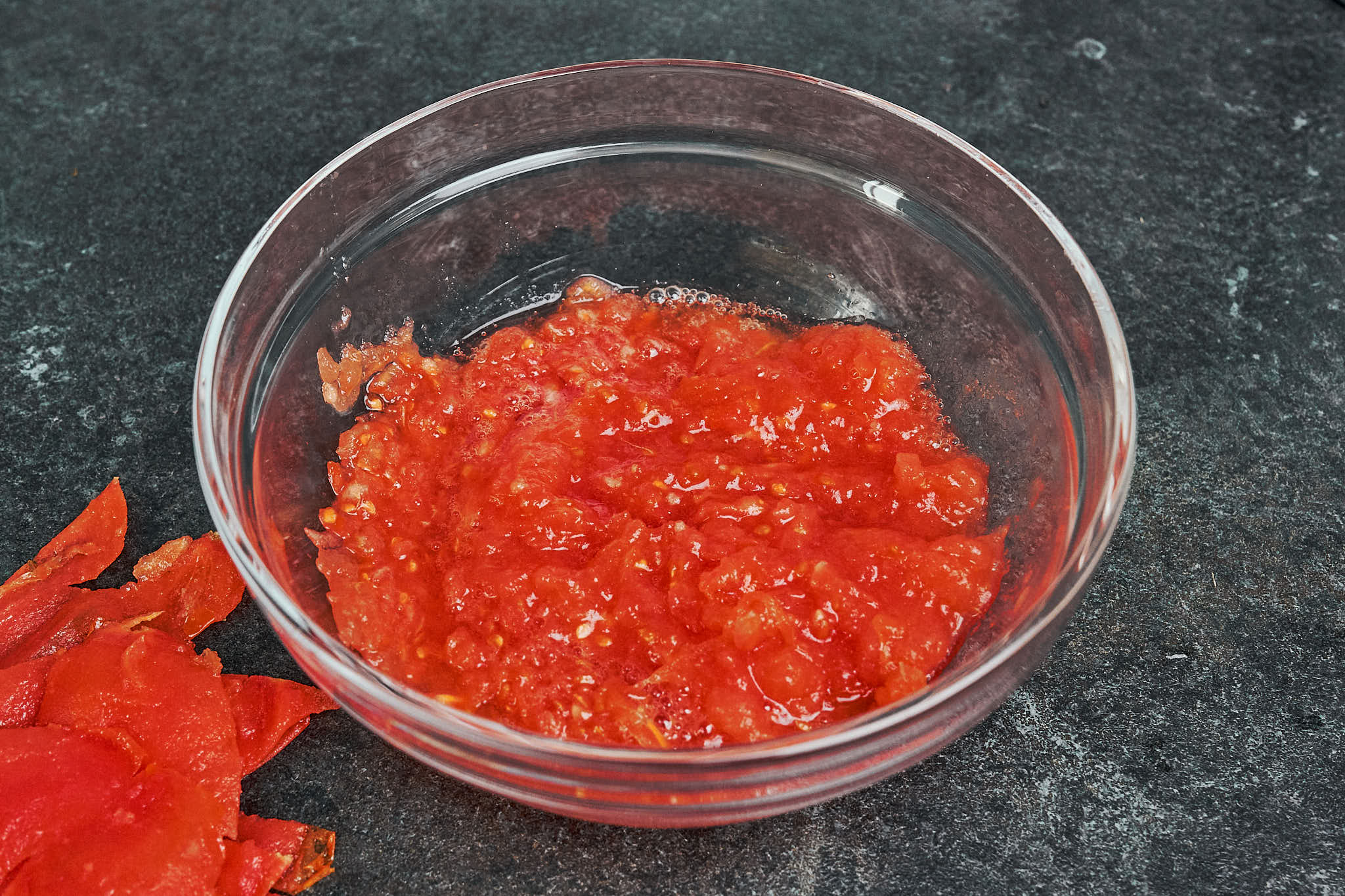

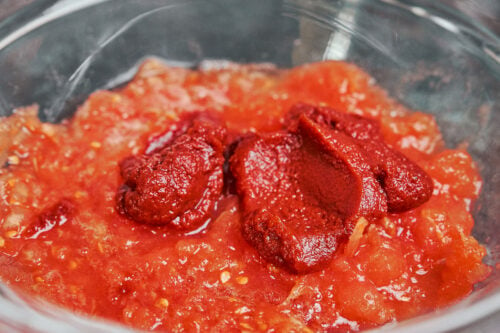
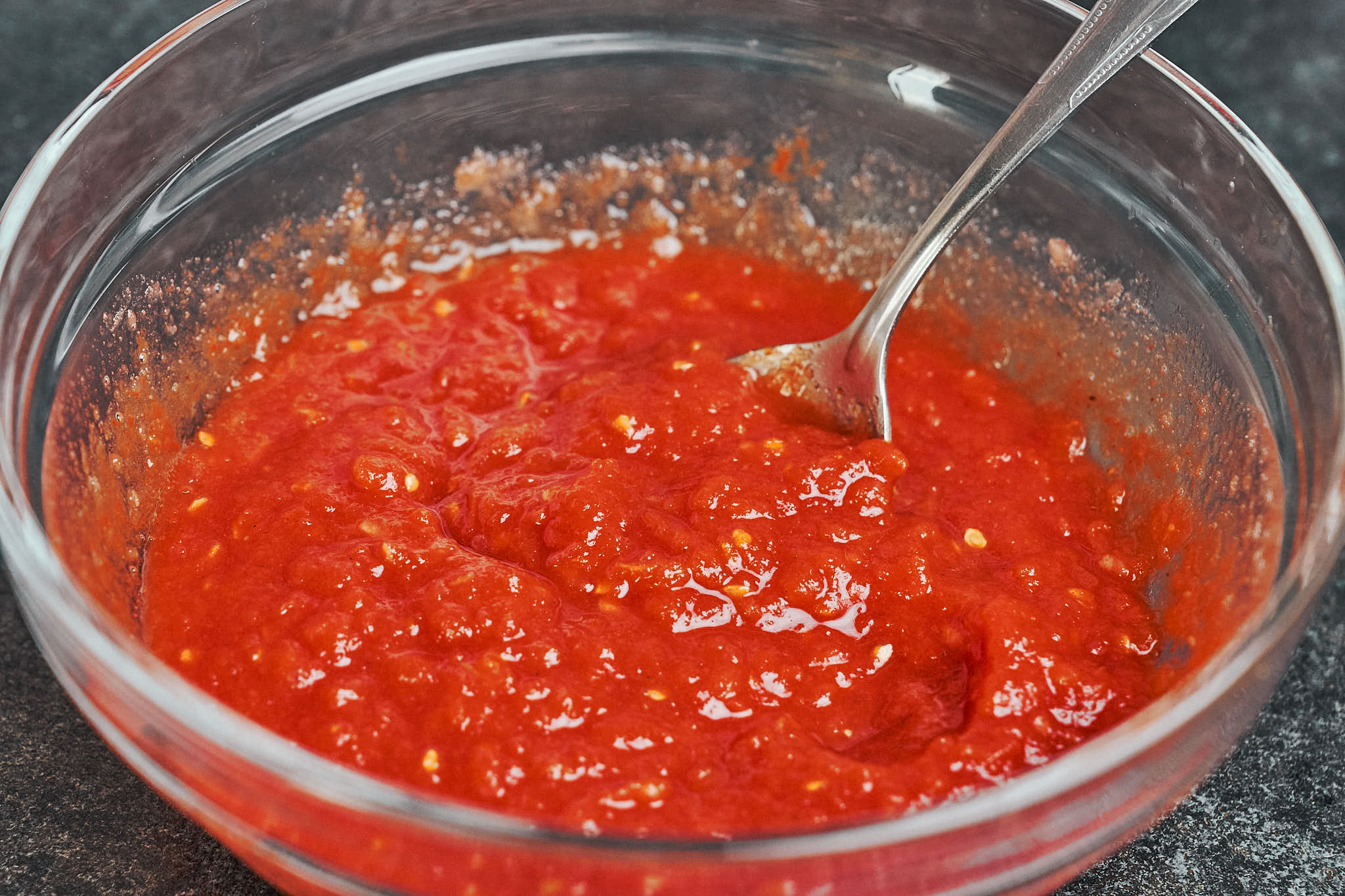
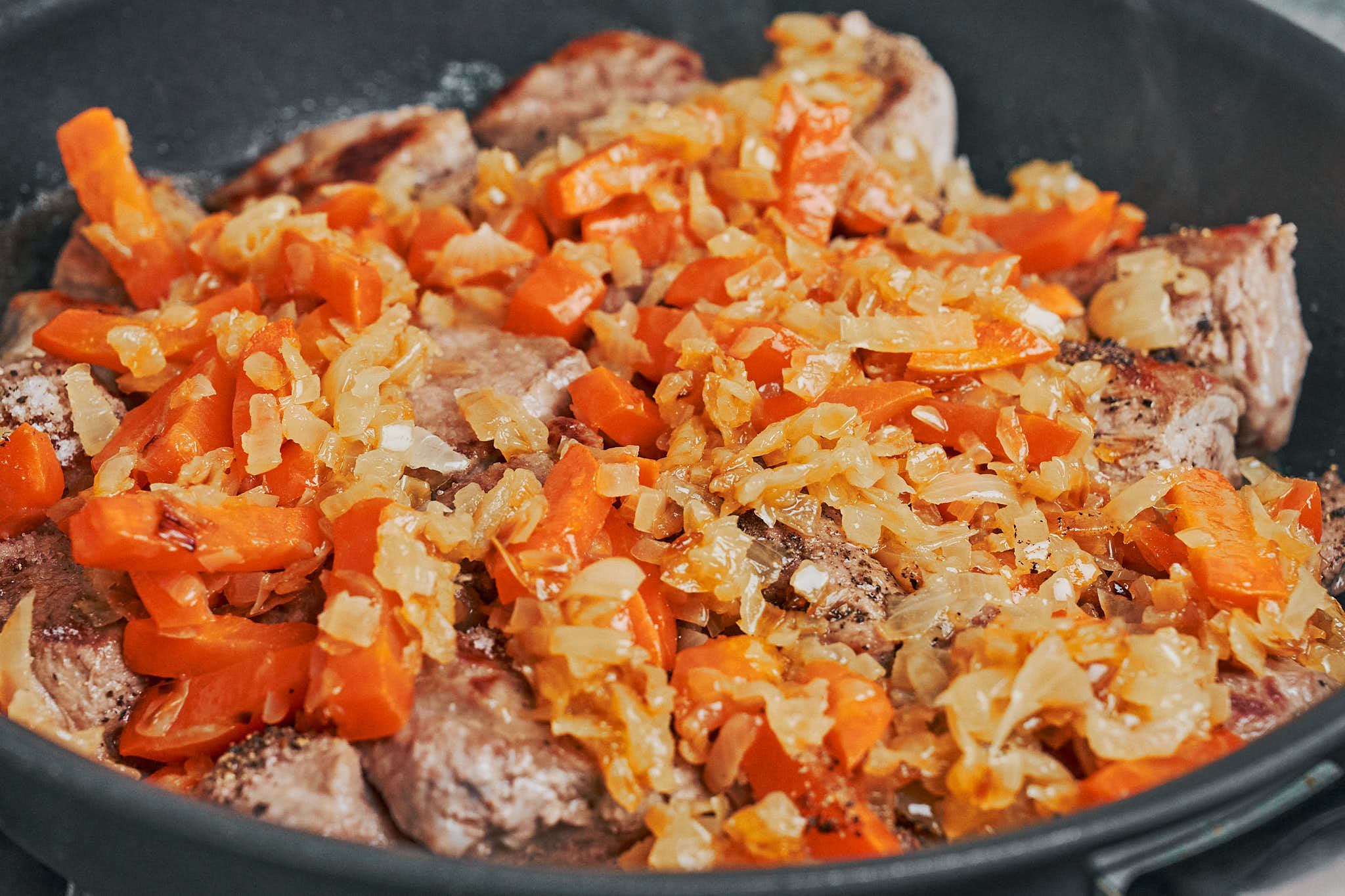
Once the pork is nicely browned, return the sautéed onions and carrots to the pan. Pour the tomato mixture right over the top and let it cook for 2 to 3 minutes, just until it starts to gently bubble and the flavors begin to blend together.
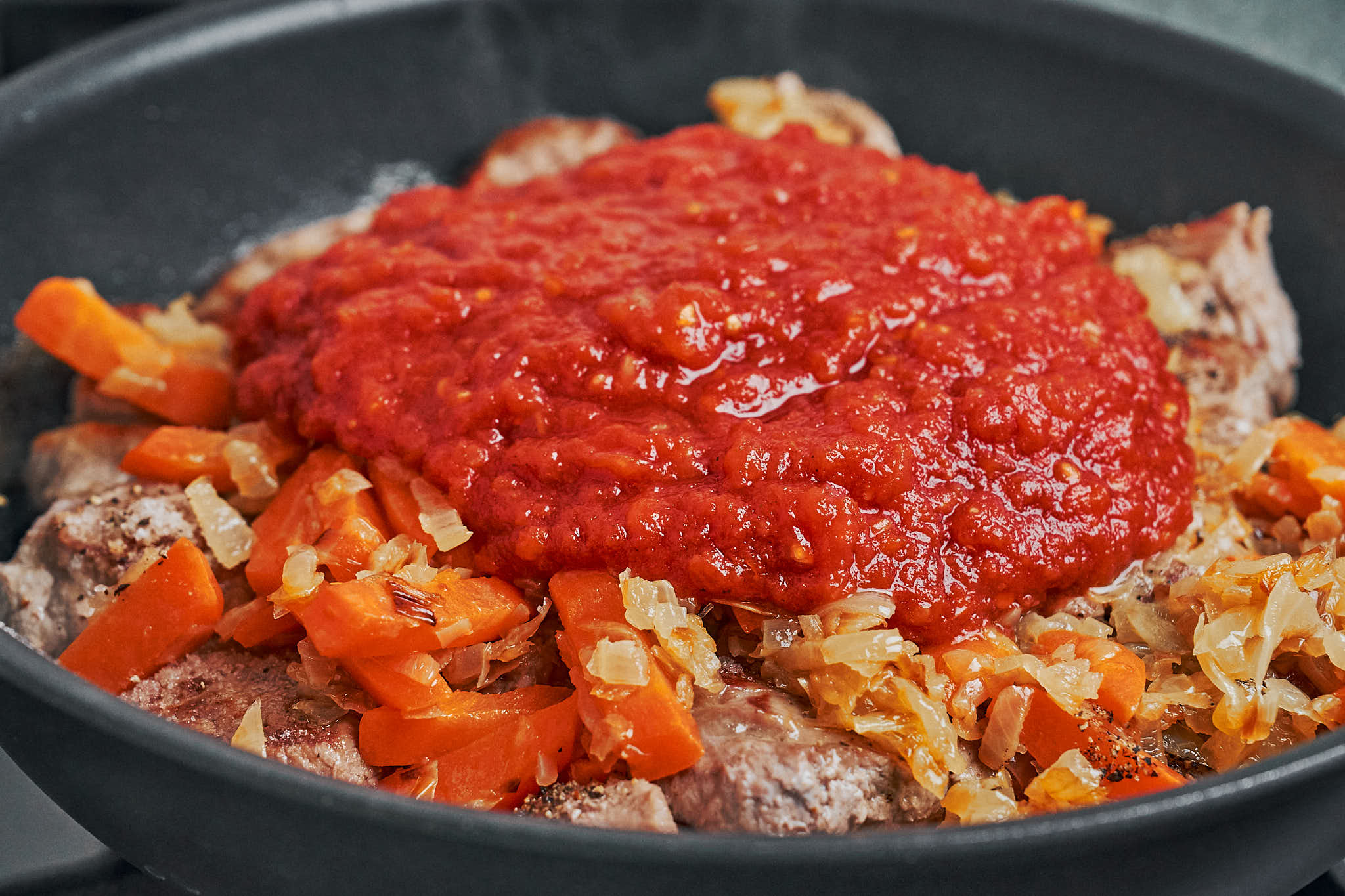
Simmer slowly.
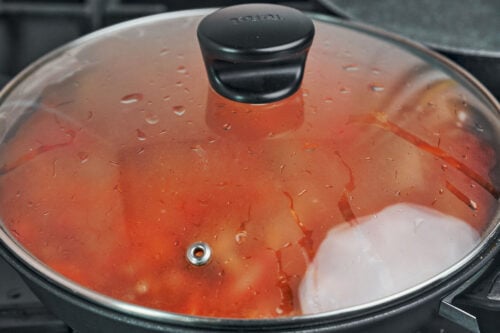
Add 3 cups of water and the bay leaves. Once it starts to gently bubble, reduce the heat, cover, and let it simmer for about 80 minutes. The pork will become tender and the sauce will slowly thicken as the flavors develop.
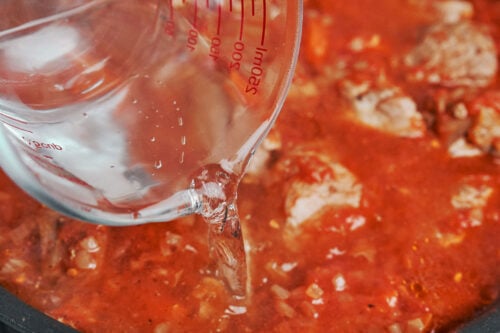
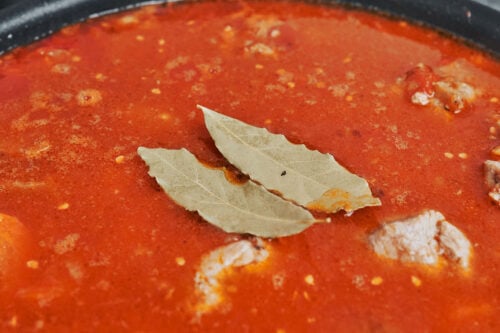
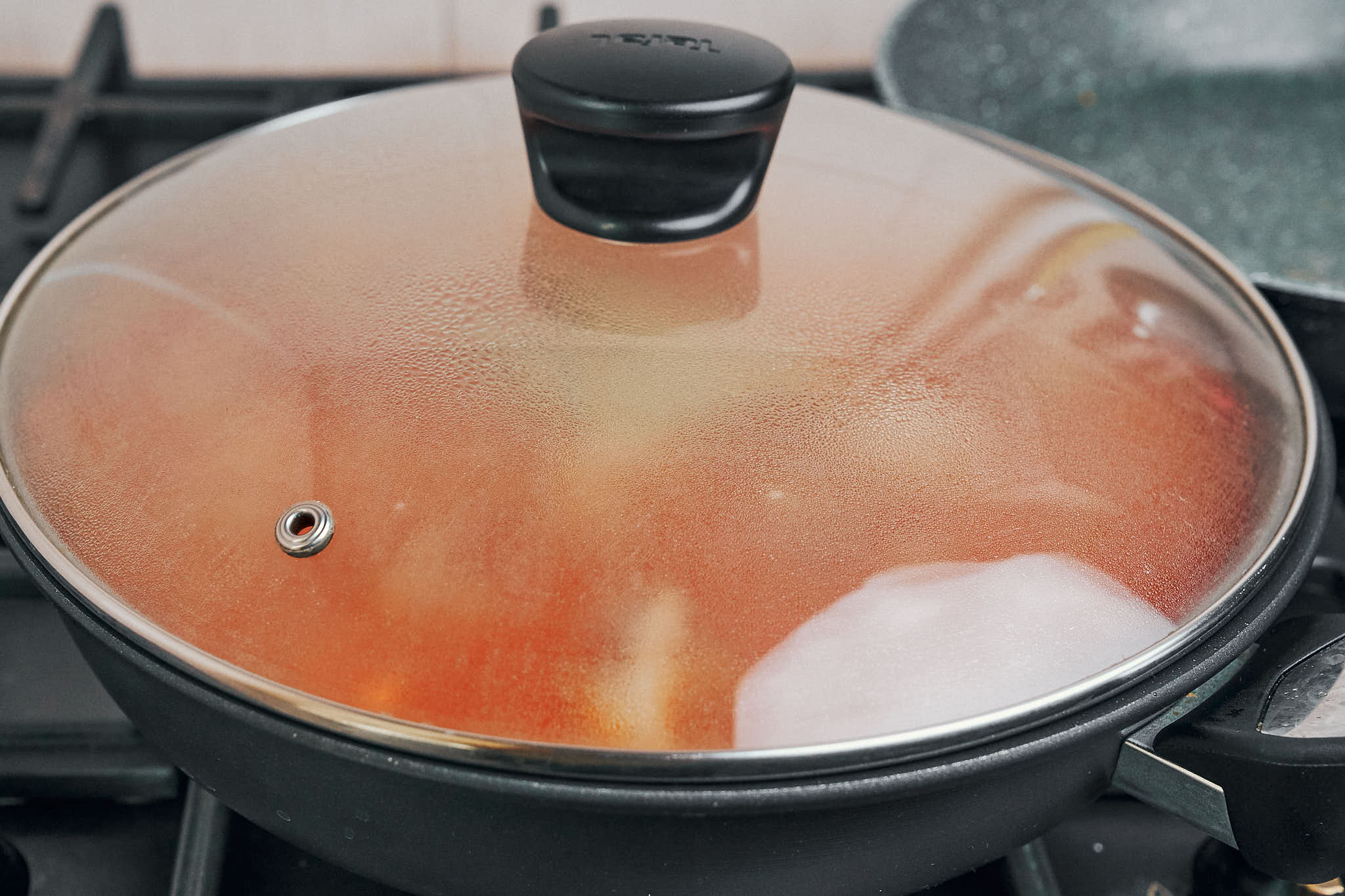
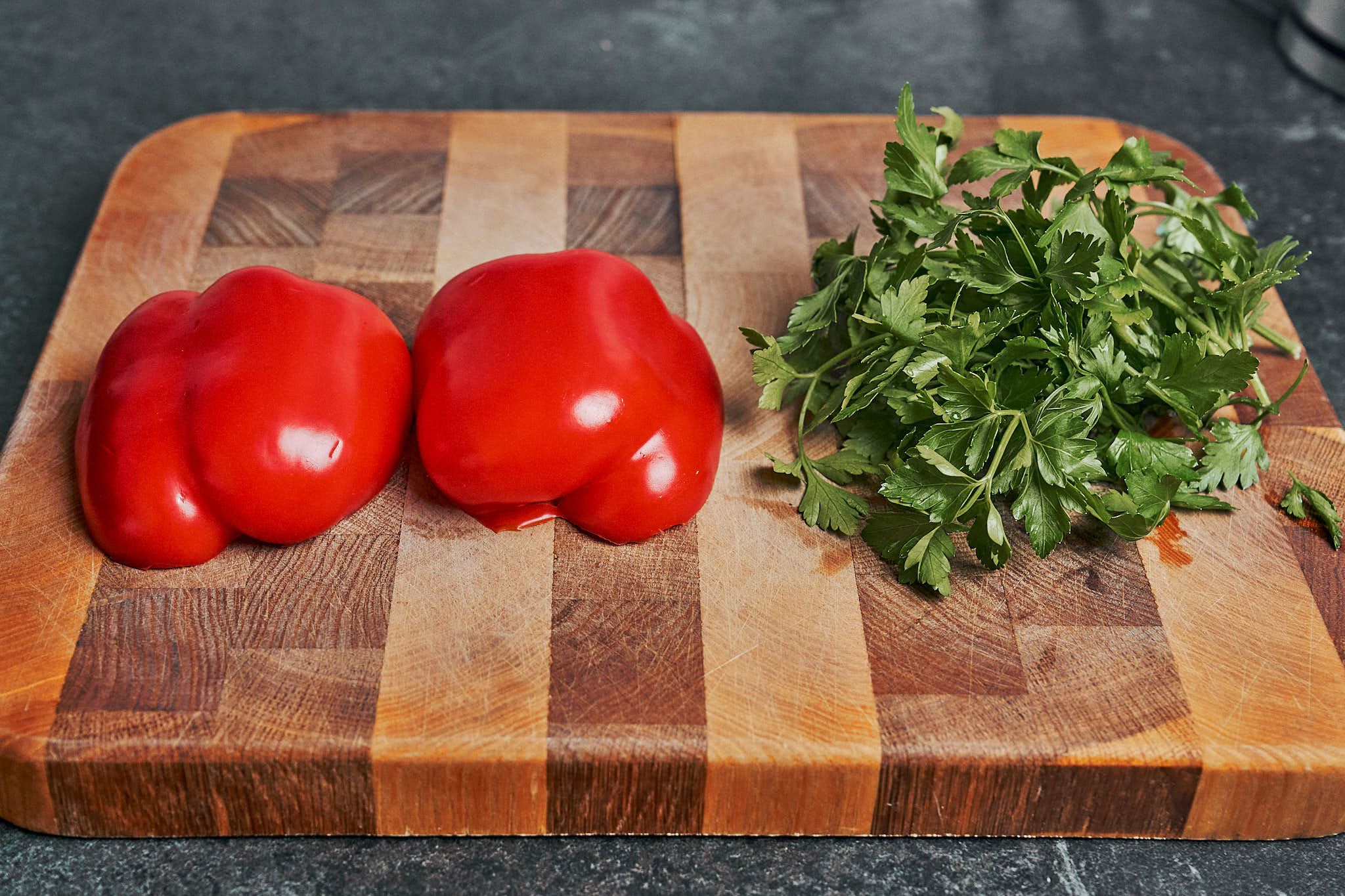
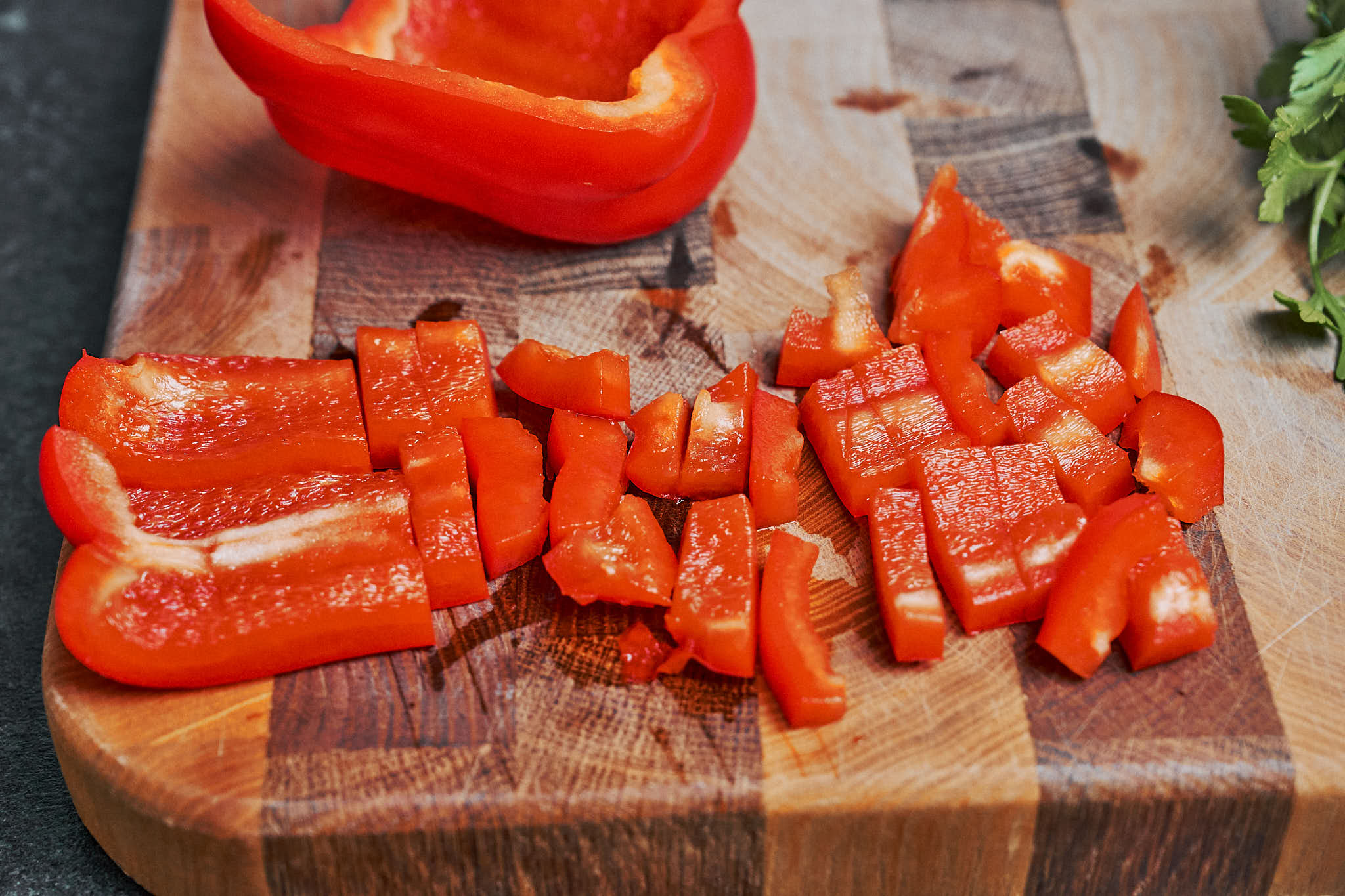
While the stew is simmering, prepare the final ingredients. Slice the bell pepper into bite-sized pieces and finely chop the fresh parsley. Having everything ready makes the final step quick and easy.
Finish and thicken.
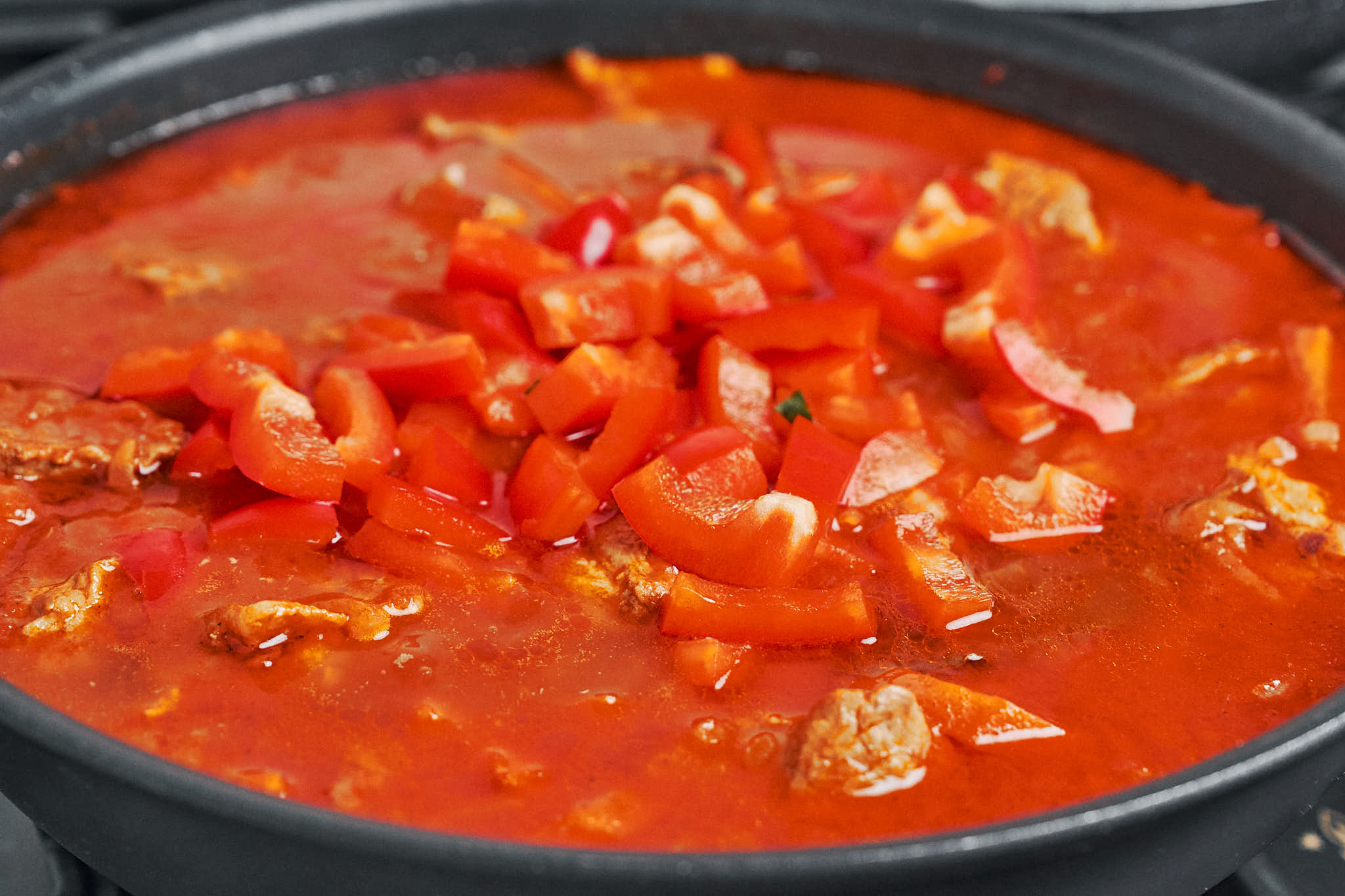
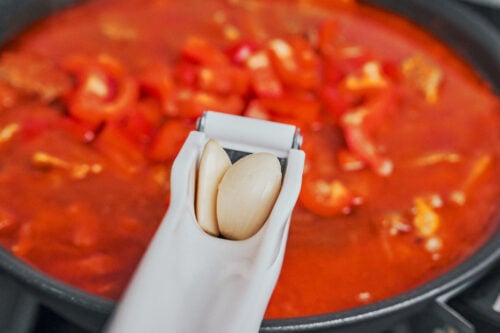
Remove the lid and stir in the sliced bell pepper and minced garlic. Sprinkle 1 tablespoon of flour evenly over the surface and gently mix it into the sauce. Cover again and cook for another 15 minutes, just until slightly thickened.




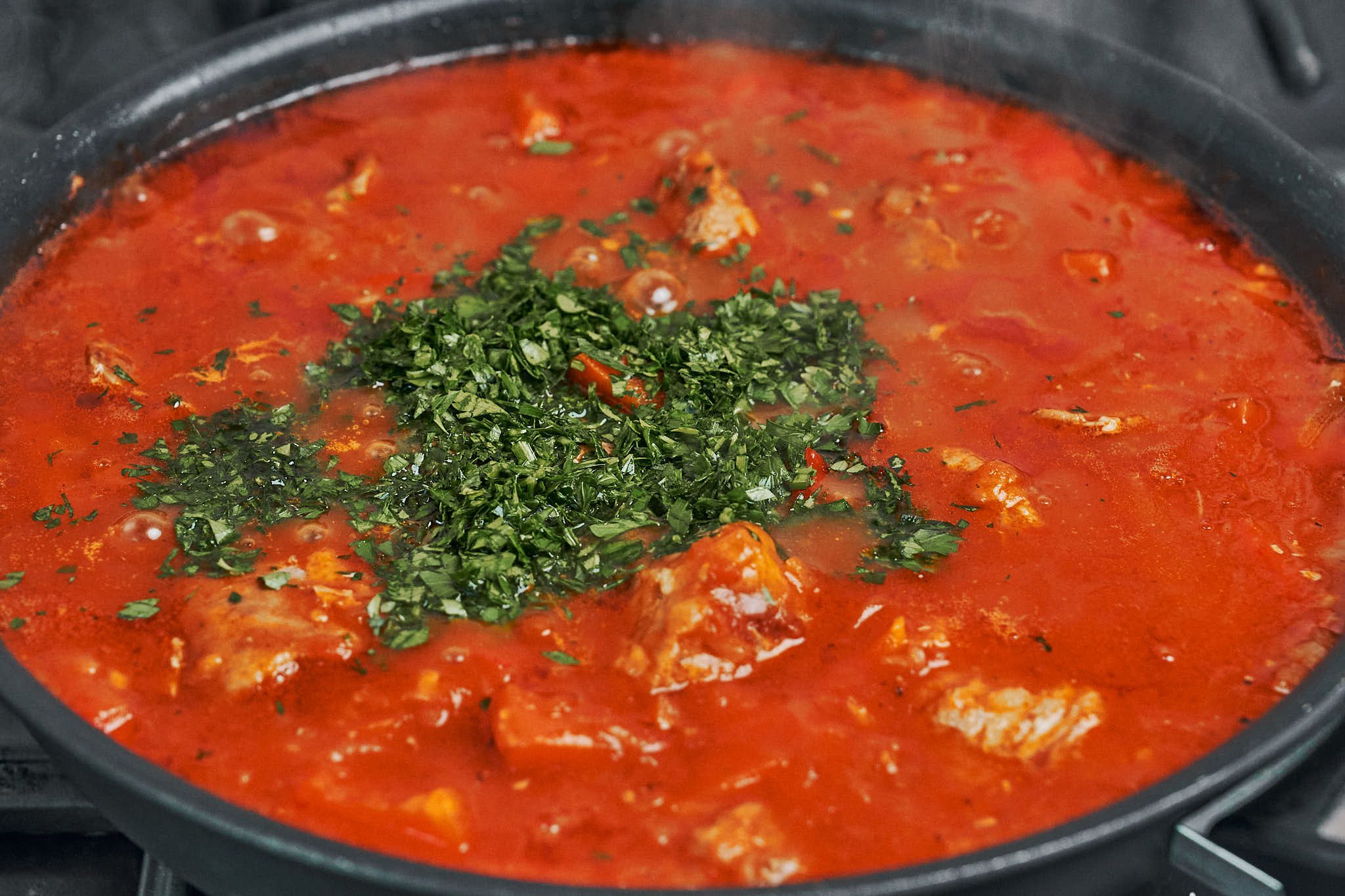
Remove the bay leaves, then stir in the freshly chopped parsley right at the end for a burst of freshness and color. Let the stew simmer for just a minute more so everything comes together. Spoon generously over creamy mashed potatoes and serve warm.
Tips for the Best Pork Stew
- Do not rush the browning step. Let the pork sit undisturbed for a few minutes before turning it. That golden crust builds deep flavor that carries through the entire stew.
- Cut the pork into even pieces. Keeping the cubes roughly the same size helps everything cook evenly and become tender at the same time.
- Let it simmer gently. A slow, steady simmer is key. If the heat is too high, the meat can tighten instead of becoming fork tender.
- Add garlic at the end. Stirring it in during the final stage keeps the flavor warm and aromatic instead of sharp or bitter.
- Adjust the thickness to your liking. If you prefer a thicker sauce, let it simmer uncovered for a few extra minutes. If it becomes too thick, add a splash of hot water and stir gently.
- It tastes even better the next day. Like many slow cooked dishes, the flavors deepen after resting overnight in the refrigerator.
What to Serve With Pork Stew
This stew is rich and saucy, so it pairs best with something that can soak up all that flavor. Here are a few of my favorite ways to serve it.
- Mashed potatoes. The classic choice. Creamy potatoes and rich tomato sauce are a perfect match.
- Rice. Simple stovetop rice is light, fluffy, and perfect for soaking up every spoonful of sauce.
- Crusty bread. Perfect for dipping and mopping up the pan.
- Egg noodles. A cozy twist that turns it into a super comforting bowl.
- Simple salad or pickles. Something bright and crunchy balances the richness.
How to Store Leftovers and Extra Tips
- Make it ahead. This pork stew keeps beautifully in the refrigerator for up to 4 to 5 days and reheats very well. The flavor actually deepens after resting.
- You can freeze it. Let the stew cool completely, then transfer it to a freezer safe container. It will keep well for up to 2 to 3 months. Thaw overnight in the refrigerator before reheating.
- Want extra depth of flavor? If you enjoy cooking with wine, add a small splash of dry white wine, about 1/4 cup, right before stirring in the tomato paste. Let it cook for a minute so the alcohol evaporates and the flavor blends in.
- Reheat gently. Warm on low heat and add a splash of water if the sauce thickens too much. Stir occasionally until heated through.
Variations and Easy Add-Ins
This pork stew is very flexible, which makes it perfect for adjusting to what you have on hand. Here are a few simple ways to change it up without overcomplicating the recipe.
- Add more veggies. This is already a pork stew with bell peppers, but you can also add mushrooms, zucchini, or green beans during the last 25 to 30 minutes so they stay tender, not mushy.
- Add potatoes. Stir in peeled, cubed potatoes during the last 40 minutes of simmering. They will cook directly in the sauce and make the stew even heartier.
- Make it spicy. Add a pinch of red pepper flakes or a small chopped chili when sautéing the onions for gentle heat.
- Use mushrooms. Sauté sliced mushrooms separately and stir them in during the final 20 minutes for extra depth and earthiness.
- Add green peas. Stir in frozen peas during the last 5 minutes of cooking for a touch of sweetness and color.
- Turn it into a thicker braise. Reduce the added water slightly and simmer uncovered a bit longer for a richer, more concentrated sauce.
- Try smoked paprika. A small pinch adds warmth and subtle smoky flavor without overpowering the stew.
- Finish with a spoon of sour cream. Stir in a tablespoon at the end for a slightly creamy, richer finish.
FAQ
Can I make this stew in advance?
Yes. It is one of those dishes that tastes even better the next day once the flavors have had time to blend.
What cut of pork works best?
Pork shoulder is ideal because it has enough marbling to stay juicy and become fork tender while simmering.
How do I make the sauce thicker?
The flour helps, but you can also simmer the stew uncovered for a few minutes at the end to reduce and thicken the sauce.
Can I use canned tomatoes instead of fresh?
Yes. Use crushed tomatoes or tomato sauce, but the fresh grated tomatoes give the stew a brighter homemade flavor.
Can I freeze pork stew?
Yes. Let it cool completely, portion into containers, and freeze. For best quality, use within about 3 to 4 months.
Hearty Pork Stew with Vegetables

Ingredients
- 2 lb pork shoulder, cut into 2 cm cubes
- 1 teaspoon salt
- 1/2 teaspoon black pepper
- 2 medium onions, chopped
- 1 carrot, sliced
- 3 medium fresh tomatoes, grated
- 2 tablespoons tomato paste
- 1 red bell pepper, sliced
- 3 to 4 cloves garlic, minced
- 2 bay leaves
- 1 tablespoon all purpose flour
- 3 cups water
- 6 tablespoons oil, divided
- 2 to 3 tablespoons fresh parsley, chopped
Instructions
- Heat 4 tablespoons of oil in a skillet over medium heat. Cook the onions until soft and lightly golden, then add the carrots and cook until tender.
- In a second deeper pan, heat 2 tablespoons of oil over high heat. Add the pork in a single layer and sear for about 6 minutes per side, until browned and most of the moisture has cooked off. Season with salt and black pepper.
- Return the onions and carrots to the pan.
- In a bowl, combine grated tomatoes and tomato paste. Pour into the pan and cook for 2 to 3 minutes.
- Add water and bay leaves. Bring to a gentle simmer, cover, and cook for about 80 minutes on low heat.
- Stir in sliced bell pepper and garlic. Sprinkle flour over the surface and gently mix. Cover and cook for another 15 minutes until slightly thickened.
- Remove bay leaves and stir in fresh parsley before serving.
Notes

This pork stew with vegetables is the kind of comfort food dinner that never goes out of style. Tender pork, a rich homemade sauce, and simple ingredients make it a reliable recipe for cozy family meals.
It’s the perfect kind of dish to make when you want something hearty, affordable, and deeply satisfying without complicated steps.
If you tried this recipe, I’d really appreciate a quick rating below. It helps my small food blog grow and helps other readers find recipes they can trust.
You can also save this recipe for later or come back to it anytime you need a cozy dinner idea.